 Semiahmoo Siding
 Why Blaine Decks Wear Out Faster Than the Manual Says
Every deck material comes with a service-life estimate printed by someone who has never stood on a deck two blocks from Semiahmoo Bay in February. Blaine sits right where salt-laden marine air off the Strait of Georgia meets a rainy season that can run eight months out of twelve. That combination is harder on outdoor structures than almost anywhere else in Whatcom County. Salt air accelerates corrosion on fasteners, brackets, and any exposed metal hardware. Driving rain off the water finds its way into joints, end grain, and fastener holes that would stay dry in a more sheltered yard. And the long, mild, damp winters we get here are exactly the conditions moss and algae need to take hold on decking, stair treads, and railings.
None of that means a Blaine deck is doomed — it means the repair work has to account for what's actually attacking the structure, not just patch what's visible on top. A board that looks fine from a few feet away can be soft underneath from months of trapped moisture, and hardware that looks solid can be corroding from the inside where you can't see it.
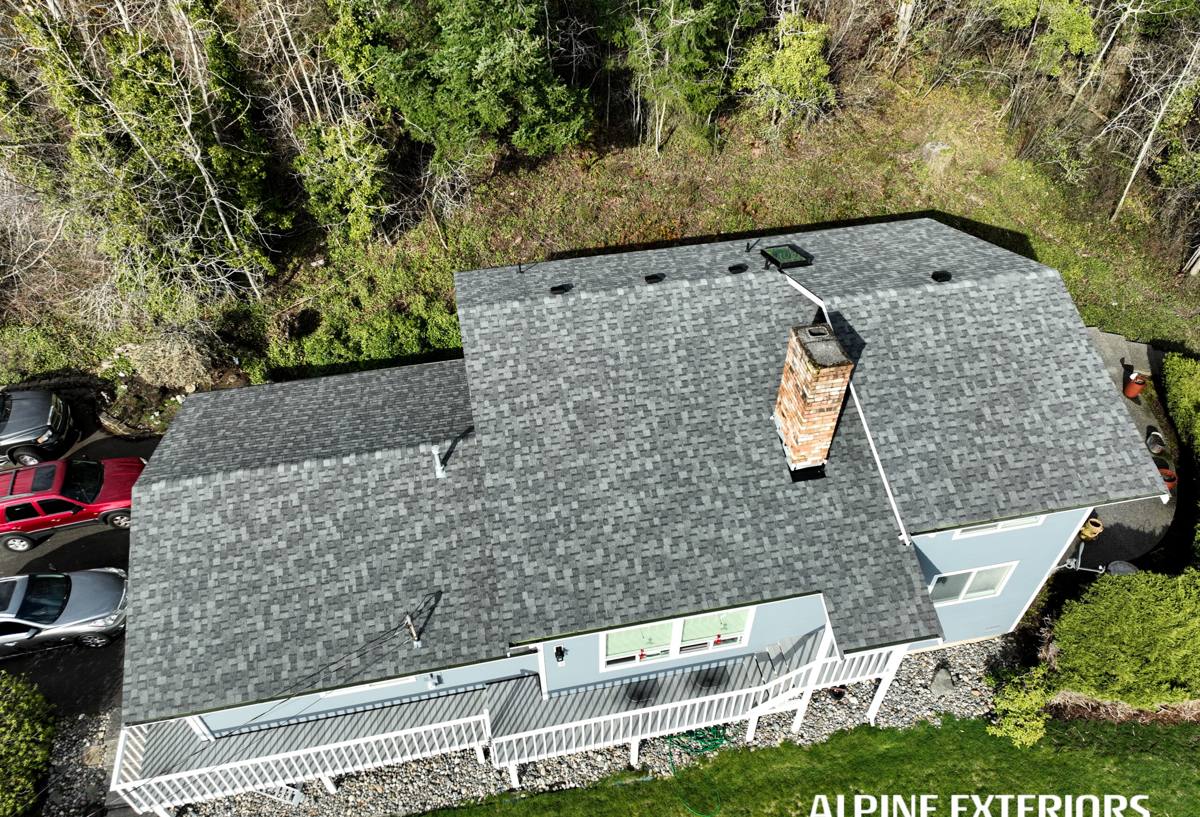
The Signs We Look For First
Most homeowners call us after noticing one obvious problem — a spongy board, a wobbly rail, a stair tread that flexes. Once we're on site, we check the whole structure, because deck damage rarely stays isolated to one spot.
Surface-Level Warning Signs
- Boards that feel soft, spongy, or spring back slowly when you step on them
- Green or black staining that keeps returning within weeks of cleaning
- Fastener heads that are rusted, streaking, or backing out of the wood
- Gaps opening up between boards, or boards cupping and curling at the edges
- Peeling or blistering finish on top of otherwise sound wood
Structural Warning Signs (Don't Wait on These)
- Any movement or bounce in the railing when you lean on it
- Visible gaps or rust streaks at the ledger board where the deck meets the house
- Posts that feel loose at the base or show soft wood at ground contact
- Stairs that flex, creak, or feel uneven underfoot
The surface issues are usually about appearance and slow water damage. The structural ones are about safety, and they're the reason we always start an inspection at the ledger board and posts before we even look at the decking on top.
What a Correct Deck Repair Actually Involves
A lot of deck "repairs" in this region amount to swapping out a few obviously rotten boards and calling it done. That approach usually fails again within a season or two, because it treats the symptom and ignores the cause — almost always moisture getting somewhere it shouldn't.
Ledger Board and Flashing
The ledger board — where the deck attaches to your house — is the single most important connection on the entire structure, and it's also the spot most prone to hidden water intrusion. If flashing is missing, cracked, or was never properly integrated with the house's siding or sheathing when the deck was built, water works its way behind the ledger and rots both the deck framing and the wall structure behind it. We check this joint on every repair, even when the customer's concern is somewhere else entirely.
Framing and Joists
Rim joists and support joists take on water from above through gaps in decking and from below through splashback and ground moisture. We probe suspect areas with an awl rather than relying on a visual check alone — wood can look intact on the surface while being soft a quarter-inch in.
Fasteners and Hardware
This is where salt air does its quiet damage. Standard fasteners corrode faster in a marine environment, and corroding screws or joist hangers lose holding strength well before they look obviously rusted through. On repair work near the water, we use fasteners and structural hardware rated for coastal or high-corrosion exposure, not whatever matches what's already there if what's already there is failing.
Decking, Railings, and Stairs
Once the structure underneath is sound, we replace damaged boards, treads, and rail components to match the existing deck as closely as possible, or advise on a broader refresh if the deck is old enough that matching isn't realistic.
Repair or Replace? A Straight Answer
Homeowners often assume any deck with a rot problem needs full replacement. That's not usually true — but it's also not always false. Here's how we actually make that call.
| Condition Found | Typical Recommendation | Why |
|---|---|---|
| Isolated soft boards, structure and ledger sound | Targeted repair | Framing is doing its job; only the wearing surface has failed |
| Rot or corrosion at the ledger board | Repair the ledger connection, often with new flashing | This is a safety-critical joint; patching around it isn't an option |
| Rot at multiple posts or the majority of joists | Partial to full rebuild | Once framing is widely compromised, patch repairs won't hold |
| Deck is 20+ years old with recurring repairs | Full replacement conversation | At some point ongoing repair costs exceed the value of a rebuild |
| Cosmetic staining, no soft spots | Cleaning and refinishing, no structural work needed | Surface discoloration alone isn't a repair issue |
We'll tell you honestly which category your deck falls into, including when a repair is the right call even though a replacement would obviously be more profitable for us. That's the standard we hold ourselves to.
How Our Process Works
1. On-Site Inspection
We walk the whole deck — decking, rails, stairs, ledger, posts, and accessible framing — and probe any area that looks or feels suspect. This is a hands-on inspection, not a walk-by estimate.
2. Clear Scope and Written Estimate
You get a plain-language explanation of what's failing, what's causing it, and what fixing it correctly requires — plus a written estimate before any work starts. No surprise change orders for problems we should have caught at inspection.
3. Repair Work
We address the cause first — flashing, framing, hardware — then the visible repair. Materials are matched to actually surviving the local climate, not just to matching the existing color.
4. Final Walkthrough
We walk the finished repair with you, point out what was done and why, and flag anything else worth keeping an eye on going forward.
Decking Material Notes for a Coastal Property
If your repair includes replacing a meaningful amount of decking, it's worth knowing how common materials actually hold up in a Blaine yard rather than in a manufacturer's brochure.
| Material | Coastal Performance Notes |
|---|---|
| Pressure-treated lumber | Affordable and structurally solid when properly maintained, but needs regular sealing to resist moss and moisture in this climate |
| Cedar | Naturally resists rot better than most softwoods and looks the part locally, but still needs periodic finish maintenance near salt air |
| Composite decking | Low maintenance and resists rot well, but installation details matter — poor ventilation underneath can still trap moisture and encourage moss on the surface |
We don't push one material over another as a blanket rule. We'll talk through what fits your budget, your home's style, and how much upkeep you actually want to do, and we're straightforward about the maintenance trade-offs of whatever you choose.
Maintenance That Actually Extends Deck Life Here
- Sweep debris off the deck regularly — trapped leaves and needles hold moisture against boards
- Clean moss and algae off decking and stairs before it builds up a slick surface, not just for looks
- Check the ledger flashing and any visible fasteners once a year for rust or gaps
- Reseal wood decking on the schedule your finish product recommends — in this climate, that's often more frequent than the label suggests
- Keep gutters and downspouts directing water away from the deck structure, not onto it
- Address soft boards or loose rails as soon as you notice them — small problems here don't stay small
Why a Crew That Already Works Blaine Makes a Difference
Deck repair advice that works in a dry inland climate doesn't automatically transfer to a property exposed to Semiahmoo Bay's marine air and rain patterns. A crew that regularly works Blaine and the surrounding Whatcom County waterfront knows which hardware actually holds up here, which framing details tend to fail first in these conditions, and what a deck built to a generic spec sheet is missing for this specific environment. That local, repeat exposure to the same climate conditions is what separates a repair that lasts from one you'll be calling about again in two years.
If you've got a deck in Blaine showing any of the signs above — or you just want an honest read on its condition before winter rains set in again — we're happy to come take a look. Reach out for a free, no-pressure estimate using the form below.