 Semiahmoo Siding
 Building a Deck That Actually Holds Up in Custer
Custer sits close enough to the water that a deck here lives a different life than one built forty miles inland. The salt-tinged air off the Strait, the long stretches of driving rain that roll through Whatcom County from fall through spring, and the shady, damp conditions that let moss and algae take hold all work against a deck that wasn't built with this specific climate in mind. We've built and repaired decks throughout this area long enough to know which shortcuts show up as callbacks two winters later, and which details are worth the extra hour on install day.
This page covers what a deck built for Custer actually needs — from the ground up — and how we approach the job so it's still solid, safe, and good-looking a decade from now.
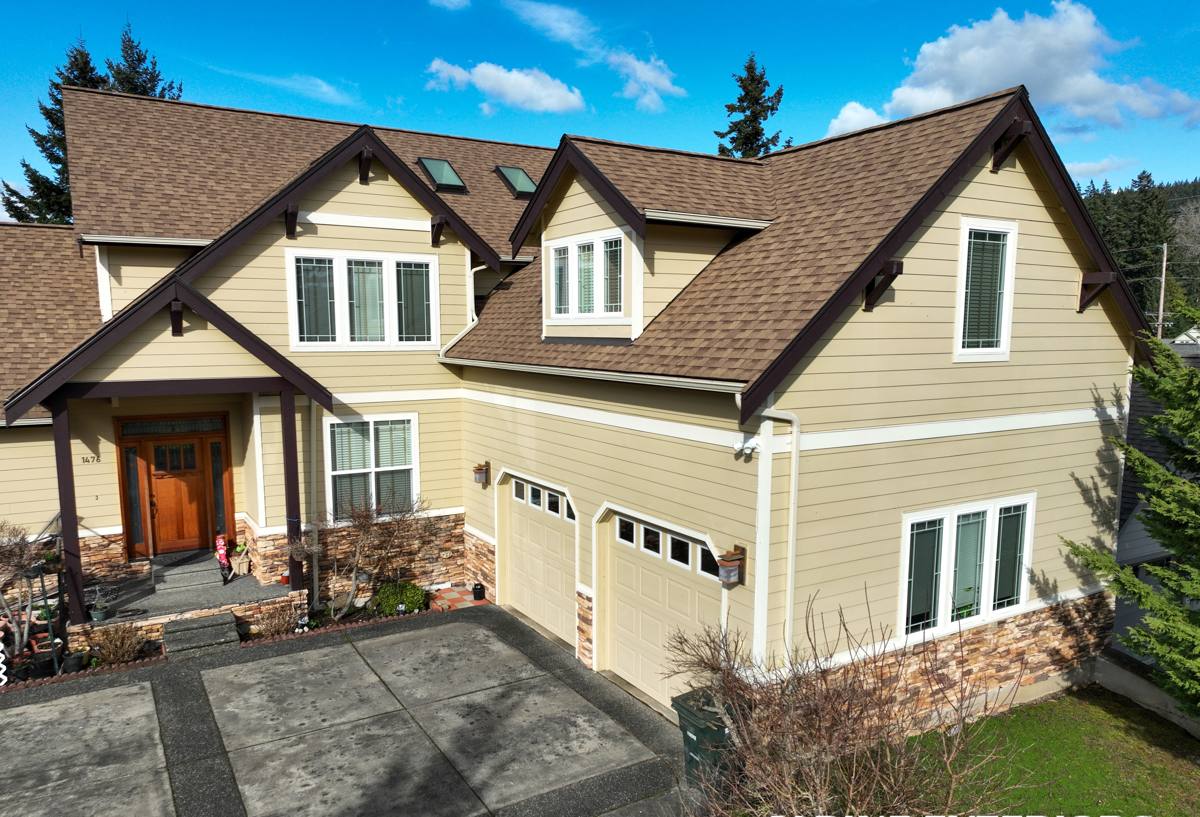
What Custer's Climate Does to a Deck
A few local realities drive almost every decision we make on a deck build out here:
- Salt air accelerates corrosion. Standard galvanized fasteners and hardware can start rusting and staining decking within a couple of seasons this close to the water. It's not dramatic — it's a slow bleed of rust streaks around every screw head and a weakening of connections you can't see until something fails.
- Driving rain gets under things. Wind-driven rain doesn't just fall straight down — it pushes sideways into ledger boards, railing posts, and any gap in flashing. A deck built for a drier climate often skips details that matter a lot here.
- Moss and algae need shade and moisture, and Custer has plenty of both. Decking that doesn't shed water well, or that sits under tree cover, grows a slick green film faster than most homeowners expect — and that's a real slip hazard, not just a cosmetic issue.
- Freeze-thaw cycles, even mild ones, stress footings. Whatcom County doesn't get brutal winters, but repeated freezing and thawing around undersized or shallow footings will loosen a structure over years.
None of this means a deck can't last here — it means the build has to account for these conditions instead of ignoring them.
The Structure: Where Most Deck Failures Actually Start
Footings and Framing
A deck is only as good as what's underground and underneath it. In this area, footings need to be sized and set to local frost depth and soil conditions, not guessed at. We see the most trouble on decks where footings were undersized or spaced too far apart to save a little money up front — the deck feels fine for a few years, then starts to bounce or sag as the ground shifts with the wet season.
For framing, we use coated or stainless fasteners and structural connectors rated for exterior, coastal-adjacent use. In a salt-air environment, mixing metals (say, a galvanized joist hanger with a stainless screw) actually speeds up corrosion through galvanic reaction — small detail, real consequence over time.
Ledger Attachment
The ledger board — where the deck attaches to the house — is the single most common source of rot and structural failure we find on older decks. If it's not flashed correctly to shed water away from the house framing, water works its way behind the ledger and into the rim joist, and you don't see the damage until it's advanced. Proper ledger flashing, correct fastener spacing, and a flashing tape or membrane behind it are non-negotiable on every deck we attach to a house.
Joist Protection
Joist tape (a self-adhering flashing membrane run along the top of each joist before decking goes down) keeps rain from sitting in the fastener holes and wicking into the wood. It's inexpensive, it takes maybe an extra hour on a typical deck, and it's one of the details that separates a deck that looks fine at year one from one that's still sound at year fifteen.
Choosing Decking Material for This Climate
There's no single "best" decking material — there's a best material for your budget, your maintenance appetite, and how much shade and moisture your specific site deals with. Here's how the common options actually perform in Custer's conditions:
| Material | How It Handles Salt Air & Rain | Moss/Algae Resistance | Maintenance |
|---|---|---|---|
| Pressure-treated wood | Holds up structurally but needs consistent sealing to resist moisture cycling | Low — porous surface holds moisture, grows moss readily in shade | Annual cleaning and re-sealing recommended |
| Cedar | Naturally rot-resistant, ages well with weathering | Moderate — still needs cleaning in shaded, damp spots | Periodic cleaning; staining/sealing extends life and color |
| Composite decking | Excellent — doesn't absorb moisture or corrode | Moderate to good, depending on the board's surface texture | Low — occasional wash-down, no sealing |
| PVC decking | Excellent — fully water-resistant | Good — smoother, less porous surface sheds algae growth better | Lowest — soap and water cleaning as needed |
We're straightforward with homeowners about trade-offs rather than pushing one product. Wood costs less up front but asks more of you every year. Composite and PVC cost more initially but hand you back your weekends. For a shaded, damp Custer lot, we lean toward recommending composite or PVC or, if wood is the goal, being honest that the maintenance schedule needs to actually happen — skipped sealing is where wood decks go wrong fastest around here.
Designing Around Moss, Shade, and Drainage
Beyond material choice, a few design decisions make a real difference in how much moss and slickness you deal with long-term:
- Board spacing and airflow: proper gapping between boards lets water drain through instead of pooling on the surface.
- Under-deck drainage: on taller decks, a below-deck drainage system keeps the space underneath from becoming a permanently damp, moss-friendly environment — and can turn that space into usable dry storage or a covered patio.
- Sun exposure: we'll talk honestly about whether nearby trees or the house's shadow are going to keep sections of the deck perpetually damp, and plan decking texture and cleaning expectations accordingly rather than pretending it won't be an issue.
- Surface texture: smoother composite and PVC boards generally shed algae film better than deeply wood-grained textures, which can trap moisture in the grooves.
Railings, Stairs, and Hardware
Railings and stairs take the brunt of wind-driven rain and get handled — leaned on, gripped, walked on wet — more than any other part of the deck. We use fastening hardware and post connections rated for exterior coastal use, and we pay particular attention to post-to-frame connections, which carry real structural load and are code-inspected for a reason. Composite or aluminum railing systems tend to outperform painted wood railings here, since they don't need repainting to keep moisture out of end grain and joints.
Permits and Local Code
Most decks above a certain height or attached to the house require a building permit in Whatcom County, and inspections typically check footing depth, ledger attachment, guardrail height, and stair geometry. We handle the permit process as part of the job — pulling permits, scheduling inspections, and building to the code requirements that apply to your specific property, rather than leaving that paperwork on the homeowner's plate.
Our Process, Start to Finish
- On-site assessment: we look at your specific lot — sun exposure, drainage, soil, and how the deck will tie into the house — before recommending a design or material.
- Design and material selection: we walk through the honest trade-offs of each decking option for your budget and maintenance preference.
- Permitting: we handle the permit application and coordinate required inspections.
- Footings and framing: footings set to proper depth, structural connectors and coastal-rated fasteners throughout, joist tape applied before decking.
- Ledger flashing: correctly flashed and sealed connection to the house, the step we consider non-negotiable.
- Decking, railing, and stairs: installed to spec with attention to spacing, drainage, and fastener consistency.
- Final walkthrough: we go over the finished deck with you, including what maintenance (if any) your material choice needs going forward.
Signs Your Existing Deck Needs Attention
If you already have a deck in Custer and aren't sure whether it needs repair or replacement, a few warning signs are worth checking for before they become safety issues:
- Soft or spongy spots in decking boards, especially near the ledger or stairs
- Rust staining streaking down from screw heads or hardware
- Visible gaps or separation where the ledger meets the house
- Persistent green or black film that returns quickly after cleaning
- Railing posts that wiggle or flex under light pressure
- Standing water that doesn't drain within an hour or two after rain
Any of these is worth a professional look — some are cosmetic, but ledger separation and loose railing posts are structural issues we'd want to address quickly.
Why Local Experience Matters for This Job
A deck built without accounting for salt air, wind-driven rain, and shaded, moss-prone conditions can look identical to a well-built one on install day. The difference shows up two, five, and ten years later — in rusted fasteners, a rotting ledger, or decking that's slick half the year. Building decks in this specific stretch of Whatcom County means knowing which fastener grades actually hold up here, where moss takes over fastest, and what the local permitting process expects, so the deck you get is built for the place it's actually standing, not a generic spec built for somewhere drier and inland.
If you're thinking about a new deck or wondering whether an existing one in Custer needs repair, we're happy to come take a look and give you a straightforward, no-pressure estimate — just fill out the form below to get started.