 Semiahmoo Siding
 Decks in Blaine Take a Different Kind of Beating
A deck in Blaine doesn't fail the way a deck in a dry inland climate fails. Out here, the damage is slower and sneakier. Salt-laden air off the water works into fasteners and hardware long before the boards themselves look bad. Driving rain off Semiahmoo Bay finds every gap in flashing and ledger connections. And the long stretch of grey, wet months each year gives moss and algae months to build up a slick, moisture-holding layer on any surface that doesn't drain and dry fast. By the time a deck "looks" like it needs work, the structure underneath has often already been dealing with moisture intrusion for a year or two.
That's the case for replacement rather than repair once a deck gets past a certain point: patching boards on a frame that's been absorbing water at the ledger or posts just buys a homeowner a couple more seasons before the same problems resurface, often worse. A full replacement done right for our climate should outlast a patch job by a wide margin.
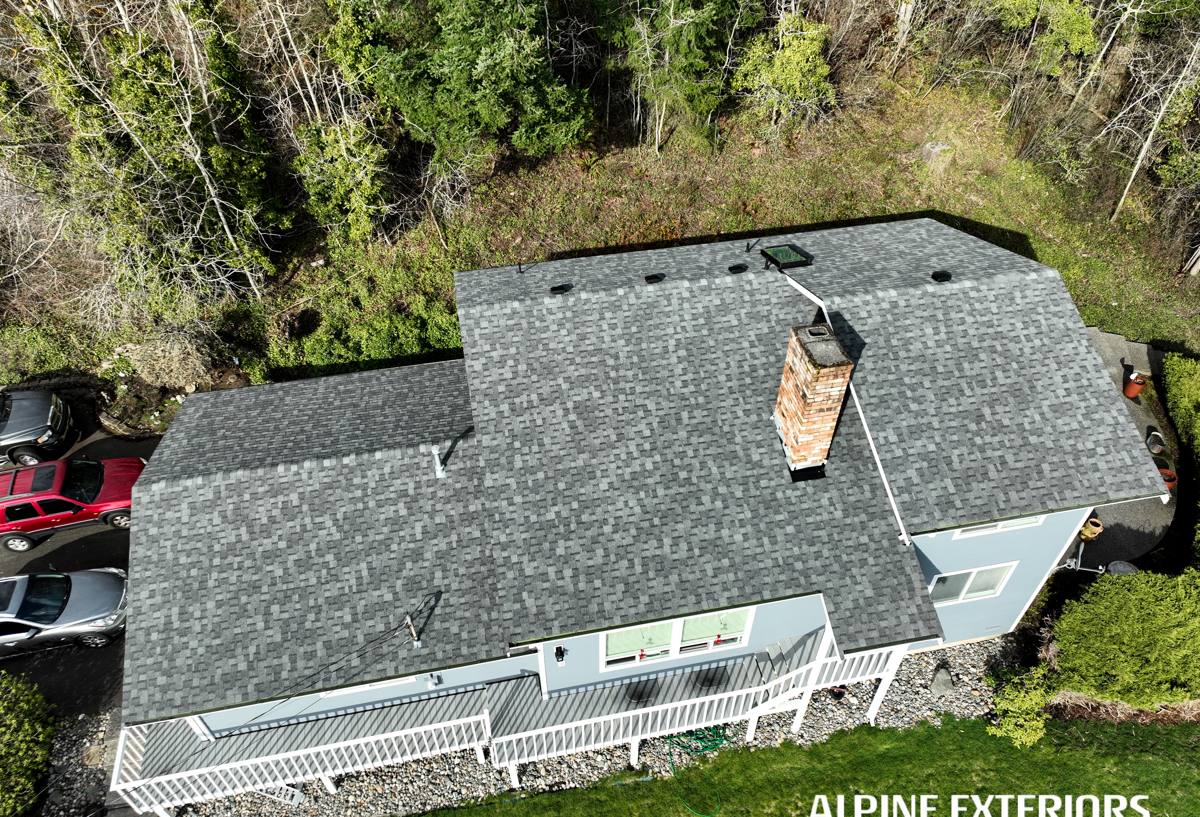
Signs a Blaine Deck Is Past Repair
Not every tired-looking deck needs to be torn out. But there are specific signs, common to Whatcom County's coastal exposure, that tell us repair won't hold:
- Soft or spongy spots in decking boards, especially near the house or in shaded corners that never fully dry out
- Rust streaking or corrosion around fasteners and structural hardware — a strong signal in salt-air areas
- Visible gaps, cracking, or staining at the ledger board where the deck meets the house
- Persistent moss or algae growth that returns within weeks of cleaning
- Wobble or movement in railings or posts, which usually points to post-base or footing decay, not just a loose bolt
- Discoloration or soft wood at joist ends, visible from underneath the deck
If a deck shows two or more of these, we typically recommend replacement over spot repair. One or two isolated issues on an otherwise sound structure may still be repairable — that's part of what we assess on-site before recommending anything.
What a Correct Deck Replacement Involves
Tear-Out and Structural Inspection
We remove the old decking, railings, and where needed the substructure, and inspect what's underneath — ledger connection, joists, posts, and footings. This is the step that matters most for a coastal property, because it's where hidden moisture damage actually gets found, not guessed at.
Ledger and Flashing Detail
The ledger-to-house connection is the single most common failure point on decks in wet climates, and it's also the hardest to inspect once the deck is finished. We flash this connection to shed water away from the house, not toward it, and use fasteners rated for the exposure. This detail alone is often the difference between a deck that lasts fifteen-plus years here and one that starts showing rot at the house wall within five.
Framing and Fasteners
In a salt-air environment, standard hardware corrodes faster than people expect. We use corrosion-resistant, coastal-rated fasteners and connectors on framing, post bases, and joist hangers — the parts of a deck nobody sees again once decking goes down, and the parts most expensive to fix later if they're wrong.
Drainage and Grading
Water needs a clear path away from posts and footings. Part of a proper rebuild is checking that grading and drainage around the deck's base don't leave posts sitting in standing water after Blaine's heavier rain events.
Decking Material Installation
Board spacing, fastening pattern, and ventilation underneath all affect how well a deck drains and dries between rain events — which, in this climate, is most of the year. Boards installed too tight or too low to the ground trap moisture and accelerate moss growth regardless of what material they're made from.
Choosing a Decking Material for Coastal Whatcom County
There's no single "best" decking material — there's a best material for a given budget, maintenance appetite, and exposure. Here's how the common options actually perform in a salt-air, high-moss climate:
| Material | Coastal/Moisture Behavior | Maintenance | Typical Lifespan Here |
|---|---|---|---|
| Pressure-treated wood | Good if properly sealed and maintained; softwood grain still absorbs moisture over time | Annual cleaning and periodic sealing | 10–15 years with upkeep |
| Cedar | Naturally moisture- and insect-resistant; still needs sealing to fight moss and graying | Regular sealing/staining | 15–20 years with upkeep |
| Composite decking | Doesn't absorb water like wood; surface can still hold moss film if not cleaned | Occasional washing, no sealing | 25+ years |
| PVC/synthetic decking | Fully moisture-resistant, best moss resistance of the group | Low — periodic rinse | 25–30+ years |
For homeowners who want the lowest long-term maintenance in a moss-heavy, salt-exposed spot, composite or PVC decking is usually the more honest recommendation — not because wood is a bad product, but because keeping a wood deck looking and performing well here requires a maintenance commitment a lot of people underestimate when they choose it. If a homeowner wants the look and feel of real wood and is prepared to stay on top of sealing and cleaning, cedar remains a solid choice.
Framing Material Matters Too
Whatever decking goes on top, the framing underneath should be pressure-treated lumber rated for ground contact where applicable, paired with corrosion-resistant hardware. This is not the place to save money — framing failures are expensive and disruptive to fix after the fact, while decking-only issues are comparatively simple.
Railings, Stairs, and Code
Railing height, baluster spacing, and stair geometry are governed by Washington building code, and a permitted deck replacement gets checked against those requirements. Beyond code minimums, railing choice affects how much wind and rain-driven moisture the deck surface actually sees — solid or partially solid railings can shelter a deck somewhat, while open railings let more weather through but also let the deck dry faster. There's a genuine trade-off there worth discussing based on how exposed a given property is.
Our Process for Blaine Deck Replacements
- On-site assessment — we look at the existing deck, ledger, framing, and site drainage, and give a straight answer on repair vs. replacement
- Written proposal — scope, materials, and pricing laid out before any work starts
- Permitting — we handle the permit process where required so the homeowner doesn't have to
- Tear-out — old structure removed and hauled off, site protected
- Structural rebuild — framing, ledger flashing, and hardware done to hold up under salt air and sustained rain
- Decking and railing install — material installed per manufacturer spec, with attention to spacing and drainage
- Final walkthrough — we go over the finished deck together before calling the job done
Why Local Experience Matters for This Job
A deck replacement done by a crew that hasn't worked coastal Whatcom County before can look identical to one built by a crew that has — right up until the first winter of driving rain and salt air finds every shortcut in the flashing and hardware. Knowing which fasteners actually hold up here, how tight to space decking boards for real drainage in this rainfall pattern, and where moss tends to establish first isn't generic knowledge — it's specific to building in Blaine and the surrounding Semiahmoo area. That's the practical reason to hire a crew that already works this coastline regularly, rather than a contractor doing their first job in a salt-air environment.
Timing a Deck Replacement Around Blaine's Weather
Deck replacement can happen most of the year here, but the drier stretch of late spring through early fall gives the best working conditions for framing and finish work, and lets sealants or coatings on wood decking cure properly before the wet season returns. That said, a structurally failing deck — soft ledger, rotted posts — shouldn't wait for ideal weather. We schedule around both the homeowner's timeline and what the job actually needs.
Before You Call: A Quick Self-Check
A short walk-around can help a homeowner decide how urgent a deck issue is before scheduling an assessment:
- Press on decking boards near the house and in shaded corners — any give or softness?
- Look underneath at joists and the ledger board for staining, dark streaks, or soft wood
- Check railing posts for wobble when pushed firmly side to side
- Look for rust bleeding from screws, bolts, or brackets
- Note how quickly moss returns after cleaning — days versus months tells you a lot about drainage
None of this replaces an in-person inspection, but it's enough to know whether a call is worth making sooner rather than later.
If a deck in Blaine is showing its age or you're planning ahead before the wet season sets in, we're glad to take a look and give a straight, no-pressure assessment. Use the form below to request a free estimate.