 Semiahmoo Siding
 Siding Built for the Realities of Drayton Harbor
Homes around Drayton Harbor sit in one of the more demanding microclimates in Whatcom County. Salt-laden air drifts in off the harbor and the Strait beyond it, storms arrive with wind-driven rain that hits walls sideways instead of falling straight down, and the shade and dampness typical of this stretch of the Washington coast keep moss and algae active for most of the year. Siding installation here is not just a cosmetic decision. It is the difference between a wall assembly that sheds water and salt for decades and one that starts failing quietly behind the surface within a few years.
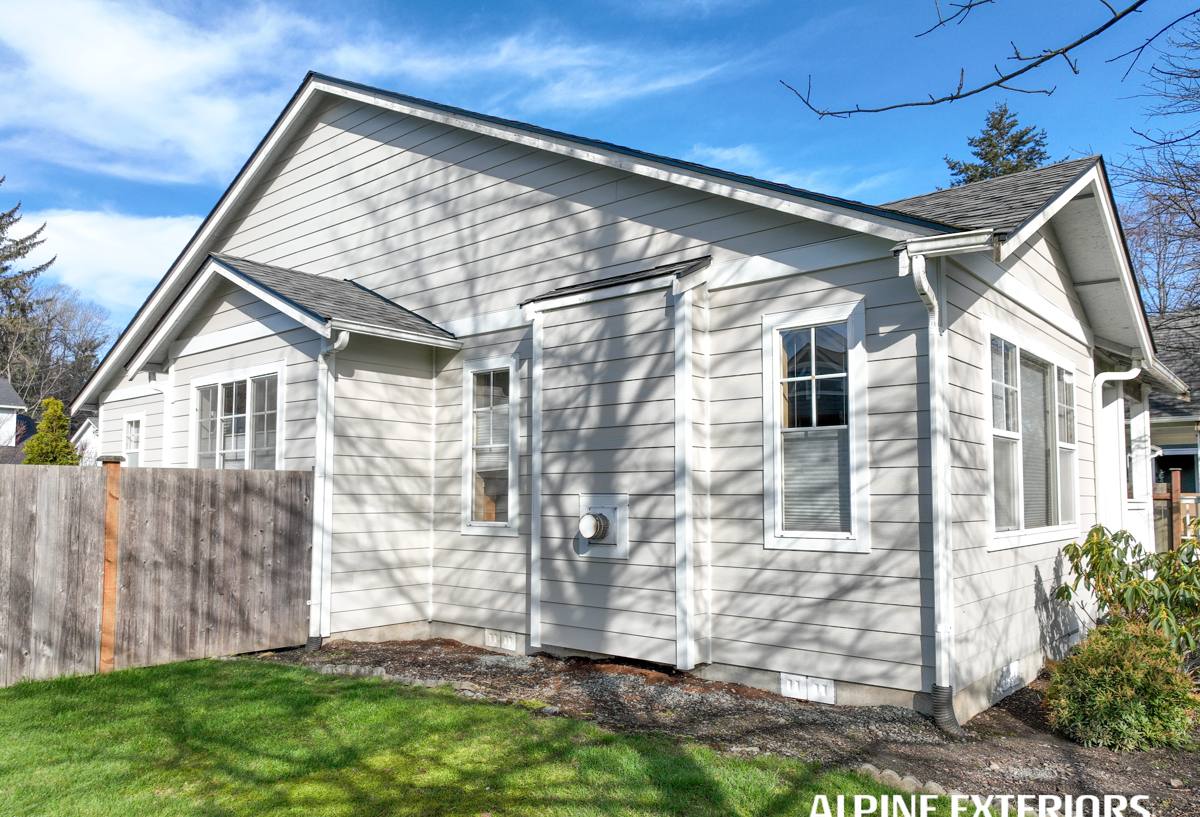
This page covers one job, done right, in one place: installing siding on homes in and around Drayton Harbor. Not a generic overview of siding in general, but the specific conditions this part of Semiahmoo deals with, what a correct installation has to account for, and how our process handles it.
What This Climate Does to Siding
Salt Air and Corrosion
Airborne salt off Drayton Harbor settles on exterior surfaces and accelerates corrosion of fasteners, flashing, and trim, especially on walls that face open water. On a lot of harbor-facing homes, the first sign of trouble isn't the siding panel itself — it's rusted fastener heads bleeding through the finish or corroded flashing at a window head, both of which point back to hardware that wasn't rated for this exposure.
Driving Rain
Wind coming off the water pushes rain horizontally into wall assemblies instead of letting it run straight down and drip off. That means laps, seams, and butt joints that would hold up fine in a calmer inland neighborhood need tighter tolerances here, because wind-driven rain finds gaps that gravity alone would never exploit.
A Long Moss Season
Whatcom County's marine layer keeps shaded, north-facing walls damp for long stretches of the year, and that sustained dampness is exactly what lets moss and algae take hold on siding, trim, and fascia. Once organic growth establishes itself on a porous or water-absorbent surface, it holds moisture against the wall and shortens the life of everything underneath — the sheathing, the framing, the paint.
What a Correct Installation Actually Involves
Siding is a system, not just a decorative skin. A crew that treats it as one panel nailed over another is the reason so many "new siding" jobs in wet coastal climates start showing problems within five to ten years. A correct installation on a Drayton Harbor home includes:
- A continuous, properly lapped weather-resistive barrier behind the siding — the actual waterproofing layer, with the siding as the first line of defense in front of it
- Correctly flashed windows, doors, and any wall penetrations, integrated with the barrier so water is directed out and down, never trapped behind trim
- A drainage gap or rainscreen approach on exposures that take the worst of the wind-driven rain, so any moisture that does get past the cladding can drain and dry instead of sitting against the sheathing
- Corrosion-resistant fasteners driven to the manufacturer's spec — the right length, spacing, and depth, not just "close enough"
- Factory-finished panels wherever possible, so the protective coating goes on before the material ever gets wet on site
- Caulking and sealant used only where the manufacturer specifies it, not as a substitute for proper flashing and lap details
None of this is exotic. It's standard, well-documented practice. The difference between a siding job that lasts and one that doesn't is almost always whether these steps were actually followed, not which brand of siding ended up on the wall.
Why We Only Install James Hardie Fiber Cement
We install James Hardie fiber cement siding exclusively. We don't install vinyl, LP SmartSide, Cemplank, Allura, primed spruce, or cedar. That's a deliberate standard, not a sales preference, and on a harbor-facing home it matters more than usual.
Fiber cement is non-combustible, which matters everywhere but carries extra weight for homes near dry summer vegetation. More relevant to Drayton Harbor specifically: Hardie's HZ5 product line is engineered for climates like ours, with freeze-thaw cycling, sustained moisture, and coastal exposure factored into the formulation. It doesn't swell, rot, or delaminate the way wood-based products can when they take on repeated moisture. And Hardie's ColorPlus factory finish is baked on under controlled conditions before the boards ever reach the jobsite, which gives it better fade and moisture resistance in salt air than a field-applied paint job can match — and it comes with its own finish warranty on top of Hardie's product warranty.
We're not going to tell you other products are junk. Vinyl is inexpensive and low-maintenance in mild climates. Engineered wood products have their place. But for a harbor-exposed home in Whatcom County, we've made the call that fiber cement's durability, non-combustibility, and factory-cured finish are worth the higher upfront cost, and we'd rather stand behind one product we trust completely than offer several we have reservations about.
Our Installation Process
- On-site assessment. We look at your home's specific exposure — which walls take the worst of the harbor wind and rain, where existing moisture or moss damage shows up, and what's happening behind the current siding wherever we can check.
- Tear-off and sheathing inspection. Old siding comes off and we inspect the sheathing underneath for rot or hidden moisture damage before anything new goes up. This step is where problems that have been building for years usually surface.
- Weather-resistive barrier and flashing. A new, continuous barrier goes on, with flashing detailed at every window, door, and penetration before a single piece of Hardie siding is installed.
- Hardie installation to spec. Panels or planks go up following James Hardie's fastening and clearance requirements exactly — not shortcuts, not "how we've always done it."
- Trim, caulking, and detail work. Corners, trim boards, and joints get finished according to manufacturer guidelines so the whole assembly works as one water-shedding system.
- Final walkthrough. We go over the finished job with you, point out anything you should keep an eye on over time, and answer questions before we consider the job done.
Comparing Materials for a Harbor-Exposed Home
Homeowners in Drayton Harbor often ask us to compare siding materials directly, since a lot of general advice online isn't written for a salty, wet, moss-prone coastal climate. Here's how the main options stack up against the conditions your home actually faces:
| Material | Salt Air / Moisture Performance | Moss & Algae Resistance | Ongoing Maintenance |
|---|---|---|---|
| James Hardie fiber cement | Engineered for wet coastal climates (HZ5); doesn't rot or swell | Resistant when properly finished and maintained | Low — factory finish holds up for years before repainting is needed |
| Vinyl siding | Doesn't rot, but can warp, crack, or fade in UV and temperature swings | Can trap moisture behind panels if installation gaps are wrong | Low, but damage often means full panel replacement, not spot repair |
| Cedar or untreated wood | Absorbs moisture; prone to swelling and rot in sustained damp exposure | Susceptible without regular treatment | High — regular sealing, staining, or painting required |
| Engineered wood (e.g., LP SmartSide) | Better than raw wood but still moisture-sensitive at cut edges and seams | Requires diligent sealing and upkeep at exposed edges | Moderate to high — edge sealing is critical and easy to miss |
Upfront cost isn't the only number that matters. A material that needs less repainting, fewer repairs, and no edge-sealing maintenance over a 20 or 30-year span often costs less in total than one with a lower sticker price and a longer maintenance list.
Signs Your Drayton Harbor Home May Need New Siding
- Persistent moss or dark streaking that comes back within a season or two of cleaning
- Soft, spongy, or bulging spots when you press on the siding, especially near the bottom courses or around windows
- Paint that's peeling, bubbling, or failing faster than it should, particularly on the wall facing the harbor
- Visible gaps, warping, or separation at seams and butt joints
- Rust staining running down from fastener heads or flashing
- Rising heating bills or noticeably drafty walls with no other obvious cause
- Interior signs like musty smells, discoloration, or damp drywall on exterior-facing walls
Any one of these on its own might be minor. Several showing up together, especially on the harbor-facing side of the house, usually means the wall assembly behind the siding is already compromised.
Why It Matters That We Already Work in Drayton Harbor
A crew that's worked on homes around Drayton Harbor before knows which walls take the worst of the wind and salt, how long the moss season really runs in a given year, and where past installations in the area have failed and why. That's not something you can fully replace with a general contractor working outside their usual territory, no matter how skilled they are elsewhere. Local experience shows up in small decisions — where to add extra flashing, which wall gets the tighter fastening schedule, how much drainage capacity a given exposure actually needs — and those small decisions are what separate siding that lasts thirty years from siding that needs attention in ten.
It also matters for the practical side of the job: knowing Whatcom County's permitting expectations, understanding how weather windows work along this part of the coast, and being realistic with you about scheduling around the rain rather than rushing an install in conditions that compromise it.
Get a Straight Answer About Your Home
If your siding is showing wear, or you just want an honest read on how much life it has left given what this climate does to a wall over time, we're glad to take a look. The estimate is free, there's no pressure attached to it, and you'll get a clear explanation of what we see and what we'd recommend — use the form below to get started.