 Semiahmoo Siding
 Drayton Harbor Homes Take a Different Kind of Beating
Homes near Drayton Harbor sit right where marine air, wind-driven rain, and a long, wet moss season all converge. That combination is harder on exterior siding than most homeowners realize until they're already dealing with soft trim, streaked paint, or panels that have started to cup and separate at the seams. Whatcom County's coastal microclimate isn't extreme in the way hurricane country is, but it's relentless — steady moisture exposure, salt-laden air off the harbor, and shaded, north-facing walls that rarely get a chance to fully dry out between storms.
Siding replacement in this area isn't just about swapping out something that looks tired. It's about correcting whatever let moisture in the first time, and choosing a product and installation method that can actually hold up to the specific conditions this stretch of coastline throws at a house year after year.
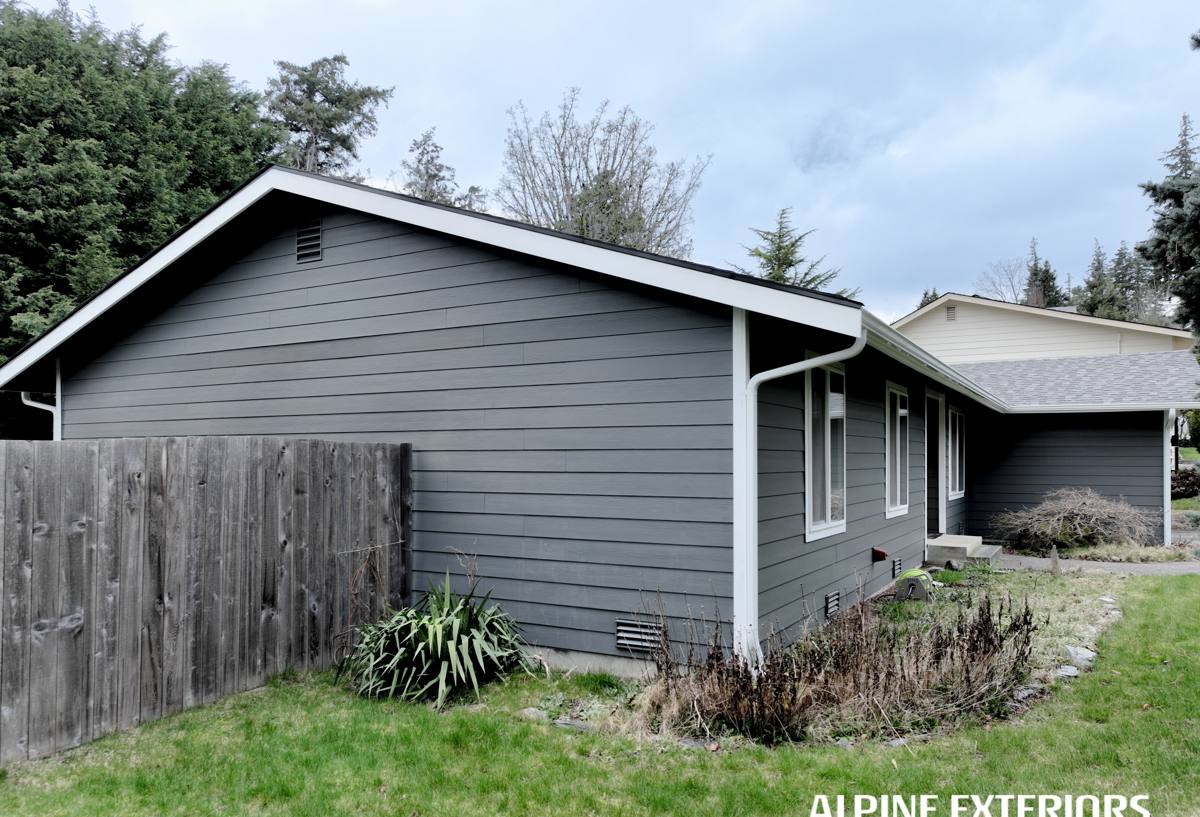
Why Salt Air, Rain, and Moss Wear Siding Out Faster Here
Salt Air
Airborne salt from Drayton Harbor and the surrounding waterways settles on exterior surfaces, accelerates the breakdown of paint films, and corrodes exposed fasteners and metal flashing over time. Siding that isn't rated or finished for coastal exposure tends to chalk, fade, and lose its protective coating years ahead of schedule.
Driving Rain
Storms coming off the water often arrive sideways, not straight down. That means rain gets driven up under laps, around window trim, and into any gap in the water-resistive barrier that a standard installation might get away with in a drier climate. Wall assemblies here need to be detailed for wind-driven rain, not just vertical drainage.
Moss and Prolonged Moisture
Shaded siding, north walls, and areas under tree cover stay damp for extended stretches during the fall and winter months. That prolonged dampness is exactly what moss, algae, and mildew need to take hold. Once organic growth establishes itself on a wall, it holds moisture against the surface even longer, which speeds up rot in any wood-based product underneath.
Signs a Drayton Harbor Home Is Overdue for Siding Replacement
Not every issue means a full replacement, but these are the signals we take seriously when we inspect a home in this area:
- Soft or spongy spots when you press on the siding, especially near the bottom courses or around windows and doors
- Persistent moss or dark streaking that comes back within a season or two of cleaning
- Visible cupping, buckling, or gaps opening up at panel seams
- Peeling or bubbling paint that keeps returning despite repainting
- Rust staining around nail heads or fasteners
- Interior signs like musty odors, peeling interior paint near exterior walls, or visible staining on sheathing during any interior work
- Siding that's original to a home built more than 20-25 years ago, particularly if it's a wood-based or composite product not rated for marine exposure
If a home shows two or more of these, it's usually a sign that moisture has already made its way past the surface and into the wall assembly — not just a cosmetic problem.
What a Correct Siding Replacement Actually Involves
Replacing siding correctly is a wall-system job, not a surface swap. Skipping any of these steps is how homes end up needing another replacement in half the time.
- Full tear-off and inspection — removing the old siding to expose the sheathing, checking for rot, delamination, or hidden water damage before anything new goes on
- Sheathing repair — replacing any compromised OSB or plywood rather than covering it up
- Water-resistive barrier — installing a continuous WRB with properly lapped and taped seams, which matters more here than in drier climates
- Flashing details — window heads, sills, deck ledgers, and any wall penetrations need flashing that sheds water outward, not just caulk
- Rain screen or drainage gap — a ventilated air gap behind the siding lets incidental moisture drain and dry instead of sitting against the back of the panel
- Correct fastening — following the manufacturer's fastener spec and spacing, with corrosion-resistant fasteners given the salt air exposure
- Factory-finished siding installed to spec — proper clearances at grade, decks, and roof lines so the material never sits in standing water or gets buried by mulch or soil
Any one of those steps done wrong can undercut everything else — a great siding product installed over a bad WRB detail, or on top of unaddressed rot, will fail regardless of the brand on the panel.
Why We Install Only James Hardie Fiber Cement
We don't offer vinyl, LP SmartSide, Cemplank, Allura, primed spruce, or cedar. That's a deliberate standard, not a lack of options. Every one of those products has legitimate strengths, but in a climate defined by salt air, driving rain, and a long moss season, they each carry trade-offs we're not willing to install and stand behind:
| Product | What it does well | Why it's a harder fit here |
|---|---|---|
| Vinyl siding | Low upfront cost, no painting | Can warp or fade with sun and temperature swings; seams and J-channels give wind-driven rain more paths inward; not repairable in sections without visible mismatch |
| LP SmartSide | Engineered wood, easier to install than solid wood | Wood-based core is more moisture-sensitive at cut edges and butt joints than fiber cement; needs diligent caulking and paint maintenance in a wet climate |
| Cemplank / Allura | Fiber cement, similar category to Hardie | Different formulation and factory finish options; we standardized on one manufacturer's engineered climate lines and warranty system rather than mixing brands |
| Primed spruce or cedar | Natural look, traditional appeal | Highest maintenance burden of any option — regular repainting or resealing, most vulnerable to rot and insect damage in prolonged damp conditions |
| James Hardie fiber cement | Non-combustible, factory-cured ColorPlus finish, engineered HZ product lines | Heavier and more labor-intensive to install correctly, which is why installer experience matters |
James Hardie's fiber cement is cement, sand, and cellulose fiber — it doesn't rot, it doesn't feed moss the way wood fiber can, and it holds paint far longer because the ColorPlus finish is baked on at the factory rather than applied on site. Hardie also engineers specific product lines (HZ5 and similar) for regions with cold, wet, humid conditions, which matches this part of Whatcom County better than a one-size-fits-all product. The transferable warranty on both the substrate and the factory finish gives homeowners real backing if something does go wrong down the line — something none of the alternatives above match as a complete package.
How Our Process Works
Every job starts with a walk-around of the exterior, not just a quote. We're looking at where the house takes the worst weather, where moss and algae keep coming back, and where the existing siding or trim shows early signs of moisture damage.
- On-site assessment — full exterior walkthrough, including problem areas the homeowner may not have flagged
- Written estimate — a clear scope of work and product selection, no vague allowances
- Tear-off and sheathing check — nothing gets covered up before we've looked at what's underneath
- WRB, flashing, and rain screen installation — the details that actually keep water out
- Hardie siding installation to manufacturer spec — correct fastening, clearances, and joint treatment
- Final walkthrough — reviewing the finished work with the homeowner before we consider the job done
What Siding Replacement Typically Costs to Plan For
Every home is different, but these are the main factors that move the price on a siding replacement in this area — we'll give you specific numbers after seeing the house.
| Factor | Why it affects cost |
|---|---|
| Home size and wall complexity | More square footage, corners, and roof lines mean more material and labor |
| Extent of hidden damage | Rotted sheathing or framing found during tear-off adds repair work beyond the siding itself |
| Siding profile and trim detail | Lap width, board-and-batten, and trim complexity all change labor time |
| Access and site conditions | Waterfront lots, steep grades, or limited access can add setup and staging time |
| Number of stories | Multi-story homes require more scaffolding and safety setup |
Why Hiring a Crew That Already Works Drayton Harbor Matters
Installing fiber cement siding correctly is a skill that shows up most in the details a homeowner never sees once the job is finished — how the flashing is lapped, how tight the drainage plane is, how fasteners are spaced and set. A crew that regularly works this specific stretch of coastline already knows which walls take the worst of the driving rain, where moss tends to establish first, and how to detail around the moisture patterns this area produces year after year. That familiarity shows up in fewer callbacks and a wall system that's actually built for the conditions it has to survive, not just installed to a generic spec sheet.
Keeping Your New Siding Looking Right
Even the right product needs a small amount of upkeep in this climate. A rinse-down once or twice a year helps keep salt residue and early moss growth from building up, and keeping gutters clear reduces the amount of water running down the face of the siding during heavy storms. Trimming back vegetation that shades and dampens walls also helps slow moss regrowth. None of this is heavy maintenance — it's the kind of light upkeep that lets a correctly installed Hardie system reach its full lifespan.
If your siding is showing wear, or you're just planning ahead for a home near Drayton Harbor, we're happy to take a look and give you a straightforward, no-pressure estimate — use the form below to get started.