 Semiahmoo Siding
 Why Bellingham Windows Wear Out Faster Than the Brochure Says
Most window marketing is written for a generic American house — dry summers, mild winters, a rain gutter that only has to deal with the occasional storm. That's not Bellingham. Between the salt-laden air coming off the water, the near-constant drizzle and driving rain off Semiahmoo, and a moss season that can run eight months out of the year, windows here take on moisture, grime, and slow corrosion in ways that don't show up in a national warranty test. A window that's "energy-efficient" on paper but poorly sealed or badly flashed for this climate will still leak air, fog between the panes, and let moss and algae creep into the frame corners within a few winters.
When we talk about energy-efficient windows for Bellingham homes, we're talking about two things at once: the glass package that actually cuts heat loss in a marine climate, and the installation details that keep water out of the wall so that efficiency lasts. Get either one wrong and you've spent real money on a window that underperforms or fails early.
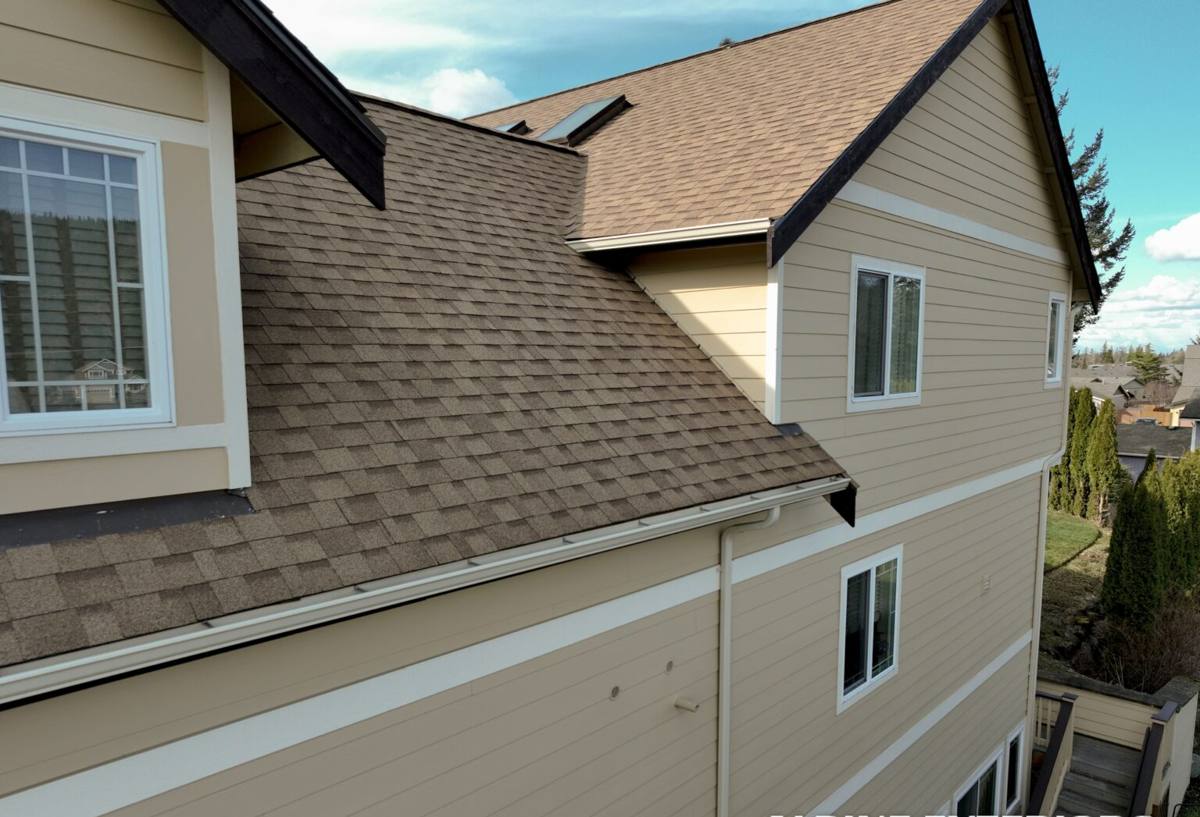
What the Climate Actually Demands from a Window
Salt air and corrosion
Being close to the water means airborne salt settles on everything — including window hardware, screen frames, and exposed fasteners. Cheaper hinges, latches, and cranks corrode faster here than they would twenty miles inland. We look for hardware rated for coastal exposure, not just standard residential grade, and we pay attention to what metal is used where the frame meets exterior trim.
Driving rain and wind-driven water
Whatcom County storms don't just fall straight down — wind off the strait pushes rain sideways into window walls, especially on west- and south-facing elevations. A window can have a great energy rating and still fail if the flashing and sill pan underneath it weren't built to shed wind-driven water. This is where most window "efficiency" problems actually start: not bad glass, but water getting behind the frame and rotting the sheathing, which then lets air infiltrate around the unit.
Moss, algae, and prolonged dampness
A long moss season means anything horizontal or shaded stays damp longer — including window sills and the bottom of frames. Moisture that lingers on a sill instead of draining away is what eventually swells wood trim, stains vinyl, and works its way into weep holes not designed to handle sustained buildup. Efficient windows in this climate need to dry out fast between rain events, not just resist the rain itself.
What "Energy-Efficient" Actually Means for a Marine Climate
Energy efficiency isn't a single number — it's a combination of ratings that matter differently depending on climate. For Bellingham's mild, wet, moderately cool climate, the priority order is a little different than it would be in a hot, dry state.
| Rating | What it measures | Why it matters here |
|---|---|---|
| U-Factor | How much heat escapes through the window | Most important rating for our winters — lower is better for keeping heat in |
| Solar Heat Gain Coefficient (SHGC) | How much solar heat passes through the glass | Moderate SHGC is usually fine here — we don't have the intense summer sun that demands very low SHGC glass |
| Air Leakage (AL) | How much air passes through the assembly at rest | Directly tied to installation quality, not just the window unit itself |
| Condensation Resistance | How well the window resists interior condensation | Relevant in our humid, cool climate where interior fogging is common |
For most Bellingham homes, a dual-pane, low-E, argon-filled window with a solid vinyl or fiberglass frame hits the right balance of performance and cost. Triple-pane can make sense for a north-facing wall that catches the worst of the wind, but it's not automatically the right call for every elevation — we'll tell you honestly where the upgrade pays off and where it doesn't.
Frame Material: What Holds Up Here
- Vinyl — Good value, low maintenance, doesn't corrode. Quality varies a lot between manufacturers, so we're selective about which lines we install.
- Fiberglass — More dimensionally stable in temperature swings, holds paint well, generally the strongest long-term option for coastal exposure, at a higher price point.
- Aluminum — Not our default recommendation for this climate. It conducts heat and cold efficiently, which works against energy efficiency, and it's more prone to condensation on the interior in a cool, humid environment. We'll still discuss it if a homeowner has a specific reason to want it, but we're upfront about the trade-off.
- Wood-clad — Attractive and traditional, but the maintenance burden in a wet, salt-air climate is real — we make sure homeowners understand the upkeep before committing.
Our Installation Process for Bellingham Homes
1. Assessment and measurement
We start by looking at each opening individually — not every window on a house faces the same exposure. A window on the weather side dealing with driving rain needs different flashing attention than one tucked under an eave on the leeward side.
2. Removing the old unit and inspecting the opening
This is the step that gets skipped by crews trying to move fast, and it's the one that matters most here. Once the old window is out, we check the sheathing and framing underneath for moisture damage, soft wood, or signs that water has been getting in around the old unit — which is common in older Bellingham homes that have weathered a lot of wet seasons.
3. Sill pan and flashing
We install a sloped sill pan and integrate flashing with the house wrap or building paper so that any water that does reach the window sheds outward and down, not into the wall cavity. This is the single most important step for making sure an energy-efficient window actually stays efficient — and dry — for the long run.
4. Setting, shimming, and sealing
The window gets shimmed level and square, fastened per manufacturer spec, and sealed with the right sealants and backer rod — not just a bead of caulk around the outside. Air sealing at the rough opening is where a lot of drafts actually originate, even with a top-rated window.
5. Interior and exterior finish
Trim, casing, and exterior detailing are finished to match the home, and we walk the homeowner through operation and basic maintenance before we consider the job done.
Signs Your Bellingham Home's Windows Are Underperforming
- Visible fog or moisture between the panes (failed seal)
- Noticeable draft near the frame even when the window is closed and locked
- Condensation forming on the interior glass or frame regularly, especially in cooler months
- Soft or discolored trim or sill wood, or paint that keeps bubbling in the same spot
- Moss or algae growth on or around the frame that keeps coming back
- Hardware that's stiff, corroded, or hard to operate
- A noticeable difference in room temperature near the window compared to the rest of the room
Cost Factors to Expect
We don't publish flat per-window pricing because the real cost depends heavily on the specifics of each opening — but the factors that move the price are consistent.
| Factor | Impact on cost |
|---|---|
| Frame material (vinyl vs. fiberglass vs. wood-clad) | Fiberglass and wood-clad run higher than standard vinyl |
| Glass package (dual-pane vs. triple-pane, coatings) | Triple-pane and specialty coatings add cost, best targeted at high-exposure walls |
| Condition of the existing opening | Water damage or rot found during removal adds repair time before the new window can go in |
| Retrofit vs. full-frame replacement | Full-frame replacement (removing exterior trim, replacing flashing) costs more but is often the right call on older homes |
| Number of openings and access | Second-story or hard-to-access windows take more time and equipment |
We'll always give you a clear, itemized estimate before any work starts, and we'll flag anything we find once the old window is out that changes the scope — no surprise add-ons buried at the end.
Why Hire a Crew That Already Works Bellingham and Semiahmoo
Window installation looks similar everywhere on the surface, but the details that make a window actually perform — flashing integration, sill pan slope, hardware selection, sealant choice — need to be tuned to the specific conditions the window will face. A crew that installs windows across a range of climates may not think twice about wind-driven rain exposure or salt-air hardware corrosion, because it's not something they deal with every week. Working Bellingham and the Semiahmoo area regularly means we've seen how local homes age, what fails first, and what actually holds up through a full wet season — not just what a spec sheet promises.
Get a Free, No-Pressure Estimate
If your windows are drafty, fogging, or just overdue, we're happy to take a look and give you an honest read on what your home actually needs — no pressure, no upsell on options that don't make sense for your exposure. Use the form below to request a free estimate for energy-efficient window replacement in Bellingham or Semiahmoo.