 Semiahmoo Siding
 Ferndale Roofs Work Harder Than People Realize
Ferndale sits close enough to the water that salt-laden air is a constant, low-grade stressor on exposed building materials, and far enough into Whatcom County's wet belt that roofs here spend a good chunk of the year damp rather than dry. That combination — airborne salt plus sustained moisture plus a long, mild moss season — is a different load than what a roof in a drier inland climate deals with. It doesn't show up as one dramatic failure. It shows up as fasteners corroding a few years early, granule loss accelerating on sun-exposed slopes, and moss quietly working its way under shingle tabs on the north-facing roof sections that never fully dry out between rains.
When we replace a roof in Ferndale, we're not just swapping old shingles for new ones. We're accounting for how this specific stretch of Whatcom County treats a roof over 20-25 years, and building in the details that make the difference between a roof that ages gracefully and one that needs attention again in year eight.
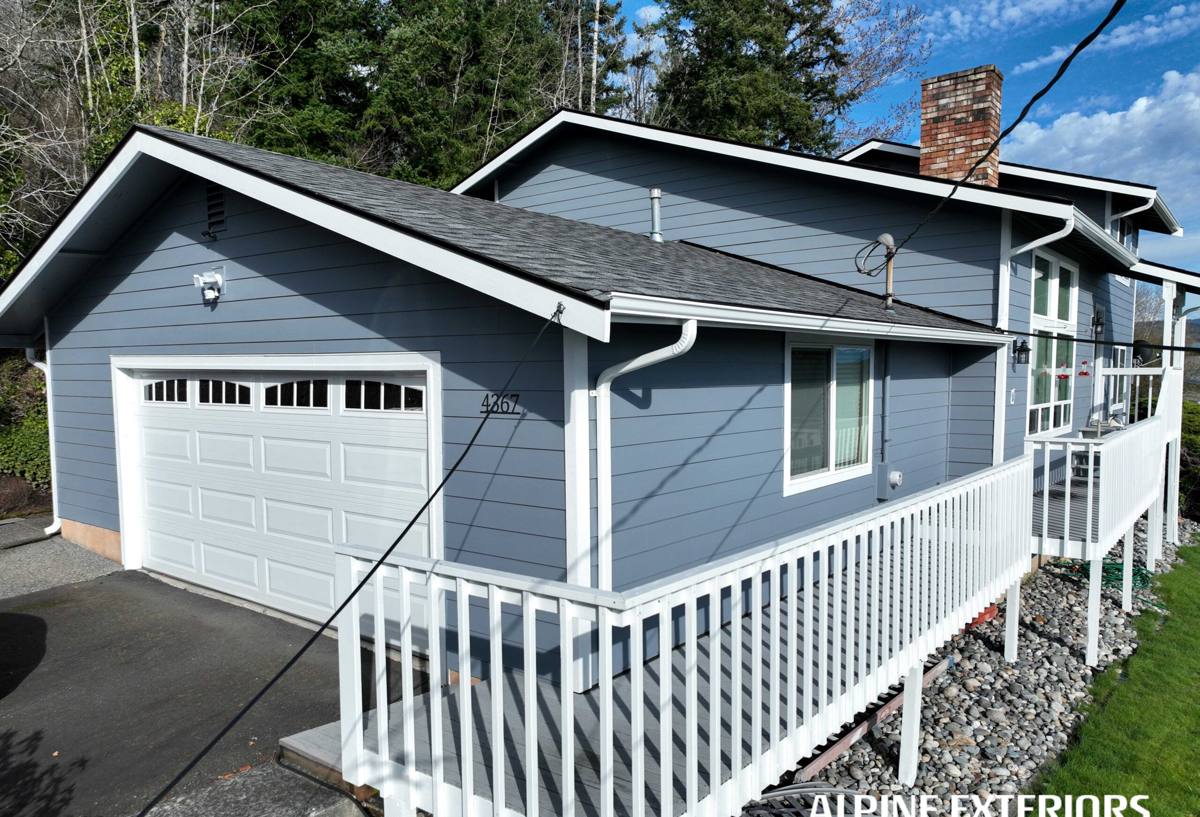
Signs a Ferndale Roof Needs Replacement, Not Another Repair
A lot of roofs get patched two or three times before anyone steps back and asks whether patching still makes sense. Here's how we think about that line.
Repair Still Makes Sense When
- The damage is isolated to one slope, one penetration, or a single storm event
- The roofing material is under roughly 15 years old and otherwise in good shape
- The decking underneath is confirmed sound, with no soft spots or staining
- There's no widespread granule loss or curling across multiple slopes
Replacement Is the Honest Answer When
- Moss has established on multiple slopes and keeps returning after cleaning
- Shingles are curling, cupping, or losing granules broadly rather than in one spot
- You've had two or more leak repairs in different spots within a few years
- Flashing around chimneys, skylights, or valleys is rusted, lifted, or was never properly stepped
- The roof is past 20-25 years and you're planning to stay in the home long-term
Moss deserves its own mention here because it's so common on shaded, north-facing Ferndale roofs. A light moss film that gets cleaned annually isn't an emergency. Moss that's thick enough to hold water against the roofing surface, or that's lifted shingle edges as it grows, has usually already done damage to the layer underneath — even if the shingles themselves still look intact from the ground.
What a Correct Roof Replacement Actually Involves
"Roof replacement" gets treated like a simple swap, but the parts that matter most for a wet coastal climate are the ones you can't see once the job is done.
Full Tear-Off, Not a Layover
We remove the existing roofing down to the deck rather than installing a second layer over the old one. A layover traps moisture, hides deck problems, and shortens the life of whatever goes on top of it. It's also a bad idea structurally — two layers of shingles is real added weight, and it makes the eventual next tear-off twice the job.
Deck Inspection and Repair
With the old material off, we can actually see the decking. In a climate where roofs stay damp for long stretches, it's common to find soft or delaminated sheathing around old leak points, valleys, or plumbing vents — even on roofs that never had an obvious interior leak. Any compromised decking gets replaced before anything new goes down. Skipping this step is the single most common shortcut that leads to a "new" roof failing early.
Underlayment Built for Wet Climates
We use synthetic or ice-and-water underlayment in the areas that see the most moisture exposure — eaves, valleys, and around penetrations — rather than relying on standard felt alone across the board. In a region with driving rain and wind-blown moisture, the underlayment is doing real work, not just serving as a backup.
Flashing Done Properly
Chimneys, skylights, valleys, and wall-to-roof transitions are where most leaks actually originate — not in the open field of shingles. Correct step flashing, counter-flashing, and valley metal, properly integrated with the underlayment (not just caulked over old flashing), is non-negotiable on every replacement we do.
Ventilation That Matches the Home
Balanced intake and exhaust ventilation keeps the attic space closer to outdoor temperature and humidity, which reduces condensation on the underside of the deck and slows moss growth on the roof surface above shaded areas. We evaluate existing ventilation as part of every replacement rather than assuming what's there is adequate.
Choosing a Roofing Material for Whatcom County Conditions
There's no single "best" roofing material — the right choice depends on budget, roof pitch, how long you plan to stay in the home, and how much moss/moisture exposure the specific roof gets. Here's how the common options actually compare for a Ferndale property.
| Material | Typical Lifespan Here | Moss/Moisture Behavior | Trade-offs |
|---|---|---|---|
| Architectural asphalt shingle | 20-30 years | Good with proper ventilation and periodic cleaning; algae-resistant granule options help | Best value; wide color range; needs occasional moss maintenance on shaded slopes |
| Standing seam metal | 40-50+ years | Sheds moisture fast, very moss-resistant on its own | Higher upfront cost; requires an experienced installer for watertight seams and flashing |
| Composite/synthetic shake | 30-50 years | Better moisture resistance than natural wood shake with a similar look | Mid-to-upper cost; product quality varies by manufacturer |
| Natural cedar shake | 20-30 years with diligent upkeep | Absorbs and holds moisture, which is exactly what accelerates moss and rot in this climate | We're honest with clients that cedar shake carries a real maintenance burden here — it's not that the product is bad, it's that our climate is hard on any wood roofing product |
For most Ferndale homes, architectural asphalt shingle remains the practical choice — it balances cost, appearance, and performance well when it's installed with the moisture-management details above. Metal earns its higher price tag on steeper, harder-to-access roofs or for homeowners planning to stay put for decades.
Our Replacement Process
- On-site inspection and estimate. We walk the roof (or use a drone where pitch or access requires it), check the attic for ventilation and moisture signs, and give you a written scope and price — no pressure, no upsell tactics.
- Material selection. We go over the options above against your budget and priorities, and help you land on a spec that fits the home and the roof's specific exposure.
- Scheduling around weather. Given how much rain Whatcom County sees, we plan tear-off and dry-in around forecast windows so your home isn't sitting open to the weather longer than necessary.
- Tear-off and deck inspection. Full removal, deck assessment, and any necessary sheathing repair, documented before we close it back up.
- Underlayment, flashing, and ventilation installation. The parts that determine how the roof performs in year 10, not just how it looks on day one.
- Roofing material installation to manufacturer spec, which matters for keeping your material warranty valid.
- Final walk-through and cleanup, including a magnetic sweep for stray nails and haul-away of all old material.
What Drives the Cost of a Ferndale Roof Replacement
Every roof is different, so we won't quote a number without seeing yours — but these are the factors that actually move the price, so you know what you're paying for.
| Factor | Why It Matters |
|---|---|
| Roof size and number of planes | More square footage and more valleys/hips mean more material and labor |
| Pitch and access | Steep or hard-to-access roofs require more safety setup and slow the work down |
| Existing layers and deck condition | A single-layer tear-off with sound decking costs less than one needing sheathing replacement |
| Material choice | Asphalt, composite, and metal carry meaningfully different material costs |
| Penetrations and flashing complexity | Chimneys, skylights, and multiple vents all add flashing detail work |
| Ventilation upgrades | Adding or correcting intake/exhaust venting is a worthwhile add if the current system is inadequate |
Broadly, expect a straightforward asphalt shingle replacement on an average-size home to run into the mid-five-figures, with metal or composite running higher and more complex rooflines pushing either option up further. We'll always give you the specific number in writing before any work starts.
Why a Crew That Already Works in Ferndale Makes a Difference
Roofing crews that mostly work drier climates sometimes under-spec ventilation and moisture protection because it hasn't burned them yet. A crew that's replaced roofs across Whatcom County season after season has already seen which details actually prevent callbacks here — where moss tends to establish first, which flashing details fail under sustained wind-driven rain, and how much intake ventilation a typical attic here actually needs versus what a generic spec sheet assumes. That local pattern recognition doesn't show up on a materials invoice, but it shows up in how the roof performs in year 12.
It also matters for permitting and scheduling — knowing the local permitting process and being realistic about weather windows keeps a project from dragging on or getting rushed into a bad forecast day.
After Your New Roof Goes On
A new roof still benefits from basic upkeep, especially in this climate. A short annual routine goes a long way toward getting full value out of the investment:
- Clear gutters and downspouts at least twice a year, more often under overhanging trees
- Have moss growth addressed early on shaded slopes, before it lifts shingle edges
- Keep an eye on flashing around chimneys and skylights after major windstorms
- Trim back branches that overhang the roofline to reduce shade, debris, and moss pressure
- Schedule a quick visual inspection every few years, even with no visible problems
If you're seeing moss buildup, granule loss, or you're simply past the point where another patch makes sense, we're happy to take a look and give you a straightforward, no-pressure estimate for what a proper roof replacement would involve for your home. Use the form below to get started.