 Semiahmoo Siding
 Deck Repair in Laurel: Not the Same Job as a Quick Board Swap
Laurel sits inland from the water, in the same stretch of Whatcom County where Semiahmoo and the rest of the Blaine-area coastline shape the region's weather. Homes here don't take the direct salt spray that waterfront properties do, but they sit under the same marine air mass, the same long stretch of wet months, and the same moss pressure that defines exterior maintenance across this part of the county. A deck built or repaired without accounting for that combination tends to look fine for a season or two and then start failing in ways that are more expensive to fix than they would have been to prevent.
Deck repair done right in Laurel starts with telling the difference between a problem that's cosmetic and one that's structural, because the fix for each is completely different and mixing them up either costs a homeowner money on unnecessary work or leaves a real safety issue sitting under their feet. This page covers what actually goes wrong with decks in this area, what a correct repair involves, how we approach the work, and why a crew that already works this part of Whatcom County catches things a crew unfamiliar with it might not.
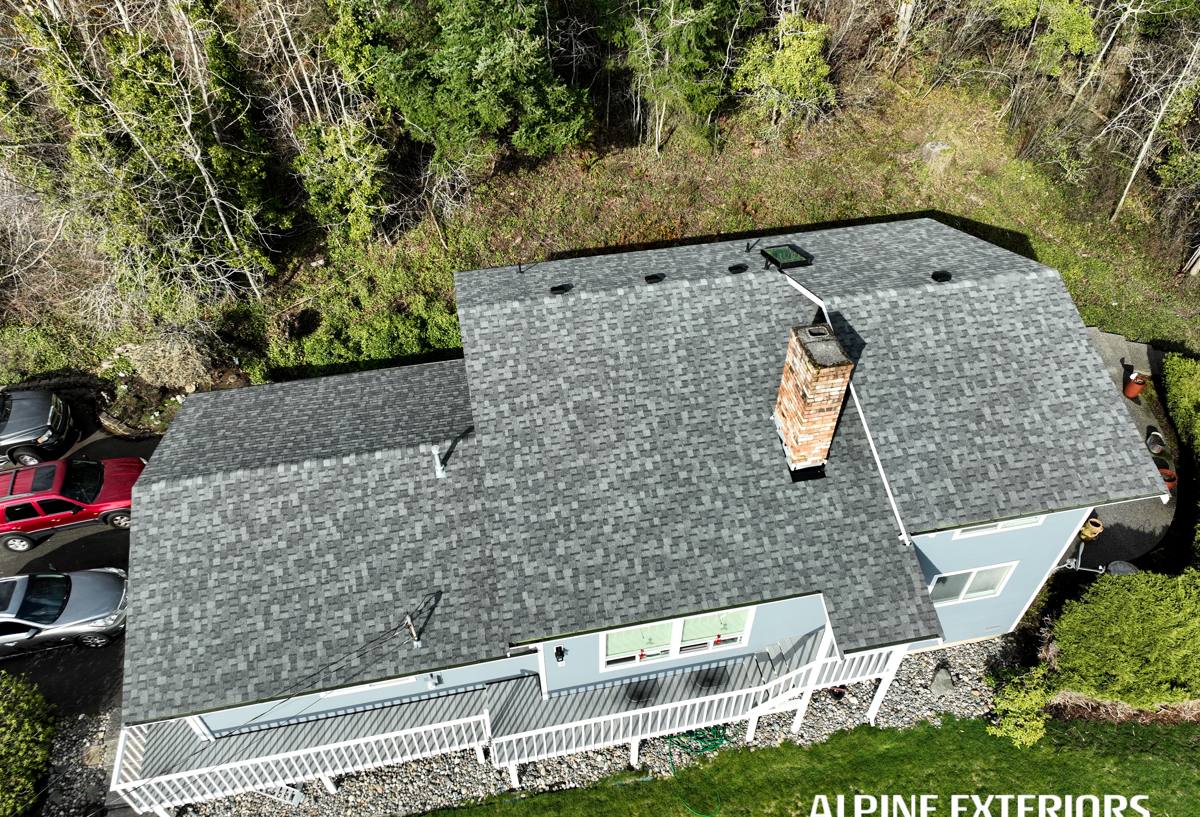
What Actually Damages Decks in This Area
A Long Moss and Mildew Season
Mild temperatures, steady humidity, and shaded or tree-lined lots add up to a moss and mildew season in this part of Whatcom County that runs most of the year, not just through the wet months. On decks, moss and algae take hold fastest on boards that don't get much direct sun and on any surface where standing moisture lingers between rains. Beyond the slip hazard, moss and mildew hold moisture directly against wood fibers and against the cap layer of composite boards, which speeds up the deterioration underneath long before it's visible from the top.
Driving Rain and Sustained Wet Weather
This region doesn't just get a lot of rain — it gets extended stretches of it, often pushed by wind that drives moisture into joints, board gaps, and ledger connections rather than letting it run straight off. That matters more at the points where a deck meets the house and where boards butt against framing, since those are the spots least able to dry out between storms. A deck that handles a normal rain fine can still develop rot at a ledger connection or a stair stringer simply because that one spot never gets a real chance to dry.
Marine-Influenced Humidity
Even set back from the immediate shoreline, homes in Laurel sit within the same marine-influenced climate that shapes decks all along the Semiahmoo and Blaine coastline. That means persistent ambient humidity and slower drying times compared to drier inland regions of the state, which is part of why moss and moisture problems show up here on a longer timeline than they would east of the Cascades. Fasteners and hardware that would be fine in a dry climate can still corrode gradually under these conditions, especially where they're in direct contact with damp wood.
Seasonal Wetting and Drying Cycles
Wood and wood-based framing expand when wet and contract as they dry, and in this climate that cycle repeats constantly rather than happening a few times a year. Over time, that movement works fasteners loose, opens gaps at board ends, and stresses connections at joists and ledgers. It's a slow, cumulative process, which is exactly why deck problems here tend to show up gradually as squeaks, minor movement, or small gaps rather than all at once.
Cosmetic Wear vs. Structural Problems
Not every symptom on an aging deck calls for the same response, and telling the two apart correctly is the real job of an honest repair estimate.
| Symptom | Usually Cosmetic | Often Structural |
|---|---|---|
| Gray, weathered wood surface | Yes — sun and weathering | Only if boards are also soft or splitting |
| Moss or algae film on the surface | Yes, if boards underneath are still sound | Can mask rot if left untreated for a long time |
| Squeaking or slight bounce underfoot | Sometimes — loose board fasteners | Often — loosened joists or hangers |
| Soft or spongy decking | No | Yes — moisture damage below the surface |
| Railing that flexes or wiggles | Rarely | Usually — loose posts or failing connections |
| Gap or separation where deck meets house | No | Yes — ledger connection needs prompt attention |
Signs Worth a Closer Look
- Discoloration or staining around fastener heads, which can mean corrosion is active underneath
- A stair stringer or post base that feels less solid than the rest of the deck
- Boards that stay damp or dark longer than the rest of the deck after a rain
- Any visible daylight or separation at the ledger board where the deck attaches to the house
- Moss that keeps returning to the same spot within weeks of cleaning
What a Correct Deck Repair Involves
A real repair starts underneath, not on top. Before touching any decking boards, we check the framing — joists, ledger connection, posts, and footings — because that's the structure everything else depends on, and it's usually where the more serious problems actually live. Surface-level fixes on top of compromised framing don't hold, and they hide the real issue for another season instead of solving it.
Framing and Structural Connections
This includes checking joists and beams for soft spots or rot, verifying the ledger board is properly flashed and fastened where it meets the house, and confirming joist hangers and structural connectors haven't corroded or pulled loose. In this climate, the ledger connection is one of the most common failure points we find, because it's a joint that stays damp longer than open-air framing and takes on stress every time someone walks or sets furniture near the house side of the deck.
Decking and Surface Repair
Once the structure underneath is sound, surface repair covers replacing rotted, cupped, or moss-damaged boards, addressing loose or corroded fasteners, and dealing with any moss or mildew buildup at the source rather than just cleaning the surface. On wood decks, that can mean sanding and refinishing sound boards while replacing failed ones. On composite or PVC decking, it usually means replacing damaged boards outright, since those materials aren't designed to be refinished the way wood is.
Railings and Guards
Railings take constant hand contact and lateral stress, and in a wet climate the posts and connection hardware are often the first parts of a railing system to loosen or corrode. A wobbly railing isn't just an inconvenience — it's a safety issue, and it's one of the more common repairs we get called out for on decks that otherwise look in decent shape.
Fasteners and Hardware
Fastener choice matters more here than in a drier climate. We use corrosion-resistant fasteners and connectors rated for sustained outdoor moisture exposure, matched to whatever decking material is being repaired, since mismatched metals or undersized hardware are a common reason repairs fail early.
Repair or Replace: How We Make That Call
Not every deck problem calls for a full rebuild, and not every deck is worth patching indefinitely either. The honest answer usually comes down to where the damage is concentrated and how much of the structure is still sound.
| Factor | Leans Toward Repair | Leans Toward Replacement |
|---|---|---|
| Framing condition | Joists and ledger are solid; issues are localized | Widespread rot or corrosion in the structural framing |
| Decking material | Wood that can be sanded and refinished; a few failed boards | Older composite that's degraded broadly or discontinued |
| Age of the deck | Newer deck with an isolated issue | Older deck already near the end of its practical service life |
| Extent of moisture damage | Contained to one area, like a stair or railing section | Found in multiple structural locations across the deck |
We'll tell a homeowner directly when a repair is the right call and when it's genuinely time to replace, rather than defaulting to whichever job is bigger.
Our Process
We start with an on-site inspection that looks past the visible surface — checking framing, ledger connections, fasteners, and drainage, not just the boards a homeowner can see from the yard. From there, we put together a clear, written scope that separates what's structural from what's cosmetic, so the homeowner knows exactly what they're paying for and why. Repairs are done to hold up under this area's wet, moss-prone conditions specifically, using fastener grades and detailing suited to sustained moisture exposure rather than a generic repair approach. We're straightforward throughout about what actually needs doing versus what's optional.
Why a Crew That Already Works This Area Matters
A contractor unfamiliar with this part of Whatcom County can still make a competent repair, but they're more likely to miss the details that are specific to how moss, moisture, and marine-influenced humidity behave here versus a drier part of the state. Working this area regularly means knowing which fastener grades hold up, how long moss problems typically take to become structural if ignored, and where ledger and framing issues tend to show up first in this climate. That familiarity shows up less in the big obvious repairs and more in the smaller judgment calls — catching a soft spot before it spreads, or knowing a board's discoloration is worth a second look rather than just a wash.
A Simple Checklist Before Hiring for Deck Repair
- Ask whether they inspect the framing and ledger connection, not just the visible decking boards
- Confirm they carry current Washington contractor licensing and active liability insurance
- Ask what fastener and hardware grade they use for sustained moisture exposure
- Ask them to separate cosmetic recommendations from structural necessities in writing
- Get a clear, written scope of work before signing anything
If you're dealing with a soft board, a wobbly railing, or just want an honest read on what your Laurel deck actually needs, we're happy to take a look and walk you through it plainly. Reach out below for a free, no-pressure estimate.