 Semiahmoo Siding
 Roof Replacement in Marietta: Built for This Coastline
Marietta sits close enough to the water that salt air is just part of daily life, and that changes how a roof ages here compared to a home twenty miles inland. Add in Whatcom County's long wet season, near-constant driving rain off the Strait, and the shade cover that keeps moss thriving on north-facing slopes for most of the year, and you've got a roofing environment that punishes shortcuts fast. A roof replacement done right in Marietta isn't just about swapping old shingles for new ones — it's about choosing materials and installation details that actually hold up to salt, moisture, and moss pressure year after year.
We work on homes in this specific pocket of Whatcom County regularly, and the patterns repeat: fasteners that corrode faster than they should, underlayment that was never rated for this much sustained moisture, and moss that's been left to grow into shingle mats until it's lifting tabs and trapping water underneath. None of that is unusual for the area — it's just what happens when a roof isn't specified or maintained for a coastal, high-rainfall climate.
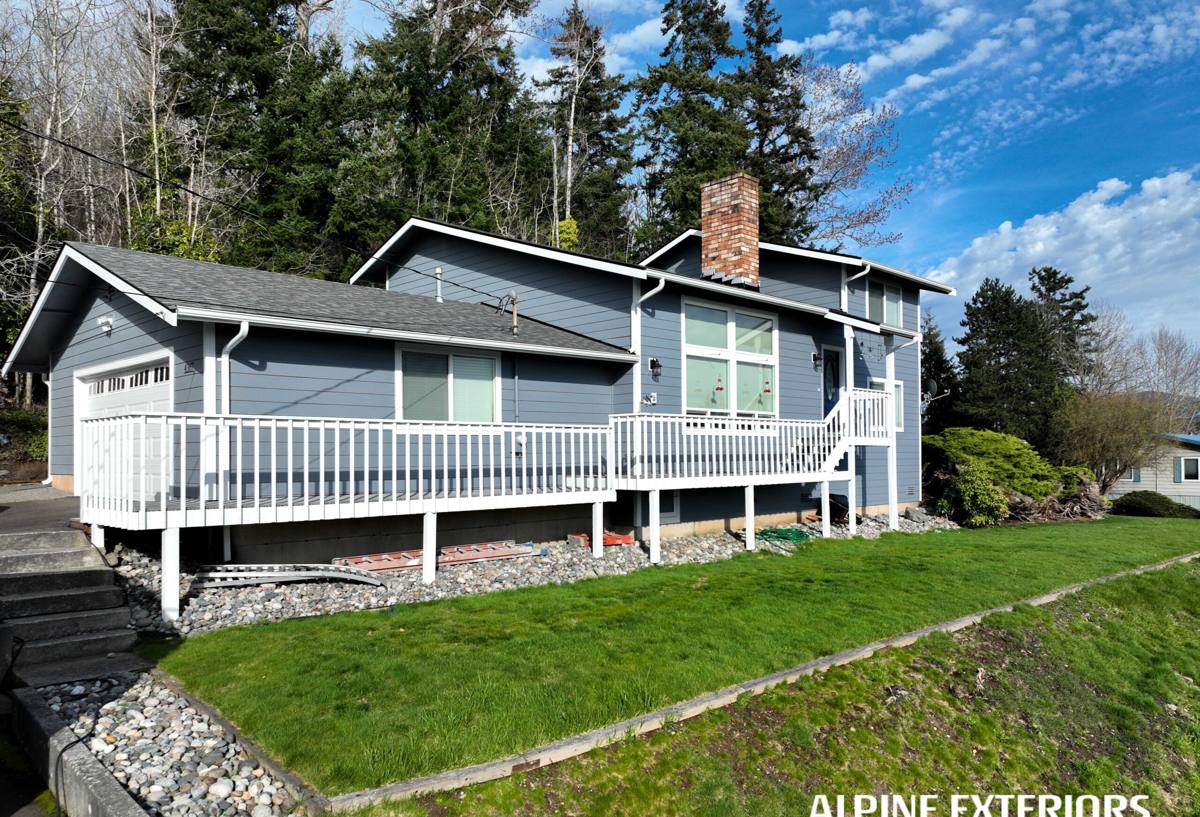
What Marietta's Climate Actually Does to a Roof
Salt Air and Metal Fatigue
Airborne salt accelerates corrosion on anything metal — flashing, fasteners, vent boots with metal collars, and gutter hardware. Standard galvanized fasteners can start showing rust streaks and weakening well before a roof's expected lifespan is up. This is one of the most overlooked details in a roof replacement: the shingles might be rated for 30 years, but if the fasteners holding them down are corroding in 12, the whole system fails early.
Driving Rain and Wind-Driven Water
Rain here doesn't always fall straight down. Storms off the water push rain sideways, which means it can work its way under shingle edges, around poorly sealed penetrations, and into gaps that would never leak in a calmer climate. Roofs in Marietta need underlayment and flashing details that assume water will be forced uphill and sideways at some point, not just downhill with gravity.
Moss and Shade
Tree cover and persistent damp conditions make Marietta prime territory for moss growth, especially on north- and west-facing roof planes that don't get much direct sun. Moss isn't just cosmetic — its root structure lifts shingle edges, holds water against the roof deck, and accelerates granule loss. A roof that's constantly fighting moss without any preventive measures built in will age faster than one that isn't.
Signs a Marietta Roof Needs Replacing, Not Patching
- Granules collecting heavily in gutters and downspouts, especially after storms
- Shingles that are cupping, curling, or cracking, particularly on south- and west-facing slopes
- Moss mats thick enough that you can't see the shingle surface underneath in places
- Rust staining around flashing, vent boots, or exposed fasteners
- Soft spots or sagging when walked on, which usually means deck damage underneath
- Daylight visible through the roof deck from inside the attic
- Repeated leaks in the same area even after past repairs
- A roof that's 20+ years old with original flashing and fasteners never upgraded
One or two of these on their own might mean a repair is enough. Several together, especially on a roof already past the 20-year mark, usually means replacement is the more honest recommendation — patching a roof that's failing systemically just delays the bigger job and adds cost.
What a Correct Roof Replacement Includes Here
Tear-Off and Deck Inspection
We remove the old roofing down to the deck rather than layering over it, because you can't properly assess or waterproof a deck you can't see. This is also when we find and address any rot or soft spots from years of trapped moisture — a common finding on older Marietta roofs, especially around chimneys, valleys, and low-slope sections where water lingers longer.
Underlayment Suited to the Climate
Given how much sustained rain this area sees, we don't treat underlayment as an afterthought. A high-quality synthetic or self-adhered underlayment in vulnerable areas (valleys, eaves, around penetrations) gives the roof a real second line of defense if wind-driven rain ever gets past the shingles themselves.
Corrosion-Resistant Fasteners and Flashing
Because of the salt air, we use fasteners and flashing rated to resist coastal corrosion rather than standard galvanized hardware that's really specified for drier, inland climates. It costs a bit more up front and saves a lot of grief in year 10 to 15, which is exactly when standard hardware starts failing near the water.
Ventilation That Matches the Home
Proper intake and exhaust ventilation keeps moisture from condensing inside the attic, which matters even more in a climate this wet. Poor ventilation traps humidity, feeds mold and rot from the inside, and can void shingle warranties outright. We check existing ventilation on every replacement and correct it when it's inadequate, rather than just matching what was there before.
Moss Prevention Built In
Where moss has been a recurring problem, we install zinc or copper strips near the ridge, which release trace metals that inhibit moss regrowth every time it rains. It's not a permanent fix on its own, but combined with periodic gentle cleaning, it meaningfully slows regrowth on the shaded slopes that struggle most.
Material Choices for Marietta Conditions
| Material | How It Handles Salt Air & Moisture | Moss Resistance | Typical Lifespan Here |
|---|---|---|---|
| Architectural asphalt shingles | Good, with corrosion-resistant fasteners | Moderate; benefits from zinc/copper strips | 20-25 years |
| Standing seam metal | Very good with proper coating/finish | Excellent; moss struggles to hold on smooth metal | 40-50+ years |
| Synthetic composite shingles | Good; doesn't absorb moisture like wood | Good | 30-40 years |
| Cedar shake | Requires diligent maintenance in wet climates | Poor without regular treatment | 20-30 years with upkeep |
We don't push one material on every home. A lot of it comes down to budget, roof pitch, how much shade the roof gets, and how the home looks with each option. What we will do is walk through the honest maintenance trade-offs of each material for this specific climate, rather than just selling whatever has the best margin.
Our Process for a Marietta Roof Replacement
- On-site inspection — We walk the roof and attic, check the deck condition, ventilation, and flashing details, and take photos to document what we find.
- Written estimate — A clear breakdown of material options, scope of work, and cost, with no vague allowances hiding surprise charges later.
- Scheduling around weather — Given how much rain this area gets, we plan tear-off days around forecast windows and protect the deck if conditions turn mid-job.
- Tear-off and deck repair — Full removal of old roofing, deck inspection, and repair of any rot or soft spots found.
- Installation — Underlayment, flashing, ventilation, and roofing material installed to manufacturer specs, using coastal-appropriate hardware throughout.
- Final walkthrough — We review the finished roof with you, cover warranty details, and answer any questions before we consider the job done.
Why Hiring a Crew That Already Works in Marietta Matters
Roofing crews unfamiliar with this stretch of Whatcom County sometimes spec materials and hardware the way they would for a drier inland job, because that's what they're used to. That's how you end up with a roof that looks fine on install day but starts showing corrosion or moss problems years ahead of schedule. A crew that already works Marietta and the surrounding Semiahmoo area knows which slopes tend to hold moss, which fastener grades actually hold up near the water, and how to sequence a tear-off around a weather pattern that can turn fast off the Strait.
Local experience also means faster response if something does come up after installation — no waiting on a crew that has to drive in from out of the area or relearn the local conditions each time.
Maintenance That Extends the Life of a New Roof
- Have gutters cleared at least twice a year so water doesn't back up under the eaves
- Schedule gentle moss removal (not pressure washing, which can strip granules) before it establishes thick mats
- Trim back overhanging branches to reduce shade and debris buildup on vulnerable slopes
- Have flashing and fasteners visually checked every couple of years, especially after major storms
- Address small leaks immediately rather than waiting — trapped moisture is what turns a minor repair into a deck replacement
A new roof handled with basic seasonal upkeep will consistently outlast one that's installed correctly but then ignored for a decade. In a climate like this, maintenance isn't optional — it's what makes the material and installation choices actually pay off.
If your roof is showing wear, moss buildup, or you're just not sure whether it's a repair or replacement situation, we're glad to take a look. Reach out for a free, no-pressure estimate using the form below, and we'll give you a straight answer based on what we actually find on your roof.