 Semiahmoo Siding
 Marietta's Roofing Climate: Salt Air, Rain, and Moss
Marietta sits close enough to Semiahmoo Bay and the Strait of Georgia that homes here deal with a specific combination of stresses most inland roofs never see. Salt-laden air moves in off the water and settles on every exposed surface, including your roof. Add Whatcom County's long stretch of driving, wind-pushed rain and a moss season that can run from fall through spring, and you've got a roofing environment that punishes shortcuts. A new roof installed here needs to be built for this specific mix of conditions, not just installed to a generic manufacturer spec sheet.
This page covers what a correct new roof installation looks like for a Marietta home specifically — the materials, the details that matter in this climate, and how our process works from first look to final walkthrough.
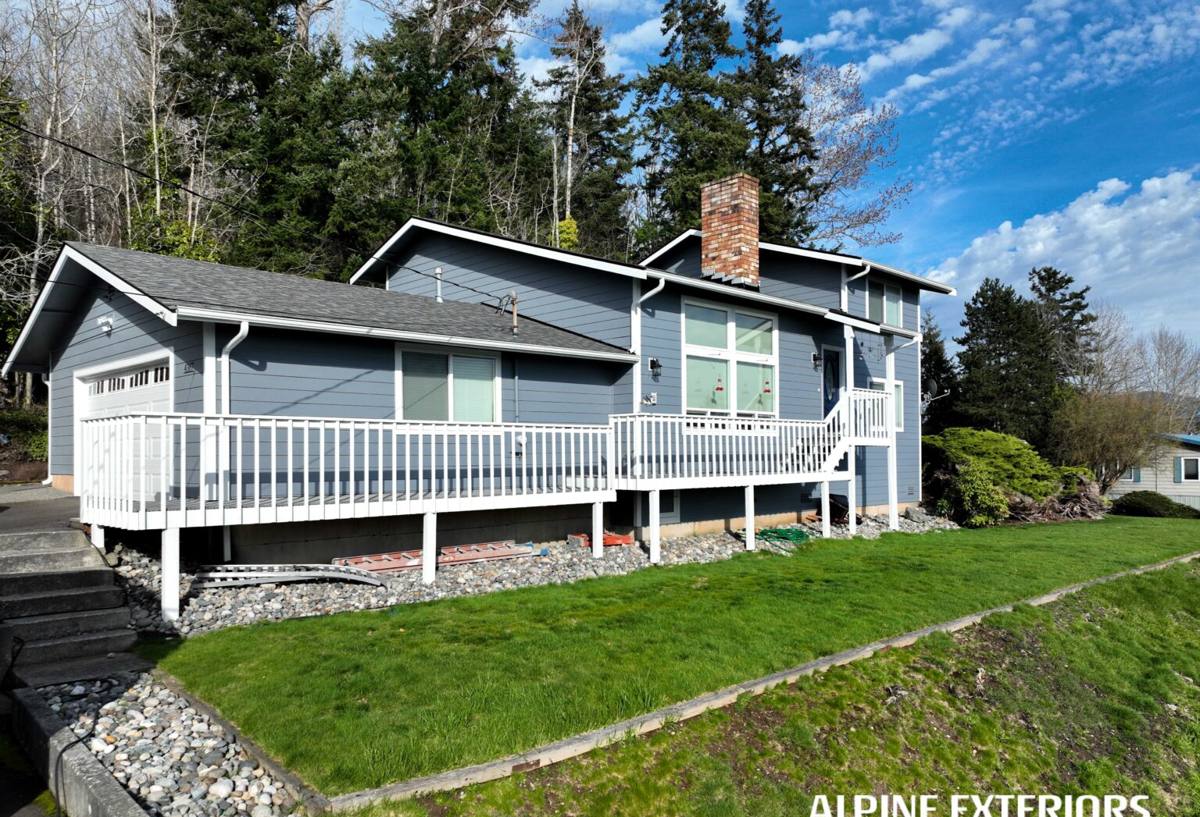
What a New Roof in Marietta Needs to Handle
Salt Air and Corrosion
Salt air accelerates corrosion on any unprotected or low-grade metal — nails, flashing, vents, and fasteners included. It's a slow process, but it's constant. A roof installed with the wrong fastener grade or bare steel flashing in a salt-exposed area will show rust streaking and weakening well before a roof built with corrosion-resistant materials in the same spot.
Driving Rain and Wind-Driven Water
Rain that falls straight down is relatively easy to shed. Rain that's being pushed sideways by wind off the water is a different problem — it finds gaps at flashing, valleys, and roof-to-wall transitions that a calm-weather roof might never test. Proper flashing detail and underlayment coverage matter more here than in a sheltered inland location.
Moss Season and Shaded Roof Sections
Whatcom County's damp, mild winters are ideal moss-growing conditions, and Marietta's tree cover and coastal humidity keep roofs wet longer between dry-outs. Moss holds moisture against roofing material, works into shingle laps and shake gaps, and can lift material enough to let water underneath. North-facing slopes and sections shaded by trees are the areas that need the most attention, both in material choice and in ongoing care after installation.
Roofing Material Comparison for Coastal Whatcom County
There's no single "best" roofing material for every home — the right choice depends on your budget, your roof's pitch and shading, and how much maintenance you're willing to keep up with. Here's an honest look at how common options perform under Marietta's salt air, rain, and moss conditions.
| Material | Salt Air Performance | Moss Resistance | Maintenance Level |
|---|---|---|---|
| Architectural asphalt shingle | Good, especially with quality flashing and fasteners | Moderate — benefits from algae-resistant granules | Low to moderate |
| Standing seam metal | Very good with marine-grade coatings and fasteners | Good — sheds moss more readily due to smooth surface | Low |
| Cedar shake | Fair — needs regular treatment near salt exposure | Poor without diligent upkeep; traps moisture in grain | High |
| Synthetic composite shingle | Good, resistant to corrosion since it's non-metallic | Moderate to good depending on product | Low |
For most Marietta homes, we lean toward architectural asphalt shingles with algae-resistant granules or standing seam metal, both installed with corrosion-resistant flashing and fasteners rated for coastal exposure. Cedar shake can still be the right call for homeowners who want the look and are committed to the maintenance, but we're upfront that it's a higher-upkeep choice in this climate — that's a maintenance and moisture-behavior trade-off, not a knock on the material itself.
Signs Your Marietta Home Needs a New Roof
Not every roofing problem calls for full replacement — some can be repaired. But certain signs point toward a roof that's past the point of patching, especially in a climate this hard on roofing materials:
- Shingles that are cupping, curling, or losing granules in large patches, not just a few spots
- Moss buildup that keeps returning within a season or two of cleaning
- Dark streaking or staining across large roof sections, especially on shaded slopes
- Soft spots or sagging when walked on or viewed from the ground
- Daylight visible through the roof deck from inside the attic
- Rusting, lifted, or missing flashing around chimneys, vents, and roof-to-wall transitions
- Interior water stains on ceilings or upper walls after heavy rain
- A roof that's near or past the upper end of its material's expected service life
If you're seeing more than one of these, it's worth having someone look at the whole roof system rather than chasing individual leaks.
What a Correct Installation Actually Involves
A new roof is only as good as what's underneath the visible surface. In a climate like Marietta's, the details that don't show from the ground are often what determine whether the roof performs well for its full service life.
Tear-Off and Deck Inspection
We remove the old roofing down to the deck rather than layering over it. That lets us actually inspect the sheathing for rot, delamination, or soft spots — common in areas that have dealt with years of moss holding moisture against the roof — and replace any compromised sections before new material goes down.
Underlayment and Water Barrier
Full synthetic underlayment coverage, with self-adhering ice-and-water barrier at eaves, valleys, and other vulnerable transitions, gives the roof a second line of defense if wind-driven rain ever gets past the surface layer — which, on an exposed coastal roof, it eventually will during the wrong storm.
Flashing Detail
Flashing around chimneys, skylights, vent pipes, and wall transitions is where most roof leaks actually originate, not in the open field of shingles. We use corrosion-resistant flashing material and proper step-and-counter-flashing technique at every transition, which matters more here than in a drier, less salt-exposed area.
Ventilation
Balanced intake and exhaust ventilation keeps the attic dry and temperature-regulated, which reduces condensation buildup and helps the new roofing material last as long as it's designed to. Poor ventilation is a quiet cause of premature roof failure that has nothing to do with the roofing material itself.
Our Installation Process
- Inspection and estimate — We walk the roof, check the deck and attic where accessible, and give you a straightforward written estimate with no pressure to sign on the spot.
- Material selection — We go over the options that make sense for your roof's pitch, shading, and your budget, including the trade-offs of each.
- Prep and protection — Landscaping, gutters, and the ground around the house are protected before tear-off begins.
- Tear-off and disposal — Old roofing comes off down to the deck, with debris hauled off the property.
- Deck repair — Any compromised sheathing found during tear-off is replaced before new material goes on.
- Installation — Underlayment, flashing, ventilation components, and the new roofing material are installed to manufacturer spec and to the details this climate requires.
- Cleanup and magnetic sweep — The property is cleaned up and swept for stray nails and debris.
- Final walkthrough — We go over the finished roof with you and answer any questions before calling the job done.
What Affects the Cost of a New Roof
Every roof is different, so we don't quote a number until we've actually looked at yours. But the factors below are what typically move the price up or down, and it's worth understanding them before you start comparing estimates:
| Factor | Why It Matters |
|---|---|
| Roof size and number of stories | More square footage and harder access both add labor time |
| Roof pitch | Steeper roofs are slower and more demanding to work safely, which affects labor cost |
| Number of existing layers | Multiple old layers mean more tear-off and disposal work |
| Deck condition | Rot or soft sheathing found during tear-off adds repair cost, but skipping it isn't an option |
| Material choice | Asphalt, metal, cedar, and composite all have different material and installation costs |
| Roof complexity | Valleys, dormers, skylights, and chimneys all add flashing work and time |
As a general guide, a straightforward tear-off and reroof on a typical single-story home tends to land toward the lower end of the range for the chosen material, while steep pitches, multiple tear-off layers, extensive deck repair, or a complex roofline push costs higher. We'll walk through exactly what's driving your number during the estimate rather than leaving you guessing.
Why a Crew That Already Works Marietta Matters
Roofing crews that work Whatcom County's coastal communities regularly know things that don't show up in a manufacturer's installation manual — which flashing details hold up against wind-driven rain off the bay, which roof sections in this area tend to hold moss longest, and what ventilation setup actually keeps attics dry in this humidity. That local experience shows up in the details: fastener choice, flashing technique, and where extra attention goes on a given roof.
It also matters for practical reasons. A crew already working in and around Marietta can respond faster if a storm causes damage, is familiar with the permitting expectations for this part of Whatcom County, and has a track record you can actually check with neighbors rather than a name that showed up for one storm-chasing season and moved on.
After Installation: Keeping a New Roof Performing
A well-installed roof still benefits from basic upkeep in this climate. Keeping gutters clear so water isn't backing up under the roof edge, having moss treated before it establishes on shaded slopes, and having the roof glanced at after major windstorms will help your new roof reach the full end of its service life rather than falling short of it.
If your Marietta roof is showing its age or you're planning ahead for a replacement, we're happy to take a look and give you a straightforward, no-pressure estimate. Use the form below to get started.