 Semiahmoo Siding
 Why Semiahmoo Resort Homes Ask More of Their Windows
Semiahmoo Resort sits out on the spit, with water on multiple sides and very little standing between the homes there and whatever the Strait of Georgia and Drayton Harbor send in. That location is part of what makes the neighborhood special, but it also means the windows on these homes take a beating that a house ten miles inland in Whatcom County never sees. Salt-laden air, wind-driven rain that comes in sideways instead of straight down, and a moss and mildew season that can run most of the year all work on window assemblies in ways that shorten their real service life if the wrong products or installation methods are used.
A window that's rated fine for a typical suburban lot can still underperform out on the spit. The difference isn't the glass itself — it's everything around the glass: the frame material, the seals, the flashing detail, and how the whole assembly is set into the wall to keep water moving out instead of in. That's the part of the job that matters most for Semiahmoo Resort, and it's the part that's easy to get wrong if a crew hasn't worked this specific stretch of coastline before.
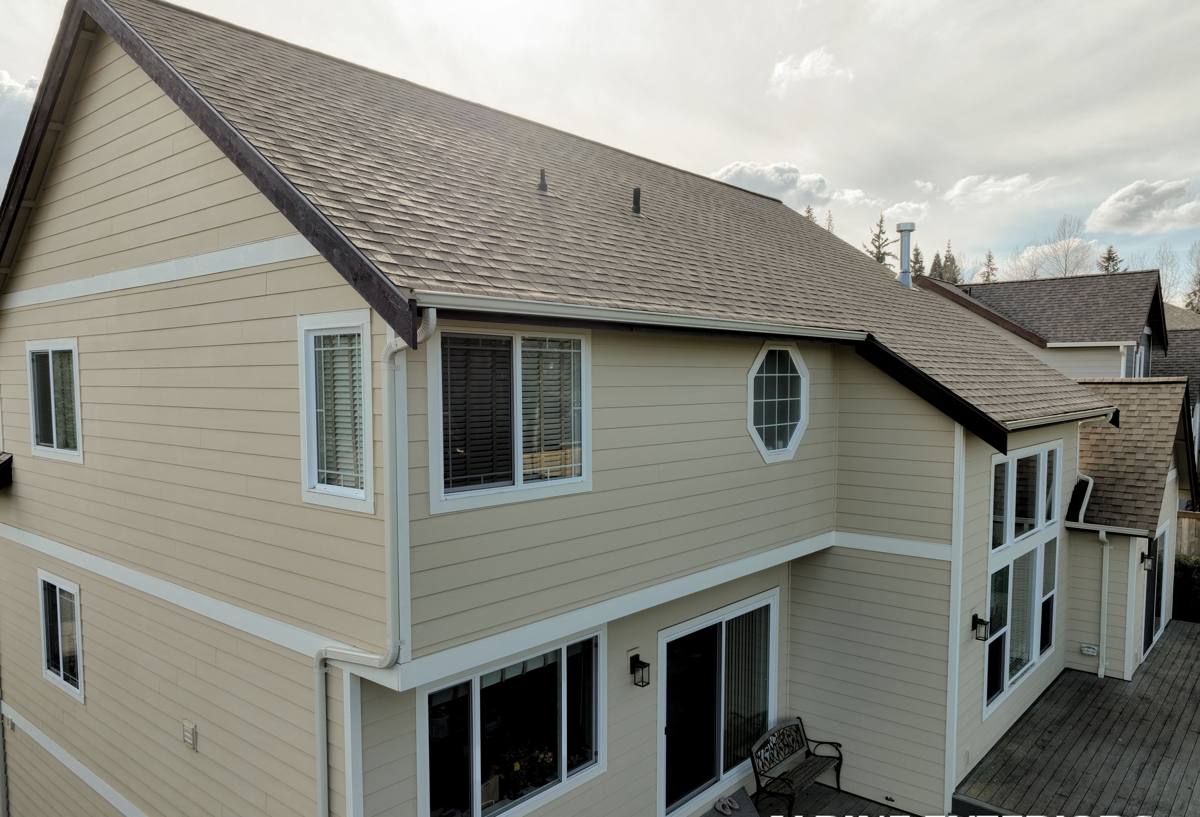
What Salt Air and Driving Rain Actually Do to a Window
Corrosion and Hardware Fatigue
Salt air accelerates corrosion on anything metal — hinges, locks, cranks, and especially aluminum frames or cladding that isn't specifically finished for coastal exposure. Once corrosion starts on hardware, windows get harder to operate, locks stop seating properly, and weatherstripping compresses unevenly because the frame is no longer moving true. This isn't cosmetic; a window that doesn't close and lock evenly is a window that leaks air and water.
Wind-Driven Rain and Water Intrusion
Water intrusion around windows is rarely a failure of the glass — it's almost always a failure at the perimeter: the flashing, the sill pan, or the sealant joint. On an exposed site like Semiahmoo Resort, rain doesn't just fall on a window, it's pushed into every gap under wind pressure. A window that would stay dry on a sheltered inland lot can leak here if the flashing details weren't built for sustained wind-driven rain rather than occasional light rain.
Moss, Mildew, and Trapped Moisture
Whatcom County's long wet season means moss and mildew get a real head start on any surface that stays damp, including window sills, tracks, and the wood trim around older window openings. Once moisture gets trapped behind trim or inside a sill that can't drain, rot follows — often well before the window itself shows visible damage. Replacing the window without correcting the drainage path just resets the clock on the same problem.
What a Correct Custom Window Job Involves
"Custom" for a home at Semiahmoo Resort usually means one of two things, sometimes both: openings that aren't standard sizes because of the home's design, or upgraded coastal-grade materials and glazing to handle the site's exposure. Either way, a correct job covers the same fundamentals:
- Accurate measurement and sizing for the actual rough opening, not a generic stock size forced to fit
- A frame material and finish rated for coastal salt exposure, not just standard residential exposure
- A sill pan and flashing system that sheds water outward even under wind pressure, not just gravity drainage
- Sealant and weatherstripping specified for UV and salt exposure, since coastal air degrades cheaper sealants faster
- Glazing selected for the home's orientation — sun, wind, and view all factor in differently window by window
- Hardware finishes chosen to resist corrosion rather than just matching the interior trim color
Skipping any one of these doesn't usually cause an immediate problem. It shows up two, five, or ten years later as a stuck sash, a soft sill, or a stain spreading across interior drywall below the window — by which point the fix is bigger than the window itself.
Frame Material Comparison for Coastal Exposure
| Frame Material | Coastal Performance | Maintenance | Typical Trade-Off |
|---|---|---|---|
| Vinyl (coastal-rated) | Good — won't corrode, handles salt air well | Low — occasional cleaning | Fewer custom color options than other materials |
| Fiberglass | Very good — dimensionally stable, resists warping in temperature swings | Low | Higher upfront cost than vinyl |
| Aluminum (standard finish) | Poor near salt water unless specifically coastal-finished | Higher — corrosion needs monitoring | Slim sightlines, but needs the right finish spec |
| Wood (clad exterior) | Depends entirely on the cladding and seal quality | Highest — exterior wood is vulnerable to this climate | Best interior look, most upkeep exposed to weather |
None of these materials is automatically wrong for Semiahmoo Resort — the point is that the material choice has to be paired with a coastal-appropriate finish and installation detail. A standard-finish aluminum frame installed without that in mind is the combination that causes problems here, not aluminum itself.
Our Installation Process for Semiahmoo Resort Homes
1. Site and Opening Assessment
Before we talk products, we look at the specific opening: what direction it faces, how exposed it is to prevailing wind and rain, what condition the existing sill and framing are in, and whether there's any sign of past moisture intrusion. This tells us what the window and the installation detail actually need to handle, rather than defaulting to a one-size answer.
2. Product Selection
We walk through frame material, glazing, and hardware options with the trade-offs laid out plainly — cost, maintenance, and expected performance in this specific exposure. Custom sizing gets confirmed against precise field measurements, not the original builder's plans, since older homes especially can have openings that have shifted slightly over time.
3. Removal and Opening Prep
Old windows come out carefully so we can inspect the framing and sill underneath — this is often the first real look anyone's had at that area in years, and it's where hidden moisture damage from a failing seal or flashing gets caught before a new window goes back in over it.
4. Flashing and Sill Pan Installation
This is the step that determines whether the window stays dry for the next twenty years or fails again in five. We build a drainage path that directs any water that does get past the window back outside the wall assembly, rather than trusting sealant alone to keep it out.
5. Window Set and Seal
The window is set plumb and level, shimmed correctly so it isn't stressed out of square, and sealed with materials rated for sustained UV and salt exposure. Poor shimming is a common hidden cause of hardware wearing unevenly and locks failing to seat over time.
6. Interior and Exterior Finish
Trim, caulking, and touch-up work are finished to match the home, and we walk the operation of every window with the homeowner before we call the job done.
Glazing Choices for a Point Location
Homes on the Semiahmoo spit deal with more direct sun and wind exposure on some elevations than a typical inland home, along with the salt air factor. Double- or triple-pane glazing with a low-E coating is a reasonable baseline for most of the home; the more useful decision is matching glazing performance to each elevation rather than specifying the same glass package everywhere. A window facing open water and prevailing wind has different priorities — wind load rating, water-shedding hardware, tighter seals — than a sheltered window on the leeward side of the same house. Custom orders let us make that distinction window by window instead of settling for a single compromise spec for the whole home.
Cost Factors to Expect
| Factor | Why It Moves the Price |
|---|---|
| Opening size and custom shape | Non-standard sizes require made-to-order units rather than stock sizing |
| Frame material | Fiberglass and coastal-finished materials cost more upfront than standard vinyl |
| Glazing package | Wind-rated and upgraded low-E glass adds cost per unit but reduces long-term issues |
| Existing damage found at removal | Rot or moisture damage discovered behind old trim adds repair scope before the new window goes in |
| Number of exposed elevations | Windows facing open water and prevailing wind often warrant a higher spec than sheltered ones |
We give a straightforward estimate broken down by these factors rather than a single lump number, so homeowners can see exactly what's driving the cost and where there's room to adjust the spec if budget is a concern.
Simple Maintenance That Extends Window Life Here
Even a well-installed coastal window benefits from basic upkeep, especially given how much salt air and moss pressure this location sees compared to a typical inland home:
- Rinse frames and tracks periodically to clear accumulated salt residue, especially after storms
- Keep weep holes and drainage channels clear of debris so water can exit as designed
- Wipe down hardware and lubricate moving parts on a schedule rather than waiting for them to stick
- Check exterior caulking annually for cracking or separation, particularly on sun- and wind-exposed elevations
- Watch for moss buildup on sills and trim and clear it promptly rather than letting it hold moisture against the surface
None of this is difficult, but skipping it on a coastal property shortens window life more than it would on a sheltered inland lot.
Why a Crew That Already Works Semiahmoo Resort Matters
A lot of window problems on this stretch of coast trace back to installation details that work fine most places but aren't enough here — standard flashing tape instead of a full sill pan, a sealant that isn't rated for sustained salt exposure, hardware finishes that weren't specified for corrosion resistance. None of these mistakes show up on the walkthrough. They show up years later.
Working this neighborhood regularly means we already know which details need to be upgraded from a standard spec and which product lines actually hold up under Whatcom County's coastal conditions versus the ones that look fine on paper but underperform here. That's the practical value of hiring a crew with local experience over a general contractor pulling from a generic residential spec sheet — fewer surprises, and a window installation that's actually built for the site it's going into.
Getting Started
If you're weighing a full window replacement or a smaller custom order for a Semiahmoo Resort home, we're glad to take a look and give you a straightforward assessment of what your openings actually need. There's no pressure and no obligation — just an honest read on your current windows and a clear estimate broken down the way it's laid out above. Fill out the form below to get a free estimate started.