 Semiahmoo Siding
 Roofing on the Semiahmoo Spit Is Its Own Challenge
Semiahmoo Resort sits out on the spit, with water on both sides and very little standing between the homes here and whatever the Salish Sea sends in. That location is what makes the resort beautiful, and it's also exactly why roofs here age faster than roofs a few miles inland in Blaine or elsewhere in Whatcom County. Salt-laden air, wind-driven rain that hits roof planes sideways instead of straight down, and a long wet season that keeps moss and moisture active for most of the year all add up to a roofing environment that punishes shortcuts.
We work on homes in this stretch of Whatcom County regularly, and the pattern is consistent: roofs installed with standard, inland assumptions tend to fail early around the details — flashing, fasteners, ventilation, underlayment — long before the field material itself wears out. A roof replacement done right for a Semiahmoo Resort home isn't just "the same roof, new shingles." It's a roof built for the specific combination of salt, wind, and moss this location deals with every year.
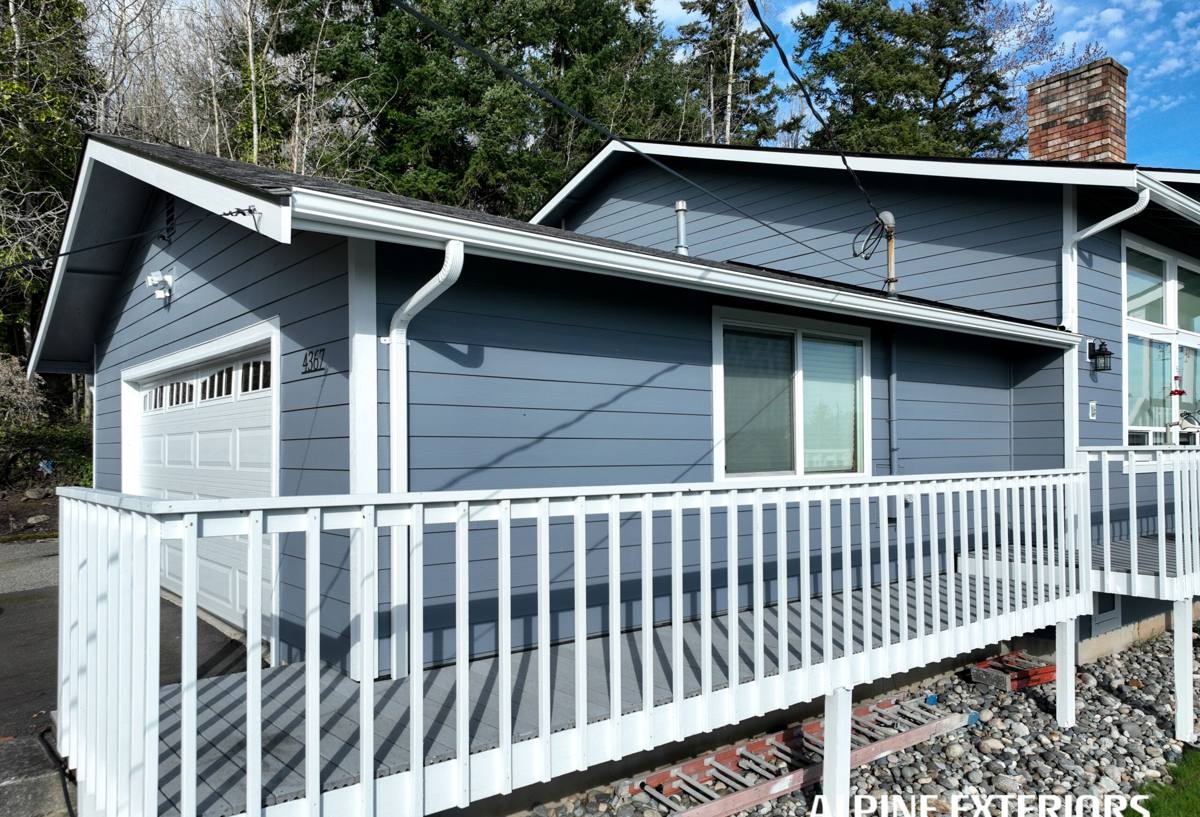
What Salt Air, Driving Rain, and Moss Actually Do to a Roof
Salt Air
Airborne salt accelerates corrosion on anything metal — nails, flashing, gutter hardware, vent boots with metal collars, and lower-grade fasteners. On a lot of roofs, the field material still looks fine while the fasteners and flashing underneath it are quietly corroding away. That's a slow failure you don't see until it shows up as a leak.
Driving, Wind-Driven Rain
Rain that comes in sideways off the water behaves differently than rain that falls straight down. It gets pushed up under shingle tabs, into laps that were only designed to shed water gravity-fed, and around penetrations that would be fine in a calmer setting. This is why underlayment quality and detail work at valleys, chimneys, and vent penetrations matter more here than on a typical inland roof.
Moss
Whatcom County's wet season runs long, and a roof that stays damp for months at a time is a moss farm. Moss holds moisture against the roof surface, lifts shingle edges as it grows, and works its way into any gap it can find. Left unmanaged, it shortens the life of even a well-installed roof.
None of these three problems is exotic on its own. Together, and repeated year after year, they're the reason roofs on the spit often need attention sooner than homeowners expect — and why the quality of the original installation matters so much.
Signs a Semiahmoo Resort Roof Is Ready for Replacement
- Granule loss showing up in gutters or at the base of downspouts
- Shingles that are curling, cupping, or lifting at the edges, especially on wind-exposed slopes
- Moss buildup that comes back within weeks of cleaning, a sign the roof surface is holding moisture
- Rust staining below metal flashing, vent boots, or fasteners
- Soft spots or sagging when walked, which usually means deck damage underneath
- Daylight visible through the attic or staining on interior ceilings after a storm
- A roof approaching or past 20 years old, even if it "looks okay" from the ground
Any one of these is worth a look. Several at once usually means patching isn't going to buy much more time, and a replacement is the more honest recommendation.
What a Correct Replacement Involves Here
A roof built for this location needs to get several things right that a generic install often glosses over:
Deck Inspection and Repair
Every square foot of decking gets checked once the old roofing is off. Any wood that's soft, delaminated, or water-stained gets replaced before anything new goes down — covering a damaged deck with new roofing just hides the problem for a while.
Underlayment
Given the amount of wind-driven rain this area sees, we lean toward synthetic or self-adhered underlayment products with strong water resistance, particularly at eaves, valleys, and around penetrations, rather than the lighter felt products that are adequate in drier, calmer regions.
Flashing and Fasteners
Corrosion-resistant flashing and fasteners are the standard here, not an upgrade option. Given how salt air treats standard-grade metal over time, using the wrong hardware is one of the most common reasons roofs near the water develop leaks well before the shingles themselves are worn out.
Ventilation
A roof system that can't breathe traps moisture in the attic, which speeds up rot in the decking and framing and works against everything else you're doing to make the roof last. Balanced intake and exhaust ventilation is part of a correct replacement, not an afterthought.
Moss Prevention
Where appropriate, zinc or copper strips at the ridge help suppress moss regrowth going forward, reducing how often the roof needs manual cleaning.
Material Options for a Coastal Resort Setting
Semiahmoo Resort's HOA or architectural guidelines, where they apply, often influence which materials and colors are appropriate — that's worth checking early. Beyond that, here's how the common options stack up for this specific climate:
| Material | Coastal Performance | Maintenance | Typical Lifespan |
|---|---|---|---|
| Architectural asphalt shingle | Good, with proper underlayment and flashing | Periodic moss removal, gutter checks | 20–30 years |
| Standing seam metal | Excellent wind and rain resistance; needs corrosion-resistant fasteners near salt air | Low; occasional fastener/seam checks | 40–60 years |
| Composite/synthetic shake | Good moisture resistance, doesn't absorb water like natural wood | Low to moderate | 30–50 years |
| Natural cedar shake | Vulnerable to prolonged moisture and moss unless well-maintained | High; regular treatment needed | 20–30 years, shorter if neglected |
We're upfront about trade-offs. Natural cedar can look great, but in a spot with this much sustained moisture and salt exposure, it demands more upkeep to hold its warranty and appearance than most homeowners want to sign up for. That's a maintenance-burden conversation, not a knock on the material itself — it just needs to be a deliberate choice, not a default one.
Our Roof Replacement Process
- Inspection and estimate. We walk the roof, check the attic where accessible, and give you a straight assessment of what's actually needed — not an upsell.
- Material and scope selection. We go over material options, HOA considerations if applicable, and what fits your budget and the house.
- Tear-off and deck inspection. Old roofing comes off, the deck is inspected, and any damaged sections are documented and repaired.
- Underlayment and flashing installation. Water-resistant underlayment and corrosion-resistant flashing go in at all critical points — eaves, valleys, penetrations, and roof-to-wall transitions.
- Field material installation. Shingles, metal panels, or shakes go on per manufacturer specs, with attention to fastening patterns appropriate for high-wind coastal exposure.
- Ventilation check. Intake and exhaust ventilation is verified or corrected as part of the job, not treated as separate work.
- Final walk-through. We review the finished roof with you, including any moss-prevention measures installed and what maintenance to expect going forward.
Cost Factors for a Semiahmoo Resort Roof Replacement
Every roof is different, but the main variables that move the price are consistent:
| Factor | Why It Matters |
|---|---|
| Roof size and complexity | More valleys, dormers, and roof planes mean more labor and material at transitions |
| Deck condition | Rot or soft decking found during tear-off adds repair cost that can't always be predicted before the old roof comes off |
| Material choice | Standing seam metal and composite products cost more upfront than asphalt but can mean fewer replacement cycles |
| Access and site conditions | Setbacks, landscaping, and steep or high roof pitches affect staging and labor time |
| Ventilation and flashing upgrades | Correcting inadequate ventilation or upgrading to corrosion-resistant hardware adds cost but reduces future leak risk |
We give a written estimate that spells out what's included, so there's no guessing about scope once the work starts.
Why Local Experience in Semiahmoo Resort Matters
A crew that's replaced roofs elsewhere in Whatcom County but never out on the spit will make assumptions that don't hold up here — using standard fasteners instead of corrosion-resistant ones, skipping the heavier underlayment, or underestimating how much wind-driven rain a given roof plane actually takes. Those are the kind of gaps that don't show up on installation day; they show up two or three winters later as a leak that shouldn't have happened.
Working this area regularly means we already know which details matter most for homes exposed to Semiahmoo Bay and Drayton Harbor conditions, and we build that into every estimate and every install — not as an upsell, but as the baseline for doing the job right the first time.
After the Replacement: Keeping It Performing
- Clear gutters and downspouts at least twice a year, more often under overhanging trees
- Remove moss buildup promptly rather than letting it establish
- Check and touch up caulking or sealant around penetrations annually
- Trim back branches that keep sections of the roof shaded and damp
- Have the roof visually inspected after any major windstorm
- Keep an eye on attic ventilation — blocked vents undo a lot of the benefit of a good install
A correctly installed roof still benefits from basic upkeep in a climate like this. None of it is complicated, but skipping it shortens the life of even a well-built roof.
If your roof is showing wear, or you just want an honest read on how much life it has left, we're happy to take a look. Estimates are free, there's no pressure, and you'll get a straight answer about what your roof actually needs — use the form below to get started.