 Semiahmoo Siding
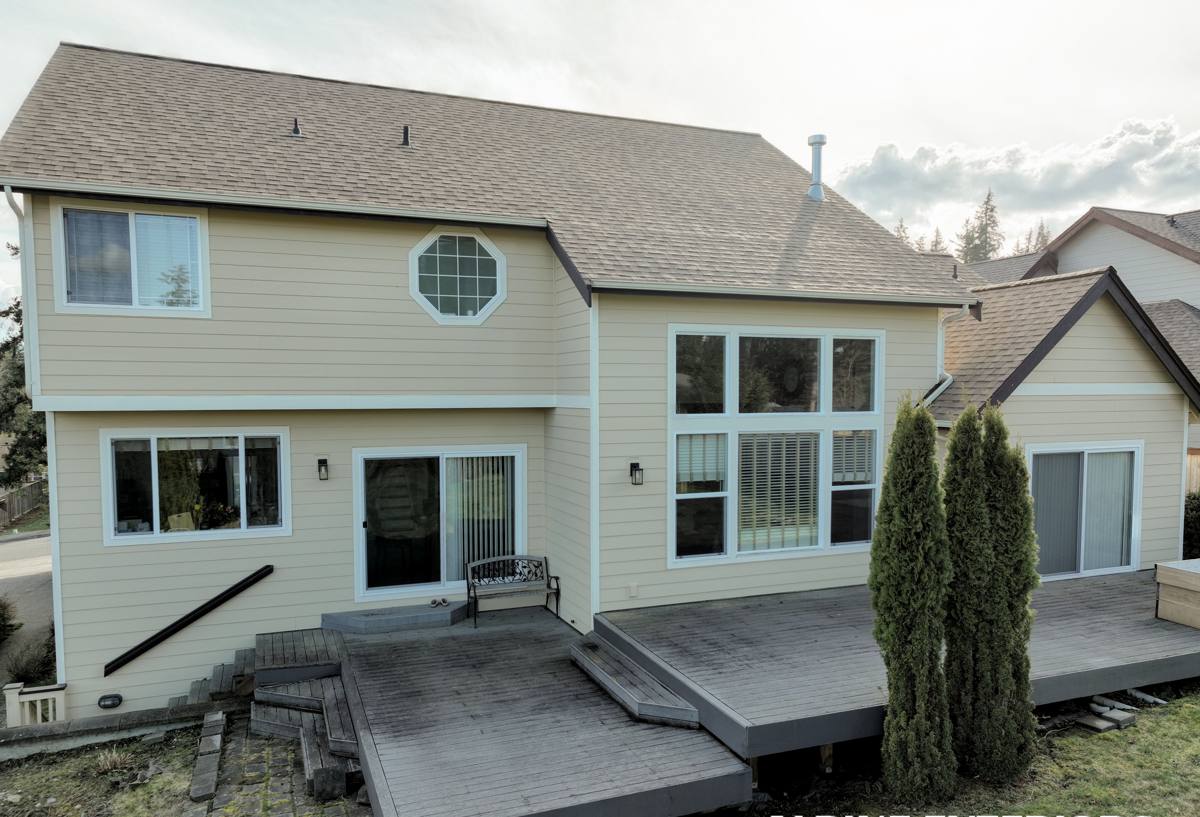
 A deck at Wiser Lake lives a harder life than most people realize. It sits under tree cover for much of the day, catches moisture off the water, and rarely gets a full afternoon of direct sun to dry out between storms. Add in the salt-laden air that drifts inland from Semiahmoo Bay and the long, gray stretch of Whatcom County winters, and you have a structure that's fighting rot, corrosion, and moss almost year-round. When a deck around Wiser Lake starts to fail, it's rarely one obvious problem — it's usually a combination of things happening quietly underneath the surface.
This page covers what deck replacement actually looks like for homes in this area: why decks here wear out faster than the manufacturer's brochure suggests, what a correct rebuild involves from the ground up, and why hiring a crew that already understands lake-adjacent, moss-season conditions makes a real difference in how long the new deck lasts.
Why Wiser Lake Decks Wear Out the Way They Do
Every deck failure has a cause, and around Wiser Lake the causes tend to repeat themselves from property to property. Understanding them is the first step in building something that actually holds up.
Moisture That Never Fully Leaves
Lakeside lots hold humidity longer than open, sun-exposed sites. Shade from mature trees and the lake itself slows evaporation, which means deck boards, joists, and ledger connections stay damp longer after every rain. Wood that stays wet for extended periods is where rot gets its foothold — not from a single storm, but from months of never fully drying out.
Salt Air and Metal Fatigue
Semiahmoo's proximity to the water means airborne salt reaches inland properties, including those around Wiser Lake, more than most homeowners expect. Salt accelerates corrosion on fasteners, joist hangers, and any exposed metal hardware. A deck built with standard hardware can develop rust streaks and weakened connections years before the boards themselves show wear.
Moss and Organic Buildup
Whatcom County's moss season runs long — often eight months or more of conditions favorable to growth. Moss holds moisture directly against the wood surface, and its root structure can work into the grain of untreated or poorly sealed boards. On sloped or shaded sections of a deck, moss also creates a slip hazard that's easy to underestimate until someone gets hurt.
Signs a Deck Needs Replacing, Not Just Repairing
Not every deck problem calls for a full replacement. But there's a point where patching becomes a waste of money, and it's worth knowing where that line is before committing to either option.
- Soft, spongy spots in the decking boards that give underfoot
- Rot at the ledger board where the deck attaches to the house
- Rusted, loosening, or missing joist hangers and fasteners
- Support posts that have shifted, settled, or show visible splitting at the base
- Persistent moss or black staining that returns within weeks of cleaning
- A railing system that no longer meets current safety standards
- Structural framing that predates modern code requirements for this region
If the problems are limited to surface boards and the framing underneath is sound, repair or a partial resurface can make sense. Once rot or corrosion has reached the structural framing, ledger, or posts, replacement is almost always the more honest recommendation — patching a compromised frame just delays the same failure.
What a Correct Deck Replacement Involves
A deck replacement isn't just swapping old boards for new ones. Done right, it's a full evaluation and rebuild of everything from the house connection down to the footings.
Ledger and House Connection
The ledger board — where the deck ties into the house — is the single most important structural connection on the entire deck, and it's also the most common point of hidden rot. Proper flashing and a correctly fastened, code-compliant ledger connection keep water from working its way behind the siding and into the house framing itself. This step gets rushed on cheap rebuilds more than any other.
Footings and Framing
Footings need to sit below frost depth and bear on solid ground, not on soil that shifts with seasonal saturation — a real consideration on lake-adjacent lots where the water table sits higher for parts of the year. Framing lumber should be rated for ground contact or exterior exposure as appropriate, and every structural connection should use corrosion-resistant hardware, not standard-grade fasteners that will start rusting within a couple of seasons in this air.
Decking Material Selection
The decking surface itself is where most homeowners focus, and it's worth getting right for this specific environment.
| Material | How It Handles This Climate | Maintenance |
|---|---|---|
| Pressure-treated wood | Affordable, but needs consistent sealing to resist moisture and moss in shaded, humid spots | Annual cleaning and re-sealing recommended |
| Cedar | Naturally resists some decay, but softer surface takes on moss and requires diligence in low-sun areas | Periodic staining or sealing |
| Composite decking | Resists rot and doesn't absorb moisture into the board itself; still needs surface cleaning to prevent moss film | Occasional washing, no sealing |
| PVC decking | Fully resists moisture absorption; performs well in persistently damp, shaded conditions | Low — periodic washing only |
Railings and Hardware
Railing systems should meet current code for height and baluster spacing, and all fasteners — screws, hangers, post bases — should be rated for exterior or coastal-adjacent exposure. This is a small line item on a quote that has an outsized effect on how the deck holds up over the next fifteen years.
Our Process for Wiser Lake Deck Replacements
We approach every deck replacement the same structured way, adjusted for what a given lot and its exposure actually need.
- On-site assessment. We inspect the existing deck's framing, ledger, footings, and any moisture or moss patterns specific to how the sun and shade move across the property.
- Removal and structural inspection. Once the old decking is off, we check the house band joist and framing behind the ledger for hidden water damage before anything new goes up.
- Framing and flashing. New footings, posts, and joists go in to current code, with proper flashing at every point water could otherwise get behind the siding.
- Decking and railing installation. We install the chosen material with attention to drainage gaps and airflow underneath — a detail that matters more here than in drier climates.
- Final walkthrough. We go over care and maintenance specific to the material chosen, including how to manage moss during the wetter months.
Why Local Experience with Wiser Lake Conditions Matters
A deck built to a generic national spec can still fail early here if it doesn't account for how this specific area behaves — the extended shade, the humidity that lingers near the water, the salt content in the air coming off Semiahmoo Bay. A crew that's worked on homes around Wiser Lake before knows which corners of a lot tend to hold moisture longest, which hardware actually stands up to this air over time, and where moss is going to be a recurring maintenance issue versus a one-time problem.
That familiarity shows up in small decisions — how footings are placed relative to drainage patterns, which fastener grade gets specified, where extra flashing goes — that don't show up on a basic estimate but make a real difference in how the deck performs ten and fifteen years out.
Maintaining a New Deck Through Whatcom County's Moss Season
Even a well-built deck needs some ongoing attention in this climate. A few habits go a long way toward protecting the investment:
- Sweep debris and standing leaves off the deck surface regularly, especially in fall
- Clean moss and algae buildup before it has a chance to establish root structure
- Check and touch up sealant on wood decking on a yearly schedule
- Inspect fasteners and hardware annually for early signs of corrosion
- Keep gutters and downspouts near the deck clear so runoff isn't draining directly onto it
What Deck Replacement Typically Involves Cost-Wise
Every deck replacement is different depending on size, material, height off the ground, and how much of the existing structure — if any — can be reused safely. Rather than quote a number that won't reflect your actual property, we walk every job in person and provide a clear, itemized estimate before any work begins. Material choice tends to be the biggest swing factor, followed by structural complexity like multiple levels, stairs, or built-in seating.
If your deck near Wiser Lake is showing soft spots, rust stains, or moss that keeps coming back no matter how often you clean it, it's worth having it looked at before those issues reach the framing. Reach out for a free, no-pressure estimate using the form below — we'll take a look, tell you honestly what you're dealing with, and lay out your options.