 Semiahmoo Siding
 Why California Creek Roofs Take a Different Kind of Beating
Homes in the California Creek area, tucked in close to Semiahmoo and Drayton Harbor in Whatcom County, sit right at the intersection of three things that are hard on an asphalt shingle roof: salt-laden air off the bay, wind-driven rain that comes in sideways during winter storms, and heavy tree cover that keeps roof slopes shaded and damp for months at a time. Any one of those on its own is manageable. Together, they shorten the life of a roof that was installed without them in mind.
We're not describing a hypothetical here — this is the normal weather pattern for this stretch of Whatcom County, and it's the reason a roofing job done for a dry-climate spec sheet doesn't hold up the same way in California Creek as it does twenty miles inland. The fix isn't a special "coastal" shingle gimmick. It's paying attention to the details that actually matter in this microclimate: the metal, the underlayment, the airflow, and the shingle itself.
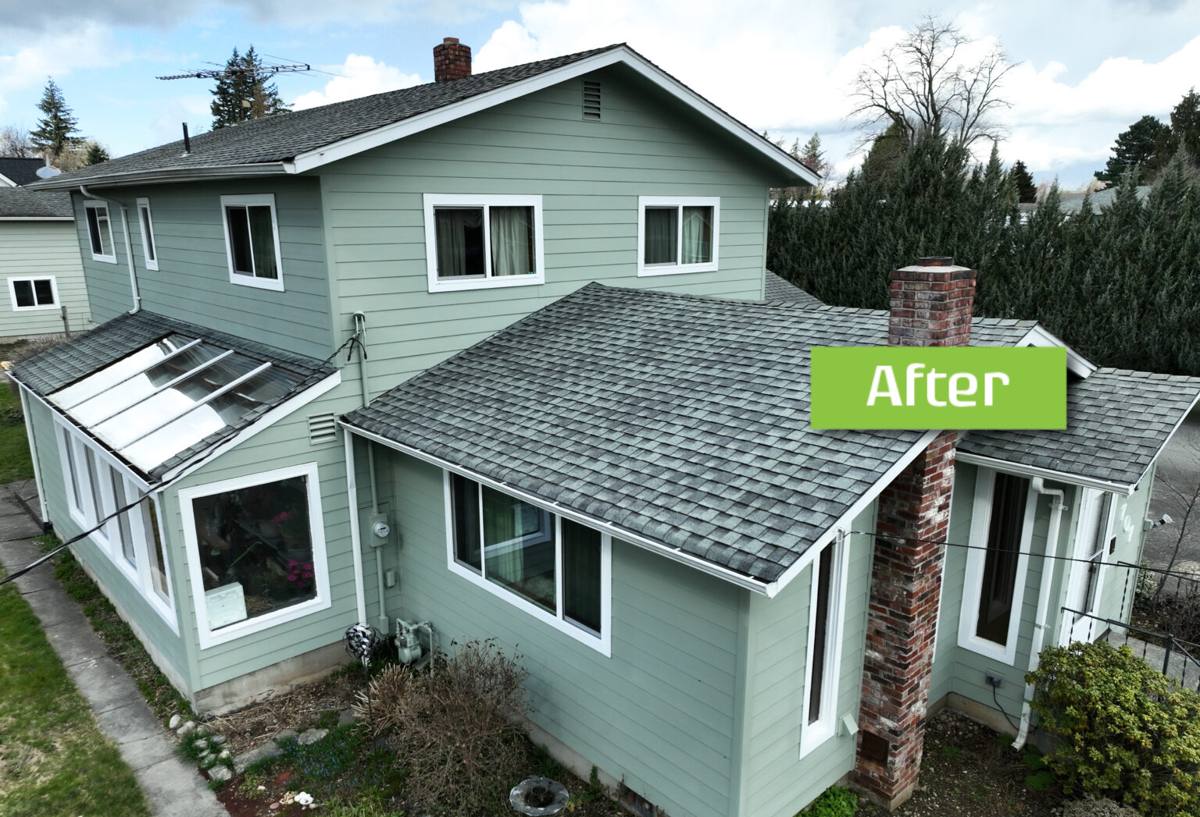
What Salt Air Does to an Asphalt Shingle Roof
Fasteners, Flashing, and Metal Components
Asphalt shingles themselves aren't very sensitive to salt, but almost everything holding them down and directing water off them is metal, and salt air accelerates corrosion on anything that isn't rated for it. Roofing nails, drip edge, step flashing, valley metal, and vent flashing all take the brunt of this. Cheap electro-galvanized fasteners and thin aluminum flashing can start showing rust streaks and pitting well before the shingles above them are due for replacement, and once flashing fails, water finds its way into the deck long before you'd notice a shingle problem from the ground.
Granule and Seal Wear
Salt-tinged moisture also plays a role in how quickly a shingle's protective granules loosen and wash off over time, especially on roofs that don't get much direct sun to dry out between rain events. Granule loss exposes the asphalt mat underneath to UV and weather it wasn't designed to face directly, which is usually the beginning of the end for that section of roof.
Moss, Algae, and Whatcom County's Long Wet Season
Why Shaded, North-Facing Slopes Get Hit Hardest
Between the tree canopy common around California Creek and the region's extended stretch of overcast, drizzly weather, north-facing and shaded roof slopes often stay damp for days after a storm has passed everywhere else. That's exactly the environment moss and algae need to take hold. Once spores land in the rough surface of a shingle, it doesn't take much shade and moisture to get established.
What Moss Actually Does to a Roof
Moss isn't just cosmetic. As it grows, it lifts shingle edges and holds water against the surface instead of letting it shed. That trapped moisture works its way under tabs and into fastener holes, and over a few seasons it can rot the sheathing underneath — a much more expensive repair than the roof covering itself. Black algae streaking is a milder version of the same story: mostly a look-of-the-house issue, but a sign that moisture is sitting on the roof longer than it should.
What a Correct Installation Looks Like in This Climate
Underlayment and Ice-and-Water Barrier
A roof built for California Creek's rain pattern needs more than the minimum underlayment code allows. We run self-adhered ice-and-water barrier at eaves, valleys, and around every penetration — the places wind-driven rain is most likely to get pushed backward under the shingles — and a synthetic underlayment across the rest of the deck that holds up to the extended exposure that's common on a Pacific Northwest job site.
Flashing Detail Work
Given how hard salt air is on metal, we use corrosion-resistant flashing and fasteners rather than the cheapest option that meets minimum code, and every valley, sidewall, chimney, and vent gets flashing that's actually integrated with the underlayment and shingle courses — not just caulked over the top, which is a common shortcut that fails quietly within a few years.
Attic and Roof Ventilation
Proper intake and exhaust ventilation keeps the underside of the roof deck dry and close to outdoor temperature, which reduces condensation, helps shingles last their full rated life, and reduces the moisture that feeds moss growth from below as well as above. A roof that looks fine on the surface but has poor attic airflow will age faster than the shingle warranty assumes.
Choosing the Right Shingle for California Creek
Not every asphalt shingle line handles this environment equally well. The table below is a general comparison of the categories homeowners in this area typically choose between — actual product lines and pricing vary by manufacturer and should be part of your estimate conversation, not a page like this one.
| Shingle Type | Algae/Moss Resistance | Wind Rating | Typical Lifespan |
|---|---|---|---|
| Standard 3-tab | Low unless AR-rated | Lower | Shorter end of the range |
| Architectural / laminate | Moderate to good with AR granules | Higher | Mid to long range |
| Algae-resistant (AR) laminate | Best available in asphalt | Higher | Long range, best value here |
| Impact-rated laminate | Good with AR option | Highest | Long range, added durability |
For most California Creek homes, we lean toward algae-resistant architectural shingles as the practical middle ground: the copper- or zinc-infused granules slow algae and moss growth meaningfully, the laminated construction handles wind gusts off the water better than a flat 3-tab, and the cost difference over a standard shingle is modest compared to the added years of service you get out of it.
Our Process for a California Creek Roofing Job
- Roof and attic inspection — we check the existing deck, ventilation, and any moss or moisture damage before quoting anything, so the estimate reflects what your roof actually needs.
- Tear-off and deck check — old shingles come off completely; we don't layer over existing roofing, because it hides deck problems and shortens the life of the new shingles.
- Sheathing repair — any soft or rotted decking, often found under long-term moss patches, gets replaced before anything new goes down.
- Underlayment and ice-and-water barrier — installed per the details above, matched to this climate rather than a bare-minimum spec.
- Flashing — new corrosion-resistant flashing at all valleys, walls, and penetrations.
- Shingle installation — installed to manufacturer nailing and exposure specs, which is what actually keeps a wind and rain warranty valid.
- Ventilation check — intake and exhaust confirmed or upgraded as part of the job, not treated as an afterthought.
- Cleanup and final walkthrough — magnetic sweep for nails, debris hauled off, and a walkthrough so you know what was done and what to watch for.
A Homeowner's Maintenance Checklist
A well-installed roof in this climate still needs a little upkeep. This is the short list we tell California Creek homeowners to stay on top of between inspections:
- Keep gutters and downspouts clear so water isn't backing up under the eaves during heavy rain.
- Trim back overhanging branches where practical to cut down on shade and debris buildup on the roof.
- Have visible moss or algae addressed early with proper roof-safe treatment rather than pressure washing, which can strip granules and shorten shingle life.
- Check the attic occasionally for damp insulation, musty smell, or daylight around vent boots — early signs of a flashing or ventilation problem.
- After major windstorms, do a visual check from the ground for lifted or missing shingles rather than waiting for a leak to show up inside.
Why Hiring a Crew That Already Works This Neighborhood Matters
A roofing crew that mostly works drier, inland areas will often spec a roof the way the manufacturer's general guidelines suggest — and that roof will probably be fine for a while. But "fine for a while" isn't the standard we hold ourselves to for a California Creek roof. Knowing which slopes on a given lot are going to stay shaded and damp, which details tend to fail first under salt exposure, and which shingle lines actually perform here over the long run comes from working in this specific area repeatedly, not from a spec sheet. That local knowledge shows up in small decisions — where we add extra ice-and-water barrier, which flashing metal we choose, how we handle ventilation on a heavily treed lot — that add years to a roof's service life without adding much to the cost.
If your roof is showing granule loss, moss buildup, or you're just planning ahead for a replacement, we're happy to take a look and walk you through what your specific roof needs — no pressure, no upsell. Fill out the form below for a free estimate.