 Semiahmoo Siding
 Why Asphalt Shingle Roofs in Laurel Wear Differently Than Roofs Inland
Laurel sits close enough to the water that every roof here is doing more work than a roof twenty miles inland. Salt-laden air, wind-driven rain off the Strait, and long stretches of gray, damp weather all act on asphalt shingles at once. None of these forces is dramatic on its own, but stacked together over years, they shorten the life of a roof that wasn't built or installed with this climate in mind. Understanding what's actually happening to the shingles above your head is the first step to getting a roof that holds up here instead of one that just looks fine on installation day.
Salt Air and Granule Loss
Asphalt shingles rely on their mineral granule surface to block UV light and shed water. In coastal air, salt particles settle on that surface and, combined with moisture, accelerate the slow breakdown of the asphalt binder underneath. The result is granule loss that shows up faster than the manufacturer's aging charts assume — often visible first in the gutters as gritty runoff. A roof rated for a 30-year lifespan inland can show meaningful wear well before that mark this close to the water if it wasn't installed with the right materials and attention to exposed edges.
Driving Rain and Wind-Driven Water
Whatcom County storms rarely come straight down. Wind pushes rain sideways and under standard shingle laps, which is exactly where a lot of "mystery leaks" originate — not from a failed shingle field, but from water forced backward at ridges, valleys, and wall intersections. A roof built for a calmer climate can get away with lighter underlayment and looser flashing details. A roof built for Laurel can't.
Moss Season
Shaded, north-facing slopes and roofs under tree cover stay damp for weeks at a stretch during our wet months, and that's exactly the environment moss needs to take hold. Moss doesn't just look bad — its root structure lifts shingle edges, holds moisture against the roof deck, and slowly works granules loose. A roof with poor ventilation or standing debris in valleys will grow moss faster than one that dries out properly between storms.
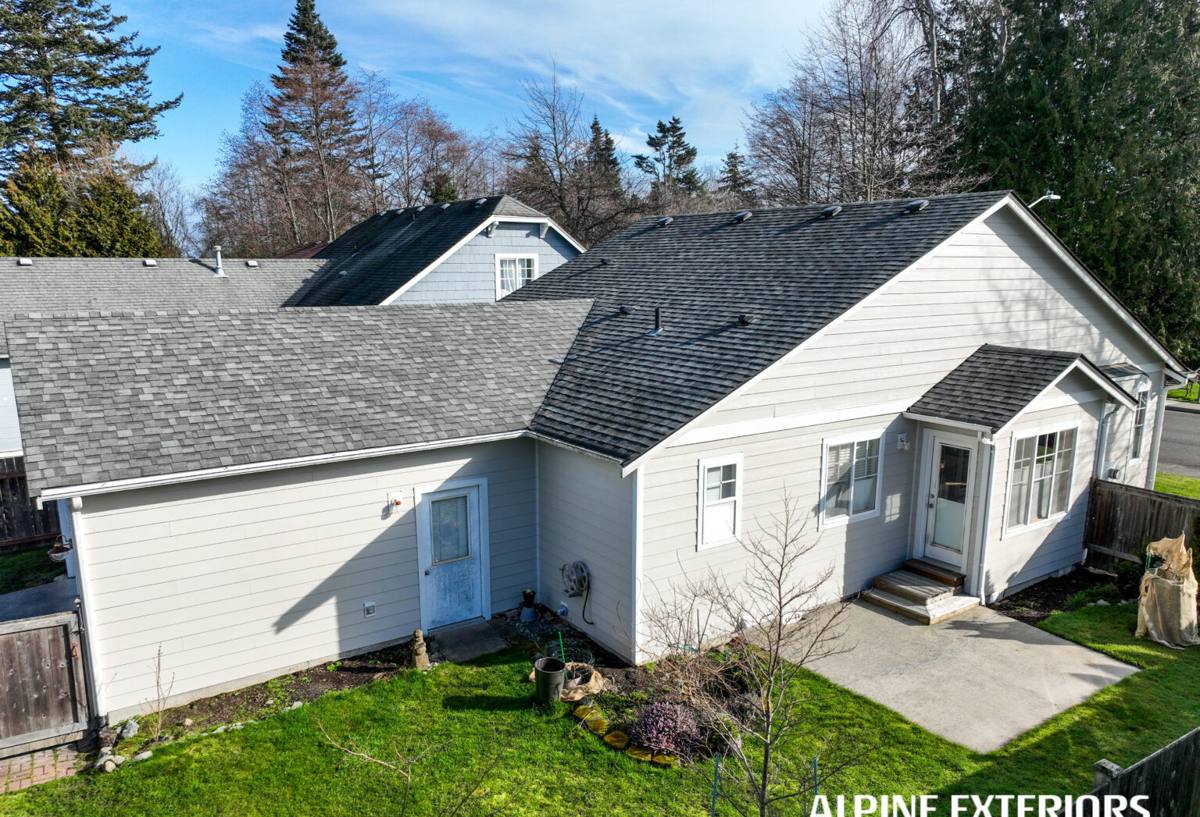
What a Correct Asphalt Shingle Installation Actually Involves
A shingle roof is a system, not a single product. The shingles themselves get the attention, but the components underneath and around them are what determine whether the roof actually performs in this climate.
- Underlayment: A synthetic or self-adhered underlayment rated for high-moisture climates, not the minimum felt allowed by code.
- Ice and water barrier at vulnerable zones: Eaves, valleys, and roof-to-wall transitions get a self-sealing membrane, since these are the areas driving rain targets first.
- Flashing: New step flashing, counterflashing, and valley metal — not roofing over old, corroded flashing to save a step.
- Fastening pattern: Correct nail placement and count per shingle, sized and positioned to hold against wind gusts common on exposed lots near the water.
- Starter course and edge treatment: Proper starter strips at eaves and rakes so the first line of defense against wind-driven rain isn't skipped.
- Ventilation: Balanced intake and exhaust so the attic and roof deck can actually dry out between wet spells instead of staying damp.
Skipping or shortcutting any one of these doesn't usually cause an immediate problem — it causes a five-to-ten-year problem, which is worse, because by the time it shows up as a stain on a ceiling, the deck underneath may already need repair.
Choosing a Shingle for a Coastal Whatcom County Home
Not every asphalt shingle product is built the same way, and the differences matter more here than in a drier, calmer climate. The table below outlines the practical trade-offs homeowners in Laurel should weigh, without pushing a single "best" answer — the right choice depends on your roof's exposure, slope, and budget.
| Shingle Type | Wind Rating | Algae/Moss Resistance | Best Fit For |
|---|---|---|---|
| Standard 3-tab | Lower (typically 60-70 mph) | Basic, unless treated | Budget-conscious projects on sheltered, lower-exposure roofs |
| Architectural (laminated) | Higher (typically 110-130 mph) | Often includes algae-resistant granules | Most Laurel homes — better wind and moisture performance |
| Algae-resistant (copper/zinc granule) lines | Varies by product line | Purpose-built to slow algae and moss growth | Shaded roofs, north slopes, or roofs near tree cover |
| Impact-rated (Class 4) | Higher, plus impact durability | Varies by product line | Homes wanting longer-term durability and possible insurance credit |
For most Laurel homes, an architectural shingle with algae-resistant granules is the practical middle ground — it costs more than a basic 3-tab up front, but the wind rating and moisture resistance line up with what this coastline actually delivers year-round.
How We Approach a Laurel Roofing Project
Assessment First
Before any material gets ordered, we get on the roof and in the attic. We're checking deck condition, existing ventilation, flashing condition around chimneys and walls, and how the current roof has handled moisture and moss over its life. This tells us whether the project is a straightforward re-roof or whether there's deck repair or ventilation work that needs to happen first.
Tear-Off vs. Overlay
We generally recommend a full tear-off rather than layering new shingles over old. Overlays trap moisture, hide deck problems, and make it impossible to install proper underlayment and flashing — all things that matter more here than in a drier climate. There are limited cases where an overlay is a reasonable, budget-driven choice, and we'll say so plainly if that's the case for your roof.
Installation and Cleanup
We install to the specifications above — proper underlayment, ice and water membrane at vulnerable areas, new flashing, correct fastening, and balanced ventilation. Job-site cleanup includes magnetic sweeps for nails and clearing debris from gutters and landscaping, since a roofing project shouldn't leave a mess behind for you to find later.
Repair or Replace? A Practical Checklist
Not every roofing problem in Laurel means a full replacement. Use this as a starting point, then have it looked at in person — some of these signs overlap between a minor repair and a bigger issue.
- Isolated shingle damage from a storm or falling debris, with the rest of the roof in good shape — usually a repair.
- Granule loss concentrated in one area versus spread evenly across the whole roof — localized wear can often be repaired.
- Moss on a shaded section but a dry, intact roof elsewhere — often a cleaning and ventilation fix, not a full tear-off.
- Soft spots in the decking when walked, or daylight visible through the roof boards — this points to deck damage that needs to be addressed regardless of shingle age.
- Roof age approaching or past its rated lifespan with widespread granule loss and curling — replacement is usually the more cost-effective path.
- Recurring leaks in different spots each season — a sign the underlayment or flashing system is failing broadly, not just in one location.
Ventilation: The Part of the Roof You Don't See
A shingle roof that looks perfect from the ground can still be failing from underneath if the attic can't breathe properly. In a climate with as much sustained moisture as Whatcom County sees, balanced intake (usually at the eaves) and exhaust (at or near the ridge) keep warm, moist air from condensing against the roof deck. Poor ventilation shortens shingle life from the inside out and contributes to moss and mildew conditions on the outside. We check this on every project — it's a small line item compared to the shingles themselves, but it affects how long everything else lasts.
Why a Crew That Already Works This Area Matters
Laurel and the surrounding Semiahmoo-area neighborhoods have their own weather pattern — closer to the water, more wind exposure on certain lots, and more sustained dampness under tree cover than you'll find a short drive inland. A roofing crew that works this specific area regularly knows which details actually matter here: where driving rain typically finds its way in, which roof orientations grow moss fastest, and which shingle and underlayment combinations hold up instead of just meeting minimum code. That local pattern recognition is hard to get from a crew that's mostly worked drier, calmer regions and treats every roof the same.
After Installation: Keeping a New Roof Performing
A correctly installed shingle roof in this climate still benefits from basic upkeep. Keep gutters and valleys clear of needles and debris so water doesn't pool. Have moss addressed early on shaded sections before it lifts shingle edges, rather than waiting until it's widespread. And after major windstorms, a quick visual check — or a call to us — can catch a lifted shingle before it becomes a leak. None of this is expensive or time-consuming, but it's the difference between a roof that reaches its full rated life and one that doesn't.
If you're weighing a repair, planning a full replacement, or just want an honest read on where your roof stands, we're happy to take a look. Reach out for a free, no-pressure estimate using the form below.