 Semiahmoo Siding
 Fiber Cement Siding Built for Sumas Conditions
Sumas sits in a part of Whatcom County where houses take a steady beating from weather most of the year. You get driving rain off the water, damp air that never fully dries out, and a moss season that seems to stretch longer every winter. Add in the salt-tinged air common along this stretch of the Washington coast, and you have a climate that is genuinely hard on exterior building materials. Siding here does not just need to look good on install day — it needs to hold up through repeated wet-dry cycles, resist moisture intrusion at every seam, and shrug off the organic growth that thrives in shaded, damp corners of a home.
We install James Hardie fiber cement siding exclusively in Sumas and throughout Semiahmoo. That is not a marketing angle — it is a standard we set after years of seeing what wood-based and vinyl products do to homes in this exact climate. This page walks through what a fiber cement job actually needs to get right here, what our process looks like, and why local experience matters as much as the material itself.
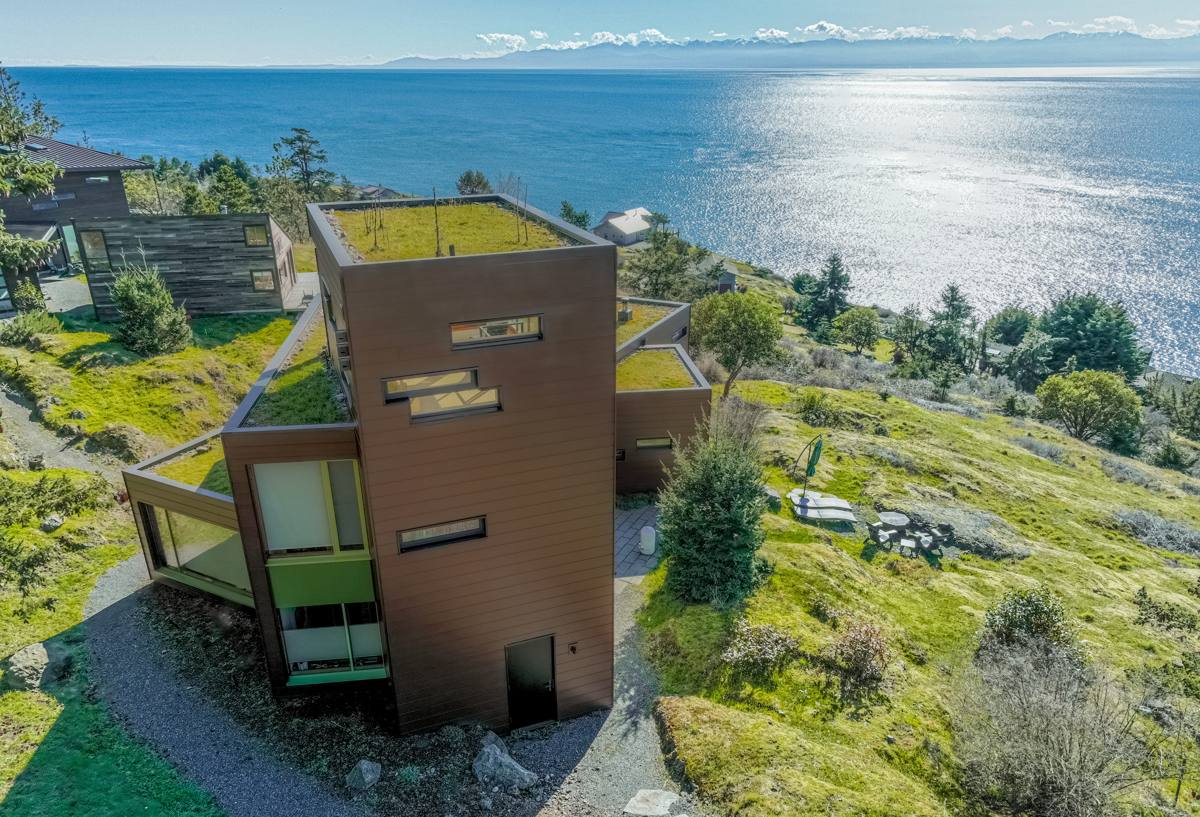
What This Climate Actually Does to Siding
Whatcom County's coastal weather pattern creates a few specific stresses that any siding installation in Sumas has to be engineered around:
- Driving rain: Wind-driven storms push water sideways into wall assemblies, not just down. Poorly flashed seams, butt joints, and trim intersections are where water finds its way behind the cladding.
- Salt air: Airborne salt accelerates corrosion on fasteners, flashing, and any exposed metal. It also degrades certain paint and coating systems faster than inland climates would.
- Extended moss and algae season: Cool, damp, shaded conditions for much of the year give moss, mildew, and algae a long runway to establish on north-facing walls and anywhere airflow is restricted.
- Wet-dry cycling: Siding here rarely gets to fully dry out between rain events. Materials that absorb moisture and swell, even slightly, are working against themselves season after season.
None of this is unusual for the region — it is simply the baseline any siding choice in Sumas has to survive, not just for a season, but for decades.
Why Fiber Cement Fits This Environment
James Hardie fiber cement is a mix of cement, sand, and cellulose fiber, cured into a dense, stable board. It does not absorb water the way wood-based products do, and it will not rot. It is also non-combustible, which is a genuine safety advantage but a separate topic from the moisture performance that matters most in this climate.
For Sumas specifically, the relevant properties are:
- Dimensional stability: Fiber cement does not swell and shrink with moisture the way wood or wood-composite siding does, so joints stay tighter over time and paint film stays intact longer.
- Factory-applied ColorPlus finish: Hardie's baked-on finish is more consistent and more resistant to fading and moisture damage than field-applied paint, which matters when a house is exposed to salt air and long wet seasons.
- Engineered for the Pacific Northwest: Hardie's HZ5 product line is specifically formulated for climates with freeze-thaw cycling and sustained moisture exposure, which describes this part of Washington well.
- Surface resistance to organic growth: A dense cement-based surface, correctly primed and finished, gives moss and algae less to grip onto compared to porous wood substrates.
What a Correct Installation Involves
Fiber cement siding is only as good as the installation behind it. In a climate like this one, a handful of details separate a job that lasts thirty-plus years from one that develops problems in five.
Water Management Comes First
Before a single board goes up, the wall needs a properly lapped weather-resistant barrier, correctly integrated window and door flashing, and rainscreen or drainage detailing where the wall assembly calls for it. In a driving-rain climate, the siding itself is really the second line of defense — the water management system behind it is what actually keeps a wall dry.
Fastening and Clearances
Hardie specifies exact fastener types, spacing, and clearance requirements — including a minimum gap between the bottom of the siding and grade, roofing, decks, and other horizontal surfaces. Skipping these clearances is one of the most common ways installers set a house up for moisture problems that show up years later.
Joint and Seam Treatment
Butt joints, corners, and penetrations (hose bibs, vents, light fixtures) are where water intrusion actually happens. Every seam needs to be caulked, flashed, or capped correctly per manufacturer spec — not just for a clean look, but because these are the failure points in a coastal climate.
Cutting and Sealing Cut Edges
Any field-cut edge exposes raw fiber cement that needs to be primed and sealed before installation. Left unsealed, cut edges are more vulnerable to moisture absorption, which defeats part of the reason to choose the material in the first place.
Installation Checklist We Follow on Every Sumas Job
- Weather-resistant barrier inspected and correctly lapped before siding starts
- Window, door, and penetration flashing installed to shed water outward and downward
- Minimum clearances maintained at grade, roofline, decks, and porches
- Fasteners matched to Hardie spec (type, length, spacing) to resist corrosion in salt air
- All field-cut edges primed and sealed before installation
- Butt joints and trim intersections properly caulked or flashed, not just butted together
- Final inspection for gaps, nail pops, and touch-up paint needs before job close-out
Comparing Siding Options for a Sumas Home
| Material | Moisture Behavior in This Climate | Maintenance Over Time | Typical Lifespan |
|---|---|---|---|
| James Hardie Fiber Cement | Does not absorb or swell; factory finish resists moisture damage | Occasional wash, minimal repainting with ColorPlus | 30+ years with correct install |
| Vinyl Siding | Does not rot but can warp, crack, or fade in UV and temperature swings; seams can allow water behind panels | Low, but panels can't be repainted easily once faded | 20-30 years, variable |
| Primed Wood or Cedar | Absorbs moisture, prone to swelling, cupping, and rot in sustained wet climates | Frequent repainting/resealing, higher long-term cost | 15-25 years, heavily maintenance-dependent |
| LP SmartSide (engineered wood) | Better than raw wood but still wood-based; sensitive to installation quality and moisture exposure at edges | Moderate; edge sealing and caulking upkeep matters | 25-30 years, install-quality dependent |
We don't install vinyl, LP SmartSide, primed wood, or cedar — not because those products have no merit anywhere, but because in a climate with this much sustained moisture and salt exposure, we've made fiber cement our standard. It is the material we are confident stands up to what Sumas weather does to a house.
Our Process for a Sumas Siding Project
1. On-Site Assessment
We walk the property, check the current siding and wall assembly condition, look at drainage and grading around the foundation, and note any areas with existing moisture damage, moss buildup, or flashing issues.
2. Scope and Product Selection
We talk through Hardie product lines (lap siding, panel, shingle-style) and color options, and put together a scope that addresses both the visible siding and the water management details behind it.
3. Prep and Water Management
Old siding comes off, the substrate gets inspected and repaired if needed, and the weather-resistant barrier and flashing system go in correctly before any new siding is installed.
4. Installation to Manufacturer Spec
Fastening, clearances, joint treatment, and edge sealing all follow Hardie's published installation requirements — this is also what keeps the manufacturer's warranty intact.
5. Final Walkthrough
We inspect the finished job with you, address any punch-list items, and make sure you understand basic care going forward.
Why Local Experience Matters
A crew that has worked houses throughout Sumas and Semiahmoo already knows how this specific stretch of Whatcom County behaves — where moss tends to establish first, which wall orientations take the worst of the driving rain, and how salt air affects fasteners and trim over time. That local pattern recognition shows up in small decisions during a job: where to add extra flashing attention, which details to double-check on a north-facing wall, how to sequence work around the wetter months. It is the difference between a crew installing siding by the book and a crew installing siding that is specifically built for the conditions right outside your door.
What to Expect in Terms of Cost
Fiber cement siding is a mid-to-upper range investment compared to vinyl, generally landing above vinyl and often in a similar range to or above quality engineered wood products, depending on the scope, trim complexity, and prep work needed. Costs vary based on the size of the home, how much of the existing wall assembly needs repair, trim and detail work, and product line selected. We provide a specific number after seeing the property — broad ballpark figures without an on-site look tend to be more misleading than helpful.
If you're weighing siding options for a home in Sumas, we're glad to come take a look and walk you through what your house specifically needs. The estimate is free, there's no pressure, and you'll get a straight answer about what a correct job involves before you decide on anything.