 Semiahmoo Siding
 Storm Damage Roof Repair in Birch Bay: Why the Approach Has to Be Different
Birch Bay sits right on the water in northern Whatcom County, and that location changes what "storm damage" actually means for a roof out here. A windstorm that lifts a few shingles on an inland roof can drive rain sideways under flashing, into soffits, and behind ridge caps on a Birch Bay roof that took the same wind broadside off open water. Add in salt-laden marine air working on fasteners and flashing year-round, plus a moss and mildew season that runs most of the year on shaded slopes, and storm damage here rarely stays a simple, isolated problem if it sits unaddressed through the next wet stretch.
We repair storm-damaged roofs for homes in and around Birch Bay, and every call gets the same approach: find out exactly what the storm actually did — not just what's visible from the ground — and fix what caused the damage, not only the part that's showing. This page covers what actually happens to a Birch Bay roof during and after a storm, what a correct repair involves, and why it matters that the crew doing the work already knows this stretch of coastline.
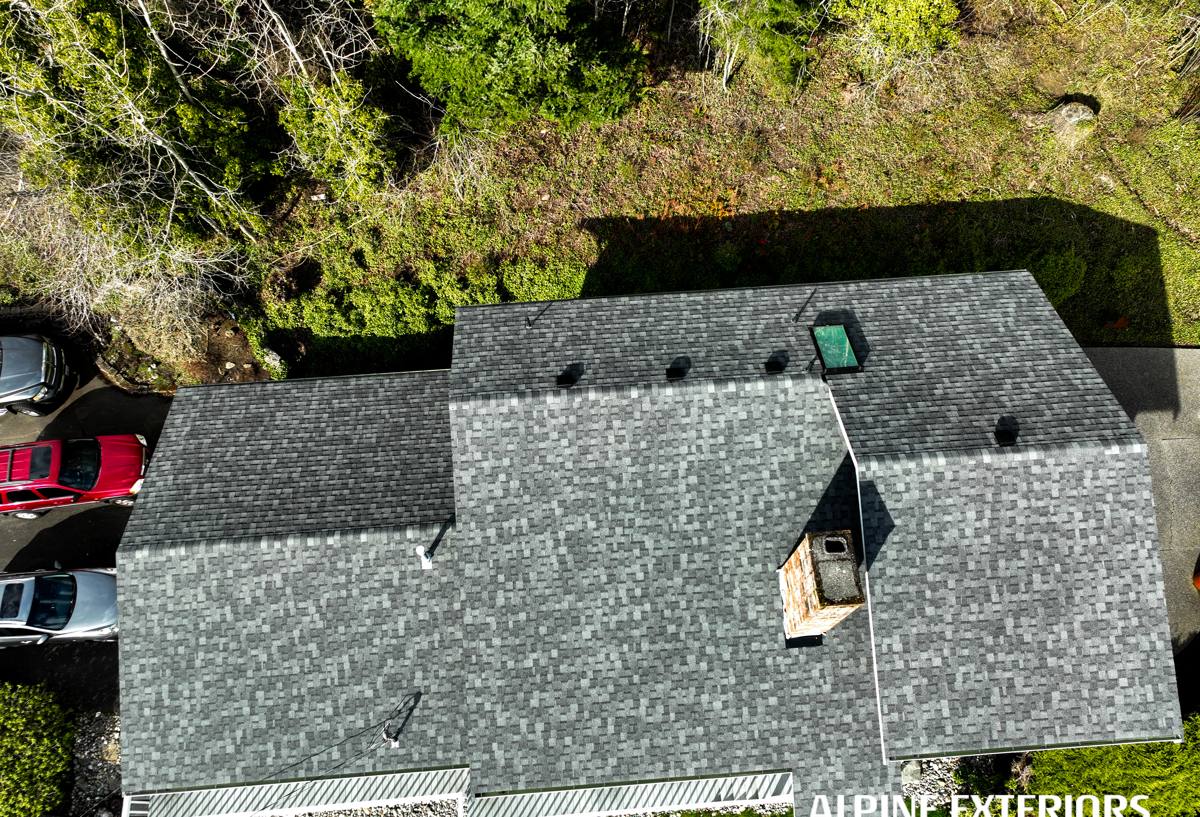
What Coastal Storms Actually Do to a Birch Bay Roof
Wind-Driven Rain and Uplift
Storms coming off the water hit Birch Bay roofs with wind that doesn't have much to slow it down before it arrives. That kind of open exposure means rain gets forced sideways and upward under shingle edges, ridge caps, and flashing laps that are built to shed water falling straight down, not water being pushed uphill by gusts. The same wind that drives the rain can lift shingle tabs, loosen ridge cap fasteners, and peel back sections of underlayment at the edges — damage that isn't always obvious from the ground once the storm has passed.
Salt Air and Accelerated Corrosion
Between storms, Birch Bay's salt-laden marine air is steadily working on every metal component on a roof — flashing, fasteners, vent caps, gutter hardware. That ongoing corrosion doesn't cause storm damage by itself, but it weakens exactly the components a roof depends on to survive the next windstorm. A flashing detail that's already thinning from years of salt exposure is far more likely to fail outright when a storm actually tests it than one that was installed with corrosion-resistant materials from the start.
Moss and Trapped Moisture After the Storm
Whatcom County's long moss season means storm damage often doesn't announce itself right away. Water that gets under a lifted shingle or past a compromised flashing lap can sit there, feeding moss and mildew on shaded, north-facing slopes, for weeks before it works through to the underlayment or deck. By the time a stain shows up on an interior ceiling, that moisture has usually been active a lot longer than the timing of the storm itself would suggest.
Signs Your Birch Bay Roof Took Storm Damage
Some damage is obvious right after a storm. A lot of it isn't, especially from the ground. Worth checking — or having checked — after any significant wind or rain event off the water:
- Shingles that are missing, curled, cracked, or visibly lifted at the tabs
- Granules collecting in gutters or at the base of downspouts after the storm
- Flashing around chimneys, vents, or skylights that looks bent, lifted, or separated from the roof plane
- Branches, needles, or other debris sitting in valleys where it can trap water
- Soft spots or give when the roof deck is walked, particularly near valleys or roof-to-wall transitions
- New water stains on interior ceilings or near exterior wall tops, especially after a windy storm
- Gutters or downspouts pulled loose, bent, or knocked off the fascia
None of these guarantee a major repair on their own, but any of them is worth a professional look before the next storm system moves through.
What to Do in the First Few Days After a Storm
How a homeowner handles the days right after storm damage affects both the repair and, often, an insurance claim. If you can safely see parts of the roof from the ground, photograph anything that looks obviously wrong — missing shingles, displaced flashing, debris sitting in a valley — before cleanup starts. Stay off the roof yourself, especially on a wet or windy day; a lot of what actually matters is only findable by someone who does this for a living and knows the difference between a compromised flashing lap and normal wear. If there's active water intrusion inside the house, a temporary tarp or cover over the affected section can keep a contained problem from turning into a much bigger one while a proper repair gets scheduled.
How We Diagnose Storm Damage Before Recommending Repair
A storm damage estimate that's actually useful starts with a real inspection of the roof, not an assumption based on what's visible from the driveway. That typically includes:
- Walking the roof plane to check every shingle course, not just the sections visible from ground level
- Inspecting flashing at every valley, chimney, vent, and roof-to-wall transition for movement or gaps caused by wind
- Checking ridge caps and edge details, which take the most direct load in a wind event
- Probing the deck for soft spots where wind-driven rain may have already reached the sheathing
- Checking attic ventilation and the underside of the roof deck for moisture or staining that hasn't reached the ceiling yet
- Documenting what we find with photos, which supports both our written scope of work and any insurance claim you're filing
We walk through the findings honestly — what the storm actually damaged, what was already wearing down before the storm hit, and what's cosmetic versus what needs attention now — before putting together a scope of work.
Repair or Replace? How That Decision Actually Gets Made
Storm damage doesn't automatically mean a new roof, and full replacement isn't automatically the safer or more cost-effective call either. The honest factors that actually drive this decision:
| Factor | Usually Points to Repair | Usually Points to Replacement |
|---|---|---|
| Extent of damage | Isolated to one slope or a handful of shingles and flashing points | Spread across multiple slopes or structural areas |
| Age of existing roof | Well within its rated service life | Already near or past its expected lifespan |
| Deck condition | Dry and sound underneath the damaged area | Rot or sustained moisture damage present |
| Prior repair history | First significant repair on an otherwise sound roof | Multiple patch repairs already on record |
| Material availability | Matching shingles or roofing material are readily available | Discontinued material makes a seamless repair impractical |
We'll give a straight answer on which category a given roof falls into, including when a full replacement is genuinely the more sensible path, rather than defaulting to whichever job is bigger.
What a Correct Storm Repair Involves
Matching Materials, Not Just Covering the Damage
A repair that patches over storm damage without matching the surrounding shingle profile, color, and exposure tends to look like a patch job and can leave a weak transition point where old and new material meet. On older roofs, an exact shingle match isn't always available, and we'll say so upfront rather than after the work is done, so you can decide whether a close match is acceptable or whether a broader section should be replaced for a cleaner result.
Flashing and Fasteners Built for Salt Air
When we replace flashing or fasteners damaged in a storm, we use corrosion-resistant materials suited to a marine environment, not a like-for-like swap with standard-grade hardware that's likely to corrode again on a similar timeline. This is one of the places a storm repair either holds up through the next decade of storms or needs redoing sooner than it should.
Fixing the Cause, Not Just the Visible Damage
A missing shingle is a symptom. Wind uplift at a weak nailing pattern, a flashing lap that was never properly sealed, or ventilation that's kept a roof deck damp are usually part of the cause. A repair that replaces only what's visibly missing, without correcting the detail that let the storm get a foothold in the first place, tends to fail again in the same spot — often faster the second time, since the underlying weakness was never addressed.
Structural and Deck Issues Get Priority
If storm damage has reached the roof deck itself — soft spots, rot, or sustained moisture — that gets addressed to the same structural standard as new construction, not treated as a lesser scope because the rest of the roof is only being repaired.
Why a Local Crew That Already Works Birch Bay Matters
A roofer who mostly works inland can still do competent repair work here, but a Birch Bay storm repair has variables that come up more often on this stretch of coastline than elsewhere in Whatcom County — corrosion patterns tied to sustained salt exposure, wind loads connected to open-water sites, and moss growth that can mask or worsen damage on shaded slopes if it isn't addressed at the same time as the repair. Working this area regularly means we're not guessing at those conditions or learning them on your roof. We know what fastener grade actually holds up out here, what a flashing detail needs to survive the next windstorm off the water, and how storm damage tends to progress on a Birch Bay roof if it's left alone through another wet season.
That familiarity also means a more accurate first estimate, with fewer surprises once work is underway, because the inspection accounted for how this specific environment behaves rather than applying a generic checklist built for a drier, more sheltered location.
After the Repair: Reducing Storm Risk Going Forward
A correct repair addresses what the last storm did. A few habits help a Birch Bay roof handle the next one better:
- Have the roof visually checked after any significant windstorm, not just once a year on a fixed schedule
- Keep gutters and downspouts clear so storm runoff has somewhere to go instead of backing up under the roof edge
- Remove moss on shaded slopes before it spreads, since moss holds moisture against roofing material and can work under shingle edges over time
- Trim back branches that overhang the roof, both to reduce debris in valleys and to limit impact damage during high wind
- Address a small leak or lifted shingle right away rather than waiting for the next inspection — these are early signs, not minor ones, in a climate this wet
- Keep a simple record of prior repairs and inspections, which makes future insurance claims and contractor conversations faster
If a recent storm left you with damage, or you just want an honest read on how your Birch Bay roof would hold up to the next one, we're glad to take a look and explain what we find plainly. Reach out below for a free, no-pressure estimate.