 Semiahmoo Siding
 New-Construction Windows Built for Blaine's Coastline
New-construction window installation is a different job from swapping out an old window in an existing wall. It happens during framing, before the weather-resistive barrier is fully lapped and before siding goes on, which means the window is being built into the wall's water-management system rather than dropped into a finished opening. Get that sequence right and the window will shed water for decades. Get it wrong and you won't know it until there's staining on an interior sill or soft sheathing behind the siding, often years later.
Blaine sits at the northwest corner of Whatcom County on Semiahmoo Bay, facing open water off the Strait of Georgia. That exposure matters for window installation more than most homeowners realize. Wind off the water drives rain sideways into wall assemblies, salt-laden air accelerates corrosion on fasteners and hardware, and the long stretch of damp, low-sun months each year keeps north- and west-facing walls wet longer than homes further inland. A new-construction window install in Blaine has to account for all of that from the first cut in the sheathing.
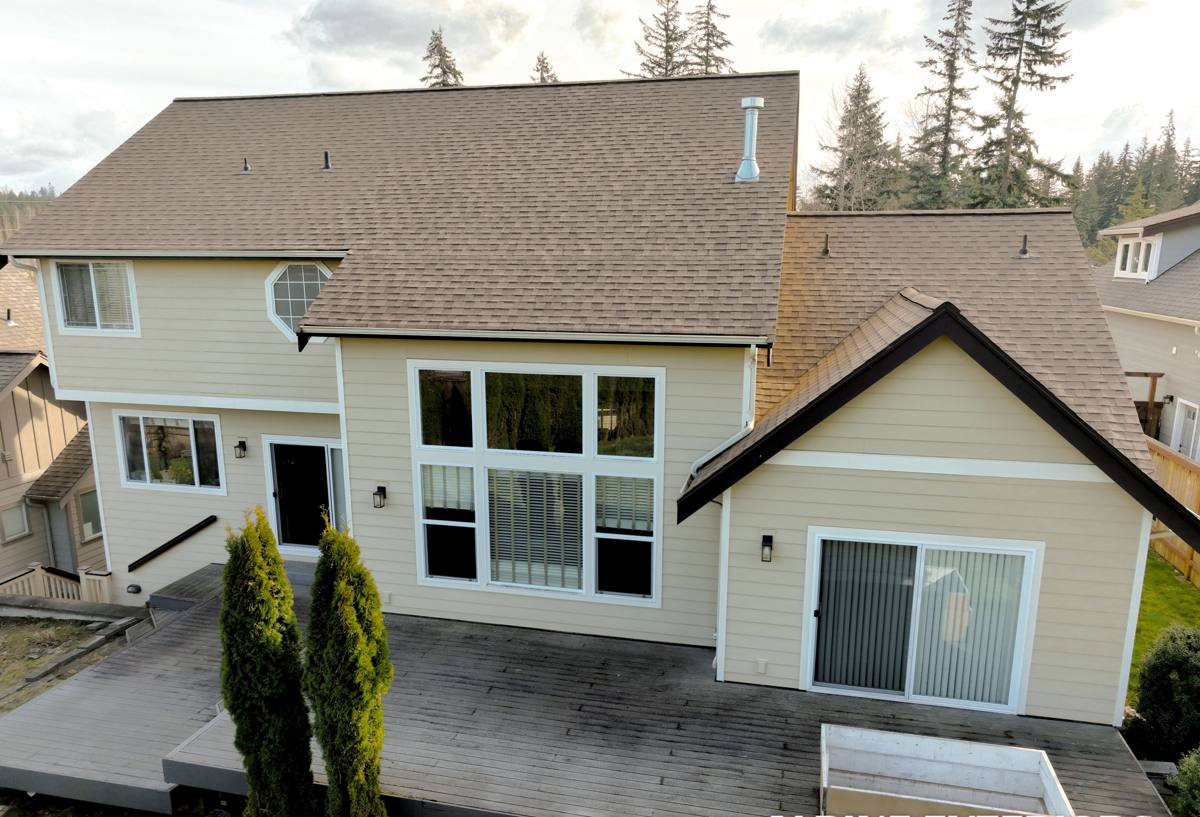
What Blaine's Climate Asks of a New Window Install
Three regional factors drive how we approach every new-construction window opening in this area:
Salt Air and Corrosion
Proximity to Semiahmoo Bay and the Strait means airborne salt reaches building materials on exposed and water-facing elevations. Standard fasteners, unprotected flashing metals, and lower-grade hardware corrode faster here than they would twenty or thirty miles inland. We select corrosion-resistant fasteners and flashing components as a baseline, not an upgrade, on bay-facing installs.
Driving, Wind-Blown Rain
Rain in Blaine rarely falls straight down. Storms coming off the water push moisture sideways and upward under trim and at the top of window openings — exactly the spots where a lazy flashing job fails first. The installation sequence around the head flashing and the sides of the opening has to assume rain will hit the window from an angle, not just from above.
A Long Moss and Algae Season
Whatcom County's damp, mild winters and shoulder seasons keep shaded wall surfaces wet for extended stretches, which is exactly the environment moss and algae need to establish. That's mostly a siding and roofing issue, but it affects windows too: sills and trim that stay damp because of poor drainage become growth points, and trapped moisture behind poorly flashed trim accelerates rot in the surrounding framing long before it's visible from outside.
What a Correct New-Construction Window Installation Involves
A window opening is a system, not a single product. Every layer has to work with the ones next to it.
Rough Opening Prep
The opening needs to be square, plumb, and sized correctly to the window's actual dimensions with proper shim space — not just close enough. We check this before any flashing goes in, because a slightly out-of-square opening leads to a window that's hard to seal and harder to operate.
Sill Pan Flashing and Drainage
The sill is the single most important part of the opening. A sloped sill pan, built or installed correctly, gives any water that gets past the window a way back out instead of a place to collect. In a climate with as much sustained rain as Blaine sees, a flat or poorly sloped sill is one of the most common causes of hidden rot we find in older builds.
Flashing Tape Sequencing
Flashing tape and the weather-resistive barrier have to be layered shingle-style — each piece overlapping the one below it — so water is always directed outward and downward, never trapped behind a layer. This sequence gets rushed on schedule-driven job sites more than any other step, and it's the step that matters most in a wind-driven-rain climate.
Nail Fin Fastening and Sealant
Fastener spacing and type follow the window manufacturer's specification, using corrosion-resistant hardware given the coastal air. Sealant is used at specific points, not as a blanket fix for a bad flashing job — over-sealing a window can trap moisture inside the wall just as easily as under-sealing lets it in.
Integration with the WRB and Siding
The window has to tie into the weather-resistive barrier and, eventually, the siding's own drainage plane as one continuous system. If the window install and the siding install aren't coordinated, gaps and reverse laps show up right at the transitions — a problem we catch because we handle siding and window integration together rather than treating them as separate trades that never talk to each other.
New-Construction vs. Replacement Windows
Homeowners and builders sometimes use these terms loosely, but the products and the install methods are different.
| Factor | New-Construction Windows | Replacement Windows |
|---|---|---|
| Frame style | Nail fin, installed into open framing | Block frame or insert, fits into existing opening |
| Timing | Before siding and interior finishes go on | After the home is finished and occupied |
| Flashing access | Full access to sheathing, sill, and WRB | Limited to what's exposed once old window is out |
| Best use case | New builds, additions, full wall rebuilds | Existing homes keeping their current siding |
| Water-management control | Complete — installer controls every layer | Partial — built on top of existing conditions |
Because a new-construction install gives full access to the opening, it's the best opportunity to get the water-management details exactly right — there's no old caulk, old flashing, or hidden damage to work around.
Choosing a Frame Material for a Coastal Blaine Home
Frame material affects how a window holds up to salt air, moisture, and the region's mild but persistently damp weather.
| Material | How it handles this climate | Maintenance |
|---|---|---|
| Vinyl | Won't rust or corrode; performs well in salt air; some expansion/contraction with temperature swings | Low — occasional cleaning |
| Fiberglass | Very stable dimensionally, strong resistance to moisture and corrosion, holds paint well if a custom color is wanted | Low |
| Wood-clad | Attractive interior wood look; exterior cladding protects from weather but any breach in the cladding invites moisture into the wood core | Higher — cladding seams and any exposed wood need monitoring |
| Bare aluminum | Prone to corrosion in salt air without a quality finish; thermally conductive, which shows up as condensation in our winters | Higher — finish and seals need regular checking |
We don't push one material as universally "best" — we walk through the trade-offs for the specific elevation, exposure, and budget on your project. On bay-facing walls in particular, corrosion resistance and moisture tolerance carry more weight than they would on a sheltered inland lot.
Our New-Construction Window Process
- Plan coordination. We review window specs and rough opening sizes against the framing plans before anything is installed, working directly with your builder or general contractor.
- Product selection review. We go over frame material, glazing package, and hardware options against your budget and the exposure of each elevation.
- Opening verification. Every rough opening is checked for square, level, and correct dimensions before flashing begins.
- Flashing and installation. Sill pan, shingle-lapped flashing tape, WRB integration, fastening, and sealant are installed to manufacturer specification and best trade practice for this climate.
- Documentation. We photograph flashing and installation details before they're covered by siding, both for our records and to support the manufacturer's warranty.
- Final check before close-in. A last inspection confirms every opening is properly sealed and drained before the wall is closed up with siding.
Checklist: What to Verify Before the Wall Closes In
Whether you're a homeowner watching your build or a builder bringing in a window crew, these are the items worth confirming before siding covers the openings for good:
- Rough openings are square, plumb, and correctly sized for the window units ordered
- Sill pans are sloped to drain outward, not flat or pitched inward
- Flashing tape is lapped shingle-style at every layer, with no reverse laps
- Fasteners and flashing metals are corrosion-resistant, appropriate for a marine climate
- Sealant is applied at manufacturer-specified points only, with weep paths left clear
- Window-to-WRB integration is continuous, with no gaps at corners or transitions
- Photos of flashing details are taken and kept on file before siding is installed
Why a Crew That Already Works in Blaine Matters
New-construction window installation depends on judgment calls — how much flashing overlap a given elevation needs, where sealant helps versus where it traps moisture, how much salt exposure a bay-facing wall actually gets. A crew that already works in Blaine has made those calls on other homes in this same wind and rain pattern and knows what actually holds up here versus what looks fine on install day and fails in year three or four. We coordinate directly with local builders and general contractors, understand the pace of a new-build schedule, and bring the same water-management standards to the window openings that we apply to the siding and trim around them — because on a coastal Whatcom County home, those systems only work if they're built as one.
If you're building new in or around Blaine and want the window openings done right the first time, we'd be glad to take a look at your plans and walk you through the options. Reach out for a free, no-pressure estimate using the form below.