 Semiahmoo Siding
 Board & Batten Siding for Wiser Lake Homes
Wiser Lake sits in a part of Whatcom County where the weather doesn't take a season off. Homes here deal with salt-laden air moving in off the Semiahmoo area, long stretches of driving rain through fall and winter, and a moss season that can run six months or longer on north- and east-facing walls. Board and batten siding has become a popular choice for homeowners in this area because the look works with the rural and lakeside character of the neighborhood, but the material and the installation details matter more here than they would in a drier inland climate. A board and batten wall that isn't built and sealed correctly for this environment will show moisture stress, moss growth, and panel movement years before it should.
This page covers what board and batten siding needs to hold up around Wiser Lake, what a correct installation actually involves, and why we only install it in James Hardie fiber cement — never vinyl, LP SmartSide, or raw wood.
Why Board & Batten Fits This Area
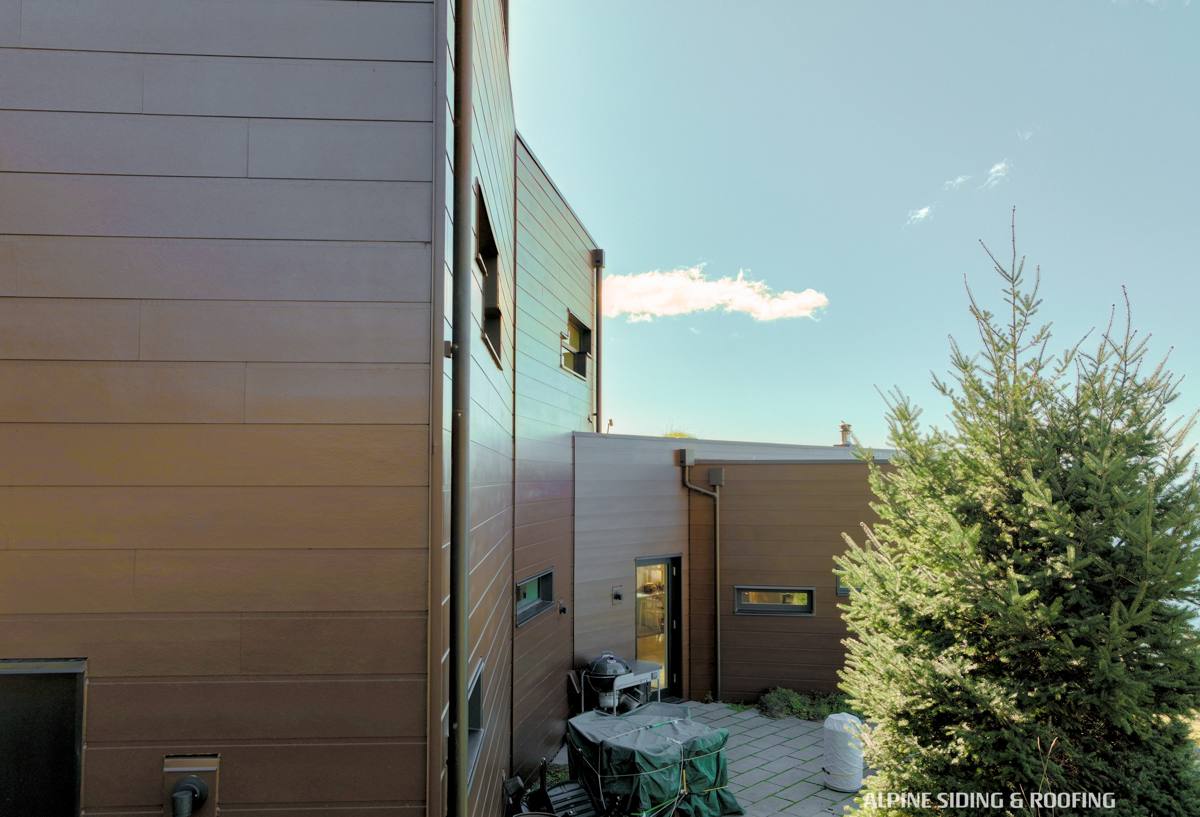
Board and batten is a vertical siding pattern: wide flat panels (or boards) with narrow battens covering the seams between them. It's been used on farmhouses, cabins, and lake homes in the Pacific Northwest for generations because the vertical lines shed water differently than horizontal lap siding, and the style reads as clean and understated rather than ornamental. Around Wiser Lake, that fits both the older rural properties and the newer builds going up near the water.
Functionally, the pattern has an advantage in wet climates: the battens create a raised profile that keeps standing water from pooling flat against the wall the way it can on some lap or panel styles. That's a real benefit — but only if the battens, panels, and flashing underneath are installed to actually manage water, not just create the look.
Where Board & Batten Gets Used Wrong
The single biggest mistake we see on board and batten jobs — from other installers, not just DIY work — is treating the battens as purely decorative. If the panel joints underneath aren't flashed and the battens aren't fastened with the right spacing and gap, the wall looks right for a year or two and then starts failing at the seams, which is exactly where board and batten depends on being done well.
What Wiser Lake's Climate Demands From This Siding
Salt Air and Driving Rain
Proximity to the water means airborne salt settles on exterior surfaces and accelerates corrosion on fasteners, flashing, and any metal trim components. It also means wind-driven rain regularly hits walls at an angle instead of falling straight down, which pushes water into joints and seams that a calmer climate would never test. Board and batten has more vertical seams per square foot than plain lap siding, so every one of those seams needs to be built to shed water outward, not let it track inward.
The Long Moss Season
Whatcom County's wet, mild winters and shaded, tree-lined lots around Wiser Lake create ideal conditions for moss and algae growth on north- and east-facing walls, especially anywhere shaded by trees near the shoreline. Moss holds moisture against the siding surface for extended periods, which is a problem for any material that isn't dimensionally stable or properly sealed at the factory. It's also simply harder to keep a textured wood or vinyl board and batten wall looking clean under these conditions than it is with a factory-finished fiber cement surface.
What a Correct Installation Actually Involves
Drainage Plane and Rainscreen Gap
Behind the visible siding, there needs to be a weather-resistive barrier and, ideally, a rainscreen gap that lets any moisture that does get past the surface drain and dry out instead of sitting against the wall sheathing. This step is invisible once the job is done, which is exactly why it's the step that gets skipped on rushed installs — and exactly why we don't skip it.
Panel and Batten Layout
Panel joints need to land on framing, be properly flashed, and be spaced to allow for the material's normal expansion and contraction. Battens go on with a controlled reveal and are fastened per the manufacturer's engineering specs — not just nailed wherever looks even from the ground.
Fastening and Flashing
In a salt-air environment, fastener choice matters more than most homeowners realize. Corrosion-resistant fasteners rated for the exposure, correct flashing at every horizontal transition (window heads, belly bands, roof-to-wall intersections), and sealed penetrations are what actually keep water out over the long term — the siding material itself is only part of the system.
Starter Strips and Bottom Terminations
Board and batten that terminates at grade, a deck, or a foundation wall needs a proper starter strip and clearance gap. Getting this wrong is one of the most common causes of moisture damage at the base of a wall, regardless of what siding material sits above it.
Why We Install James Hardie and Nothing Else
Board and batten siding is sold in several materials — vinyl, engineered wood like LP SmartSide, raw or primed cedar and spruce, and fiber cement. We install exclusively James Hardie fiber cement, using HardiePanel vertical siding with Hardie trim battens, and we won't quote the other options. Here's the honest breakdown of why.
| Material | How it performs in salt air / heavy rain / moss | Long-term maintenance |
|---|---|---|
| Vinyl board & batten | Doesn't rot, but panels can warp or gap over time, and seams are a common water entry point in wind-driven rain | Low upkeep, but color fades and can't be repainted easily; damaged sections are visible against faded panels |
| LP SmartSide (engineered wood) | Treated to resist moisture, but it's still a wood-based product — edge sealing and caulking have to be maintained or moisture gets in | Requires periodic inspection of joints and touch-up; more installation-sensitive than fiber cement |
| Raw or primed cedar/spruce | Attractive but absorbs moisture readily; moss and mildew take hold faster on unfinished wood surfaces in shaded, damp spots | Needs repainting or re-staining on a recurring cycle; highest ongoing maintenance of the group |
| James Hardie fiber cement | Non-combustible, dimensionally stable, engineered specifically for wet Pacific Northwest climates (HZ5 product line) | Factory-applied ColorPlus finish holds color and resists moss/mildew far longer than field-applied paint |
We're not claiming the other products are junk — vinyl and engineered wood siding are used successfully all over the country. But for a wet, salty, moss-prone climate like Whatcom County's, and for a pattern like board and batten that has more seams and joints than lap siding, we've made fiber cement our standard because it holds up to this specific set of conditions with less maintenance and fewer callbacks. James Hardie also backs its ColorPlus-finished products with a strong, transferable warranty, which matters on a siding style where seam and joint quality is what determines whether the wall performs.
Our Process for a Wiser Lake Board & Batten Job
- Site walk and moisture check. We inspect the existing wall assembly, check for hidden moisture or rot around windows, trim, and the base of the wall before quoting anything.
- Removal and sheathing inspection. Old siding comes off and we look at what's underneath — this is where problems from a prior installation usually show up.
- Weather barrier and drainage plane. We install a proper water-resistive barrier and rainscreen gap before any siding goes up.
- Panel and batten installation. HardiePanel is installed with correct joint flashing and fastening; battens go on with proper reveal and spacing.
- Trim, flashing, and sealant. Window heads, corners, and transitions get flashed and sealed to the same standard as the field of the wall.
- Final walkthrough. We go over the finished job with the homeowner before considering it done.
Living With Board & Batten Through Moss Season
James Hardie's factory finish reduces moss and mildew growth compared to field-painted wood, but no exterior surface in this climate is maintenance-free forever. A little seasonal attention keeps a correctly installed wall looking good for decades.
- Rinse shaded, north-facing walls once or twice a year to clear early moss growth before it establishes
- Keep tree branches and shrubs trimmed back from the siding so walls get airflow and sun exposure
- Check gutters and downspouts each fall — overflow during heavy rain is one of the most common causes of localized moss and staining
- Inspect caulking at trim and window edges every year or two and have it touched up if it's cracking
- Have any impact damage or panel movement looked at promptly rather than waiting for it to spread
Why a Local Crew Matters for This Job
Board and batten siding is less forgiving of installation shortcuts than plain lap siding — there are simply more seams, more flashing details, and more places for water to find a way in if the crew doesn't know how to detail it for this specific climate. A crew that already works homes around Wiser Lake and the broader Semiahmoo area has seen how salt air, driving rain, and long moss seasons actually play out on a wall over years, not just at handoff. That local experience shows up in the small decisions — flashing choices, fastener selection, where to add extra sealant — that a crew unfamiliar with this coastline wouldn't necessarily think to make.
Get a Free Estimate
If you're planning a board and batten project for a home near Wiser Lake, we'd be glad to take a look and walk you through what correct installation looks like for your specific wall conditions. There's no pressure and no obligation — just a straightforward assessment from a crew that installs this siding style in this climate every week. Use the form below to request your free estimate.