 Semiahmoo Siding
 Why New Roof Installation in Custer Isn't a One-Size-Fits-All Job
Custer sits inland from the open water, but it doesn't escape the weather that defines this part of Whatcom County. Homes here still take on salt-laced air moving in off the bay, long stretches of driving rain through fall and winter, and a moss season that can run eight months or longer under the shade of the fir and cedar cover common to this area. A roof that would hold up fine in a drier inland climate can start failing early here if it wasn't designed and installed with these conditions in mind.
New roof installation is one of the biggest investments a homeowner makes in a property, and it's not a job where corners show up right away — they show up in year four or five, as leaks around a poorly flashed chimney, moss lifting shingle edges, or a north-facing slope that never quite dries out between storms. Getting it right the first time matters more here than in milder climates, because the margin for error is smaller.
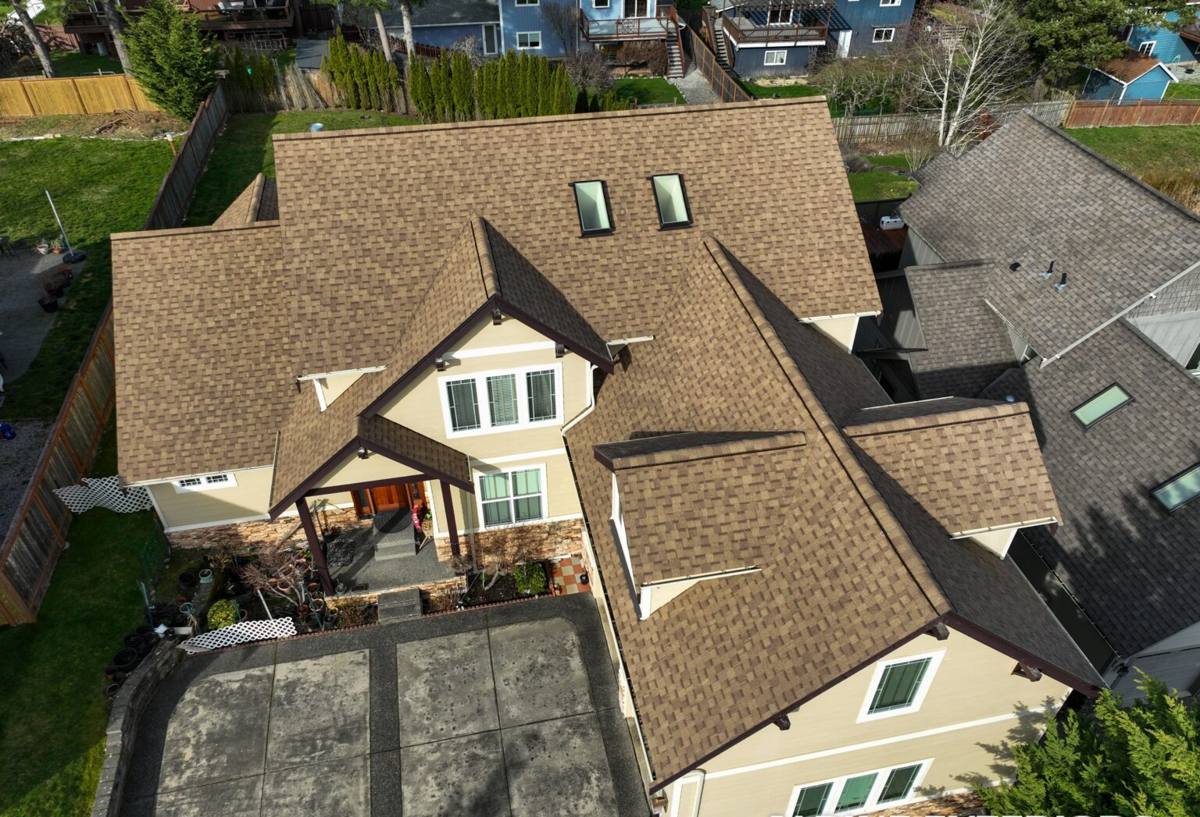
Signs a Custer Roof Needs Replacement, Not Another Repair
Not every roof problem calls for a full tear-off. But repeated patch jobs on an aging roof usually cost more over time than one correctly done replacement, especially once a roof is taking on water in more than one spot. Here's what typically points toward replacement rather than another repair:
- Granules collecting in gutters and downspouts, or shingles that look bald in patches
- Shingles that are cupping, curling at the edges, or cracking when you look closely from the ground
- Moss or algae staining that keeps coming back within a season or two of cleaning
- Daylight visible through the attic roof deck, or damp insulation after a storm
- A roof that's already had two or more rounds of significant repairs in the last several years
- Missing or lifted flashing around chimneys, skylights, or roof-to-wall transitions
- The roof is at or past the manufacturer's expected service life for its material
If you're seeing two or more of these at once, it's worth having someone look at the whole system rather than chasing individual leaks one at a time.
What Goes Into a Correct New Roof Installation
Tear-Off and Deck Inspection
A proper job starts with a full tear-off down to the roof deck, not an overlay on top of old, failing material. That's the only way to actually see the plywood or OSB sheathing underneath. In a wet climate like ours, it's common to find soft spots or water-stained sheathing around old flashing points and roof valleys — areas where a previous roof was quietly letting moisture through for years. Any damaged decking gets replaced before anything new goes down; installing new roofing over compromised sheathing just hides the problem for another few years.
Underlayment and Water Protection
Underlayment is the roof's real waterproofing layer — the shingles or panels on top are the first line of defense, but the underlayment is what keeps the deck dry when wind-driven rain gets past them, which it will during a strong winter storm. Given how much sideways rain this area sees, we don't treat underlayment as a formality. Self-adhered ice-and-water membrane goes in valleys, around penetrations, and along eaves, with synthetic underlayment covering the rest of the field.
Ventilation
A roof system needs to breathe. Balanced intake at the soffits and exhaust at the ridge keeps the attic close to outside temperature and moves moisture out before it condenses on the underside of the deck. Poor ventilation is one of the most common hidden causes of premature roof failure and moss growth in this region, because a warm, damp attic keeps the roof deck from drying out between rainstorms.
Flashing and Penetrations
Chimneys, skylights, vent pipes, and wall-to-roof transitions are where the overwhelming majority of roof leaks start — not in the open field of shingles. Correct flashing means new metal at every one of these points, properly stepped and counter-flashed, not caulk smeared over old flashing to save time.
Material Installation
Fastener placement, nailing patterns, and starter course installation all need to match the manufacturer's specifications exactly, both for performance and to keep the material warranty valid. This is also where wind exposure matters — homes with more open exposure to weather coming off the water need a higher wind-rated installation method than a sheltered lot might.
Choosing a Roofing System for Whatcom County Weather
There's no single "best" roofing material — the right choice depends on the home's roof pitch, tree cover, budget, and how long you plan to own the property. Here's an honest comparison of the systems we install most often in this area:
| Material | Typical Lifespan | How It Handles Moss & Moisture | Trade-Offs |
|---|---|---|---|
| Architectural asphalt shingle | 25–30 years | Good with proper ventilation and periodic cleaning; algae-resistant granules help but don't eliminate moss risk | Best value; wide color/style range; needs occasional moss treatment on shaded slopes |
| Standing seam metal | 40–50+ years | Sheds water and dries fast; moss struggles to get a foothold on smooth metal | Higher upfront cost; needs a crew experienced with metal detailing |
| Synthetic/composite shingle | 30–50 years | Resists moisture absorption better than wood; performs well in wet climates | Cost sits between asphalt and metal; product selection is more limited |
| Cedar shake | 20–30 years with upkeep | Attractive but absorbs moisture; requires regular maintenance to resist moss and rot here | Highest maintenance burden in a climate this wet; we're upfront with clients about that before they commit |
For heavily shaded, north-facing roofs common on wooded Custer lots, we'll often steer homeowners toward metal or a well-ventilated architectural shingle system over cedar, simply because the maintenance burden of wood shake in near-constant shade is a lot to take on. That's a professional recommendation based on moisture behavior, not a knock on the material itself.
Our Installation Process, Start to Finish
- On-site inspection and estimate — we walk the roof and attic, note ventilation, decking condition where visible, and flashing points, and give you a written scope and price.
- Material selection — we go over system options and trade-offs for your specific roof, not a one-size answer.
- Scheduling and protection — landscaping, siding, and gutters get protected before tear-off begins.
- Tear-off and deck assessment — old roofing comes off, the deck is inspected, and any needed repairs are approved with you before we cover them up.
- Underlayment, flashing, and ventilation install — the parts of the job that determine whether the roof performs for the next few decades.
- Final material installation — shingles, panels, or shakes go on to manufacturer spec.
- Cleanup and magnetic sweep — job site and yard cleared of debris and stray fasteners.
- Final walkthrough — we go over the finished roof with you before calling the job done.
Moss, Algae, and Custer's Long Wet Season
Moss doesn't just sit on top of shingles — it holds moisture against the roof surface and works its way under shingle tabs, lifting them over time and creating entry points for water. In a climate where roofs can stay damp for days after a storm, moss has a long window to establish itself, especially under tree cover. A correctly installed roof reduces that risk through better airflow and drainage, but it doesn't eliminate the need for basic upkeep. We tell every client the same thing: keep gutters clear, keep overhanging branches trimmed back from the roofline, and have the roof looked at every couple of years so small moss growth gets addressed before it becomes a shingle problem.
What Actually Drives the Cost of a New Roof
We don't quote prices without seeing the roof, because too many variables affect the real cost. What we can do is walk through the factors that move the number up or down, so an estimate makes sense when you get it:
| Cost Factor | Why It Matters |
|---|---|
| Roof size and number of facets | More squares and more complex geometry mean more labor and material |
| Pitch and accessibility | Steep or hard-to-access roofs take longer and require more safety setup |
| Number of layers to remove | Tearing off two layers of old roofing costs more than one |
| Decking condition | Rotten or soft sheathing found during tear-off needs replacement before new roofing goes on |
| Material choice | Asphalt, metal, synthetic, and cedar all sit at different price points |
| Ventilation and flashing upgrades | Bringing an older roof's ventilation or flashing up to current standards adds scope but reduces future problems |
| Chimneys, skylights, and penetrations | Each one adds flashing and labor time |
An honest estimate spells out these factors rather than handing you a single number with no explanation behind it.
Why a Crew That Already Works Custer Matters
Roofing crews that mostly work drier, calmer climates sometimes underbuild for what this region actually throws at a roof over a winter. A crew that regularly works Whatcom County homes knows to spec underlayment for wind-driven rain rather than the minimum code requires, knows which roof orientations in this area tend to hold moss longest, and knows how to detail flashing so it holds up through repeated freeze-thaw and soak cycles rather than just looking right on installation day. That local pattern recognition is hard to substitute for, and it's the difference between a roof that performs for its full expected lifespan and one that starts needing attention in year six or seven.
If your Custer home needs a new roof, we're happy to take a look and walk you through what we see — no pressure, no scare tactics, just a straight assessment and a written estimate using the form below.