 Semiahmoo Siding
 Building a Deck That Actually Holds Up in Blaine Harbor
Blaine Harbor sits right where saltwater, wind, and Pacific Northwest rain all meet a residential neighborhood, and that combination is hard on outdoor structures in ways that inland decks never have to deal with. A deck built with generic, one-size-fits-all methods might look fine for the first year or two, then start showing corrosion streaks on the hardware, soft spots where water pooled, and a green film that never fully goes away no matter how often you scrub it. Building correctly for this specific location means thinking about salt exposure, moisture management, and shade-driven moss growth from the design stage forward, not treating them as maintenance problems to solve later.
This page focuses specifically on custom deck construction for homes in and around Blaine Harbor. It's not a generic overview of decks — it's what we've learned building and repairing them in this exact marine environment.
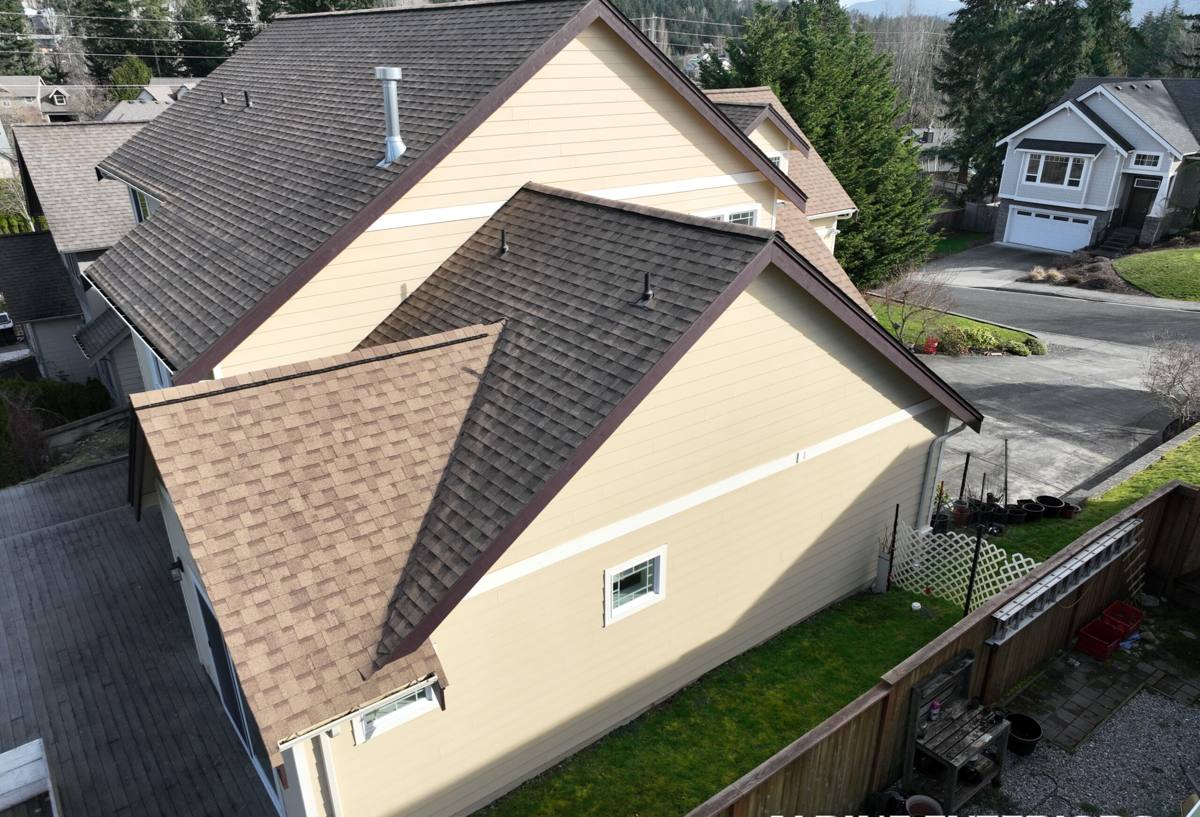
What Salt Air Does to an Unprotected Deck
Proximity to saltwater changes the math on materials and hardware. Airborne salt settles on every exposed surface and accelerates corrosion on anything metal, and it doesn't take a direct ocean view for this to matter — homes several blocks inland from the harbor still see elevated corrosion rates compared to decks built further from the water.
Fastener and Hardware Corrosion
Standard galvanized fasteners and joist hangers are rated for general outdoor use, but in a harbor environment they can start pitting and rusting well before the wood around them shows any wear. Once a fastener corrodes, it loses holding strength, and a deck is only as strong as its weakest connection points — the ledger bolts, the joist hangers, the post bases. We spec stainless steel or marine-grade coated fasteners and connectors for Blaine Harbor builds specifically because the cost difference upfront is small compared to the cost of pulling apart a deck to replace failed hardware down the line.
Wood vs. Composite in Salt Air
Salt air doesn't rot wood directly, but it does accelerate the breakdown of finishes and sealants, which means unprotected or poorly maintained wood loses its weather barrier faster near the water. Composite and PVC decking don't corrode, but any metal fasteners, screws, or structural hardware used with them still need the same salt-resistant treatment. The decking surface is only part of the equation — what's holding it together matters just as much.
Managing Driving Rain and Moisture
Whatcom County gets a lot of rain, and near the harbor it often arrives sideways, driven by wind off the water. That changes how a deck needs to shed and manage moisture compared to a calmer inland site.
Ledger Board Flashing and Waterproofing
The ledger board — where the deck attaches to the house — is the single most common failure point on decks in wet climates. If flashing isn't installed correctly, water gets driven behind the ledger by wind-blown rain and can rot the rim joist or even get into the wall framing before anyone notices. We flash every ledger connection with a proper waterproof membrane and metal flashing, not just caulk, because caulk alone breaks down and fails silently.
Deck Board Spacing and Drainage
Board spacing, joist orientation, and any under-deck drainage systems all need to account for how much water is actually going to hit the surface and how fast it needs to leave. Too tight a gap traps debris and moisture between boards; too wide invites more organic buildup underneath. We set spacing based on the decking material and the site's actual drainage conditions, not a generic default.
Moss, Algae, and the Long Wet Season
Whatcom County's moss season runs long, and shaded or north-facing decks near the harbor can stay damp for weeks at a stretch. That creates ideal conditions for moss, algae, and mildew to take hold on decking surfaces, railings, and stair treads.
Surface Traction and Slip Safety
A mossy deck surface isn't just unsightly — it's genuinely slick, especially on stairs. Material selection and surface texture both play into how much traction a deck retains through a wet winter. Some composite and PVC products are formulated with better slip resistance and mold inhibitors than others, and board orientation relative to sun exposure affects how quickly a surface dries out between rains.
Material Choices That Resist Moss
No decking material is fully immune to moss and algae in a climate like this, but some resist it far better than untreated or poorly finished wood. Capped composite and PVC boards don't provide the organic material moss needs to root into, which cuts down significantly on buildup even in shaded, low-airflow spots under trees or between the house and a fence line.
Choosing Decking Material for Blaine Harbor Conditions
There's no single "best" decking material for every home — it depends on budget, how much shade the deck gets, how close it is to the water, and how much upkeep you want to take on. Here's how the common options stack up specifically for this climate.
| Material | Salt Air Performance | Moss/Algae Resistance | Maintenance |
|---|---|---|---|
| Pressure-treated wood | Good if fasteners are corrosion-resistant | Needs regular cleaning and refinishing | Annual sealing/staining |
| Cedar | Naturally rot-resistant, but finish still matters | Moderate; darkens without upkeep | Periodic oiling or sealing |
| Capped composite | Excellent — no corrosion on the boards themselves | Strong resistance with mold-inhibiting caps | Occasional washing |
| PVC decking | Excellent, fully synthetic | Very strong resistance | Minimal — periodic washing |
Whichever surface material you choose, the substructure underneath — framing, fasteners, flashing — needs to be built to the same marine-grade standard. A high-end composite deck built on corroding hardware will still fail early.
Framing, Footings, and Structural Considerations
Blaine Harbor homes vary in age and foundation type, and older homes in particular sometimes have rim joists or wall framing that needs extra attention before a ledger board can be safely attached. We inspect the attachment point before we ever start framing, because a deck is only as sound as what it's bolted to. Footing depth and placement also need to account for local soil conditions and frost depth, which is why we don't reuse a generic footing spec across every job — each site gets evaluated on its own.
For elevated decks or those with a view toward the water, wind exposure is also part of the structural conversation. Railing posts and guardrail connections need to be solid enough to handle sustained wind loads off the harbor, not just meet the minimum code requirement on paper.
Our Custom Deck Process
Every deck we build starts with an honest look at the site — sun exposure, drainage, proximity to the water, and how the space will actually be used — before any design work happens. From there, the process generally looks like this:
- On-site evaluation of the attachment point, framing condition, and drainage patterns
- Design conversation covering layout, railing style, decking material, and budget
- Permitting through Whatcom County where required, handled on your behalf
- Proper ledger flashing and waterproofing before any framing goes up
- Marine-grade or stainless fasteners and connectors throughout the structure
- Final walkthrough covering care and maintenance specific to your chosen materials
We don't cut corners on the parts of the job that don't show — the flashing, the fasteners, the footings — because those are exactly the parts that determine whether a deck lasts fifteen years or needs major repair in five.
Railings, Fasteners, and Hardware Built for the Marine Environment
Railings take a lot of direct weather exposure and a lot of hand contact, so both the material and the hardware matter here as much as anywhere else on the deck. Aluminum and composite railing systems generally hold up better than untreated wood railings in salt air, and any exposed fasteners on a railing system should match the same corrosion-resistant standard used in the framing. It's a small detail that's easy to overlook, but it's usually the first place a harbor-area deck shows its age if it was built with standard hardware instead of marine-rated components.
Why a Crew That Already Works Blaine Harbor Matters
Building a deck correctly for this specific stretch of Whatcom County isn't about following a generic best-practices checklist — it's about knowing how salt air, wind direction, and the length of the wet season actually behave on the ground here. A crew that's worked other homes in Blaine Harbor already knows which fastener grades hold up, which orientations stay wetter longer, and where the permitting process tends to get held up. That local experience shows up in fewer surprises during the build and a deck that's specced correctly the first time, instead of one that needs its hardware or finish redone within a few years because it was built to a generic spec that didn't account for where it actually sits.
Maintenance to Protect Your Investment
Even a well-built deck needs some seasonal attention in this climate. Rinsing off salt residue and organic debris a few times a year, keeping gutters and downspouts clear so water isn't dumping onto or near the deck, and checking railing and stair hardware periodically for early signs of corrosion all go a long way. Wood decks need more frequent attention — resealing or staining on a regular cycle — while composite and PVC surfaces mostly just need occasional washing to stay free of algae film. We'll walk you through exactly what your specific materials need before the job is finished.
If you're planning a new deck or replacing one that hasn't held up to the harbor conditions, we're happy to take a look and talk through what makes sense for your home. Use the form below to request a free, no-pressure estimate.