 Semiahmoo Siding
 Building a Deck That Actually Holds Up in Sumas
A deck in Sumas has to deal with a different set of problems than a deck built somewhere dry and inland. Between the salt-laden air drifting in off the water near Semiahmoo, the driving rain that comes sideways off Drayton Harbor and Boundary Bay through the fall and winter, and a moss and algae season that can stretch six months or longer, a deck here is under near-constant moisture pressure. Framing lumber that would last decades in eastern Washington can start showing rot in half that time here if it's not detailed correctly. Fasteners that would hold fine in a dry climate corrode and stain the decking within a few seasons. None of this means a deck can't last — it means it has to be built with this specific climate in mind from the footings up, not treated like a generic build from a catalog.
Salt Air and Corrosion Near Semiahmoo
Properties closer to the water pick up salt-laden moisture in the air, and that salt accelerates corrosion on anything metal — screws, joist hangers, bolts, even the coating on some cheaper fasteners. Over a few years, standard fasteners can start to rust, bleed dark streaks down the decking, and eventually lose holding strength where it matters most: at structural connections. This is a bigger factor here than in most of Whatcom County, and it changes what hardware we spec on a Sumas deck build.
Moss, Algae, and a Long Wet Season
Whatcom County's damp, shaded, mild winters are ideal growing conditions for moss and algae, and decks are one of the first surfaces to show it — especially in spots that don't get much direct sun or airflow underneath. Moss holds moisture against the decking surface, and over time that moisture works into fastener holes, board ends, and any spot where the protective coating or sealant has worn thin. A deck that's designed with drainage and airflow in mind sheds this buildup far better than one that wasn't.
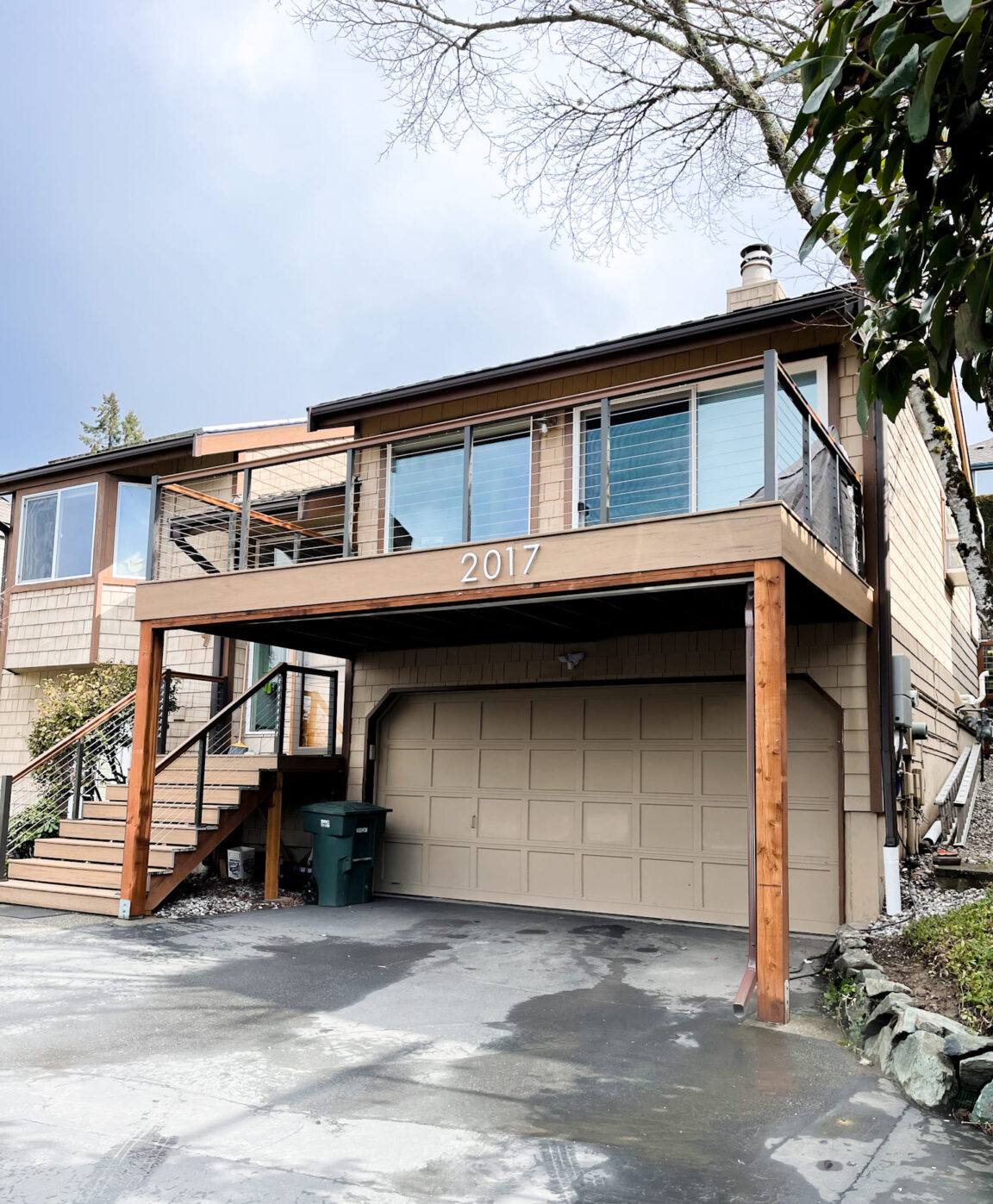
What a Correctly Built Deck Involves Here
A deck that's going to hold up in this climate isn't just about picking good decking boards — the structure underneath matters more, and it's the part most homeowners never see once the project is done.
Footings and Frost Depth
Footings need to be sized and set to the depth required for our soil and frost conditions, on a base that won't shift as it saturates and dries through the wet season. Undersized or shallow footings are one of the more common shortcuts we see on older decks, and they show up later as a deck that's started to rack, sag, or pull away from the house.
Ledger Board Attachment and Flashing
Where a deck attaches to the house is the single most common failure point on decks in this region — not because the framing lumber fails, but because water gets behind the ledger board and rots the rim joist or sheathing from the inside, unseen for years. Correct flashing at the ledger, with the house's water-resistive barrier lapped properly over top, is not optional in a climate with this much driving rain. This is also the connection point that carries the most structural load, so it has to be both watertight and mechanically sound.
Joist Protection and Airflow
Joist tape or an equivalent flashing over the tops of joists keeps standing water from sitting in fastener holes and wicking into the lumber. Just as important is leaving enough clearance and airflow underneath the deck so moisture can actually dry out between rain events instead of staying damp for weeks at a time, which is exactly the condition moss and rot both need to take hold.
Fasteners and Hardware
Given the salt air common to properties near Semiahmoo, we spec corrosion-resistant hardware — stainless steel or high-grade coated fasteners and joist hangers rated for the exposure — rather than the standard hardware that's fine in drier inland areas. It costs a little more up front and saves the deck from hardware failure and rust staining well before its time.
Choosing Decking Material for Sumas Conditions
There's no single right answer for every homeowner — budget, maintenance tolerance, and how the deck will be used all factor in. What matters is understanding the honest trade-offs for our climate specifically.
| Material | How It Handles This Climate | Maintenance | Typical Lifespan Here |
|---|---|---|---|
| Pressure-treated fir/hem-fir | Affordable, structurally solid; needs sealing to resist moisture and moss staining | Annual cleaning and re-sealing recommended | 15-20 years with upkeep |
| Cedar | Naturally rot- and insect-resistant, handles our damp seasons well; still needs periodic finish | Cleaning plus finish every 2-3 years | 20-25 years with upkeep |
| Composite decking | Doesn't absorb moisture like wood; still needs cleaning to prevent surface algae/mildew film | Periodic washing, no sealing needed | 25-30+ years, manufacturer-dependent |
| PVC decking | Fully moisture-resistant surface, holds up well in wet, shaded yards | Occasional washing | 25-30+ years, manufacturer-dependent |
Composite and PVC decking cost more up front, but for homeowners who want to spend their weekends doing something other than sanding and re-sealing a deck every couple of years, they're often the better long-term value in a climate this wet. Wood remains a solid, honest choice too — it just asks more of the owner over time. We'll walk through the real cost and maintenance difference for your specific property rather than pushing one material across the board.
Railings, Stairs, and Local Code
Any deck built above a certain height needs a compliant guardrail, and stairs need proper rise/run and handrail requirements. Whatcom County requires permits for most new deck construction and structural repairs, and inspections confirm the footings, framing, and railings meet code before it's signed off. Skipping this step to save time is a shortcut that can come back to bite a homeowner at resale, when an uninspected deck raises questions during a home sale inspection.
- Guardrails required above code-specified height, with baluster spacing that meets code (commonly no gap wide enough to pass a 4-inch sphere)
- Handrails required on stairs with a set number of risers or more
- Footing depth and spacing sized to the deck's load and local soil conditions
- Ledger attachment engineered for the structure it's tying into
- Final inspection completed and closed out with the county
Our Process for Custom Deck Builds in Sumas
- On-site visit: we look at the site's sun exposure, drainage, existing structure (if replacing a deck), and how the space will actually be used.
- Design and material selection: we talk through layout, decking material, and railing style, with honest pricing for each option.
- Permitting: we handle the Whatcom County permit application and coordinate inspections so nothing gets missed.
- Footings and framing: footings poured to proper depth, framing built with flashed ledger attachment, joist protection, and corrosion-resistant hardware throughout.
- Decking, railing, and stairs: installed to the manufacturer's spacing and fastening specs, which matters for warranty coverage as much as looks.
- Final walkthrough: we go over care and maintenance for whatever material was installed before we call the job done.
Maintenance Through a Long Moss Season
Every deck in this region benefits from a seasonal maintenance routine, regardless of material. A few consistent habits go a long way toward avoiding early replacement.
- Sweep debris and standing leaves off the deck surface regularly, especially in fall
- Rinse or wash the surface periodically to prevent moss and algae from taking hold, particularly in shaded areas
- Check and clear gaps between boards so water and debris don't pack in and hold moisture
- Inspect fasteners and hardware yearly for rust staining or loosening
- Re-seal wood decking on the schedule appropriate to the product — don't wait until it's visibly gray and dry
- Confirm the area underneath the deck stays clear so airflow can keep doing its job
Why Hire a Crew That Already Works in Sumas
A deck built by a crew that only occasionally works this far north can miss the details that matter most here — the flashing detail at the ledger, the hardware grade near the water, the airflow clearance that keeps moss from taking over by year three. We work in Semiahmoo and the surrounding Whatcom County communities regularly, which means we're building to this climate as a matter of course, not as an afterthought. That shows up in fewer callbacks, fewer surprises at resale, and a deck that's still solid well past the point where a poorly detailed one would need major repair.
If you're planning a new deck or replacing one that's showing its age, we're happy to come take a look and give you a straight answer on what it needs — no pressure, no upsell, just an honest estimate based on your property. Use the form below to get started.