 Semiahmoo Siding
 Windows Built for Where the Bay Meets the Border
Homes near the Peace Arch sit in one of the more demanding window environments in Whatcom County. You've got salt-laden air rolling off Semiahmoo Bay and Drayton Harbor, wind-driven rain that comes in sideways off the Strait of Georgia, and a moss season that can stretch from October into May. None of that is exotic weather by Pacific Northwest standards, but it is a very specific combination, and it punishes windows that were built and installed for a drier, calmer climate. A window that performs fine in Spokane or even in Bellingham's more sheltered neighborhoods can fail early out here if it wasn't chosen and installed with this exact exposure in mind.
This page is about one thing: custom windows for houses in the Peace Arch area, and what actually matters when you're replacing or installing them so close to open water and the international border corridor.
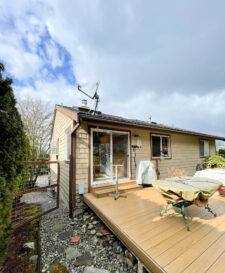
The Salt Air Problem: What Ocean Proximity Does to Window Materials
Salt air is corrosive, full stop. It doesn't take a direct ocean view for a house to be affected — the marine layer that moves off Semiahmoo Bay carries fine salt particulate well inland, and it settles on every exterior surface, including window hardware, fasteners, and frame seams. Over years, that exposure does a few predictable things:
- Untreated or lower-grade aluminum hardware pits and corrodes, making locks and cranks stiff or seized
- Steel fasteners rust from the inside out, sometimes years before any surface staining is visible
- Cheaper vinyl can become brittle faster under UV plus salt exposure than the same product would inland
- Wood that isn't properly clad or finished absorbs moisture faster near the coast, accelerating rot at joints
None of this means windows near the water are doomed — it means the material and hardware specification has to account for it from the start. This is a case where the cheapest window on a spec sheet and the right window for a Peace Arch home are often two different products.
Why This Matters More Here Than a Few Miles Inland
The closer a home sits to Semiahmoo Bay or Drayton Harbor, the more concentrated the salt exposure. We adjust our material and hardware recommendations based on how exposed a given property actually is — a home with more tree cover and distance from open water doesn't need the same spec as one with a clear line to the bay. A generic "coastal package" applied blindly is often overkill in one spot and not enough in another.
Driving Rain and the Flashing Details That Actually Matter
Whatcom County's coastal storms don't just drop rain straight down — wind pushes it horizontally into wall assemblies, and window openings are the single most common place water finds its way into a wall. This is true everywhere, but it's especially true on exposed elevations facing the water or open field near the border.
Correct window installation in this climate depends far more on flashing and drainage detail than on the window unit itself. A premium window installed with sloppy flashing will leak. A mid-range window installed with correct flashing, sill pan drainage, and properly lapped house wrap will outperform it for decades. Specifically, a correct installation in a driving-rain climate includes:
- A sloped sill pan under the window so any water that gets past the frame drains back outside instead of into the wall cavity
- Housewrap or weather-resistant barrier integrated in the correct shingle-lap order — head flashing over the wrap, side and sill flashing under it
- Quality sealant at the right joints only — over-sealing every gap can trap moisture instead of letting it drain
- Back-dammed sills and end dams so wind-driven water can't sneak around the sides of the sill pan
This is also where a lot of budget window jobs go wrong — the window itself gets swapped out, but the flashing and drainage plane behind it is reused or patched rather than rebuilt correctly. On a home exposed to bay winds, that shortcut usually shows up as a stain or soft spot within a few wet seasons.
Moss Season, Condensation, and Moisture Management
The long stretch of cool, damp weather that defines a Whatcom County winter creates a second, quieter problem: interior condensation and exterior moss and algae growth around window trim and sills. A window with a poor thermal break will run cold on the interior frame, which condenses household humidity right at the glass edge and sill — a slow but steady source of wood rot, paint failure, and mold on window trim.
Exterior moss growth on horizontal trim surfaces, sills, and mulled window assemblies is common on shaded or north-facing elevations near the water. It's mostly cosmetic, but trapped moss holds moisture against wood trim and accelerates paint and caulk failure if it's never cleaned off. Custom window trim and cladding details that shed water quickly and dry out between storms hold up far better than flat or poorly sloped trim profiles.
What a Good Window Does About This
Look for a warm-edge spacer system in the glass unit (rather than a bare aluminum spacer), a frame material with a real thermal break, and interior finishes that tolerate the humidity swings of a marine climate without swelling or peeling. This is less about a specific brand and more about the construction of the unit itself.
Choosing the Right Window Frame Material
There's no single "best" frame material for every home near the Peace Arch — it depends on the home's exposure, its architectural style, and the owner's tolerance for maintenance. Here's how the common options actually compare in this specific climate:
| Frame Material | Salt Air / Coastal Performance | Maintenance | Best Fit |
|---|---|---|---|
| Vinyl (quality-grade) | Good — won't corrode or rust; UV-stable formulations hold up well | Low — occasional cleaning only | Most homes wanting performance and value |
| Fiberglass | Excellent — dimensionally stable, resists salt and moisture very well | Low | Homes with heavy direct water exposure or larger openings |
| Wood-clad (exterior clad, wood interior) | Good if cladding and flashing are done correctly; interior wood needs interior humidity control | Moderate | Older or architecturally traditional homes where interior wood look matters |
| Aluminum (standard, non-marine grade) | Poor in direct salt exposure without marine-grade hardware and coatings | Higher — hardware and finish need monitoring | Generally not our first recommendation this close to the water |
We don't install a product purely because it's the cheapest option on a supplier's list, and we're upfront when a material isn't the right call for a given exposure — that's a maintenance and longevity conversation, not a brand judgment.
Glass Packages and Performance for a Marine Climate
Whatcom County's climate doesn't demand the extreme insulation values you'd spec for a mountain or high-desert climate, but the persistent damp and temperature swings between a cold, clear night and a wet, windy day make glass selection worth getting right. For most Peace Arch area homes, we're weighing:
- Double-pane with Low-E coating and argon fill — the standard, cost-effective choice for most rooms
- Triple-pane — worth considering on north- or water-facing elevations that take the brunt of wind and cold, or in rooms with existing condensation complaints
- Warm-edge spacer systems — reduces the cold-edge effect that drives condensation and frost at the glass perimeter
- Impact or laminated glass — an option worth discussing for exposed elevations facing open water where wind-driven debris is a concern during winter storms
The right answer is almost always room-by-room and elevation-by-elevation rather than one spec for the whole house — a sunroom facing the water has different needs than a bedroom on the sheltered side.
Our Custom Window Installation Process
Custom window work near the water isn't a catalog swap. Here's how we actually approach it:
- On-site assessment — we look at exposure (how much direct wind and salt spray the elevation actually gets), existing water damage, current flashing condition, and the home's structural rough openings before recommending anything
- Material and glass selection — matched to that specific elevation's exposure, not a blanket spec for the whole house
- Precise measurement and custom sizing — especially important on older Whatcom County homes where openings are rarely perfectly square or standard-sized
- Removal and inspection of the opening — this is the point where hidden rot or old flashing failures get found, before they're sealed behind a new window
- Correct flashing and sill pan installation — rebuilt to current drainage-plane best practice, not just patched around the old window
- Window installation, shimming, and air-sealing — set plumb, level, and square, with insulation (not just spray foam alone) filling the gap correctly
- Exterior trim, caulking, and finish work — sloped and detailed to shed water rather than trap it
- Final walkthrough — operation check on every unit, and a look at how the finished job will handle the next driving rainstorm
Style and Practical Considerations for Peace Arch Area Homes
Homes in this part of Whatcom County span a real range — older coastal cottages, mid-century houses, and newer construction closer to the border corridor. Custom window work here often means matching a period-appropriate grille pattern or proportions on an older home, rather than defaulting to whatever's standard in a builder-grade window package. On older homes especially, we pay attention to matching sightlines and trim reveals so new windows don't look like an obvious retrofit from the street or the water side.
For homes with any kind of view toward the bay, sizing and mulled configurations (multiple units joined into one larger opening) come up often — those require extra attention to structural support and flashing at the mull joints, since that's a common leak point if it's rushed.
A Maintenance Checklist That Actually Extends Window Life Here
A well-installed window is only half the equation — coastal exposure means ongoing upkeep matters more here than in a drier inland climate. A simple seasonal routine goes a long way:
- Rinse salt film off exterior frames and glass a few times a year, especially after winter storms
- Clear moss and debris from sills, tracks, and weep holes before it holds moisture against the frame
- Check and lubricate hardware (locks, cranks, hinges) annually to catch early corrosion before it seizes
- Inspect exterior caulking each spring for cracking or separation, and re-seal small gaps before the next wet season
- Watch interior sills and lower sashes for condensation buildup during cold snaps — persistent moisture there is worth investigating, not ignoring
Why Local Experience Near the Peace Arch Matters
Window installation isn't the same job in every zip code. A crew that mostly works drier inland climates can put in a technically fine window and still get the flashing detail wrong for a house that takes direct wind off the bay, simply because they haven't seen what that exposure does over ten winters. Working regularly in the Peace Arch area and around Semiahmoo means we've seen how local homes actually age — where moss builds up, which elevations take the worst of the driving rain, and which shortcuts show up as callbacks two or three years later. That's the kind of judgment that doesn't come from a spec sheet.
If you're considering custom windows for a home near the Peace Arch, we're happy to take a look and give you a straight, no-pressure assessment of what your home actually needs. Use the form below to request a free estimate.