 Semiahmoo Siding
 Cherry Point's Deck Problem: Salt, Rain, and Moss
Decks along the Cherry Point shoreline near Semiahmoo take a different kind of beating than decks a few miles inland. The combination of salt-laden air, near-constant driving rain through the fall and winter, and a moss season that can stretch six months or more means the wear pattern on a waterfront or near-waterfront deck is faster and more specific than what you'd see in a drier part of Whatcom County. Fasteners corrode sooner. Ledger boards and framing stay damp longer between dry spells. And any spot where moss and organic buildup collect becomes a place where moisture sits against wood or composite instead of running off.
None of that means a deck in this area is doomed to fail early — it means the deck has to be built with those conditions in mind from the substructure up, not just resurfaced with new boards on top of an aging frame. That distinction is the difference between a deck replacement that holds up and one that starts showing the same problems again in a few seasons.
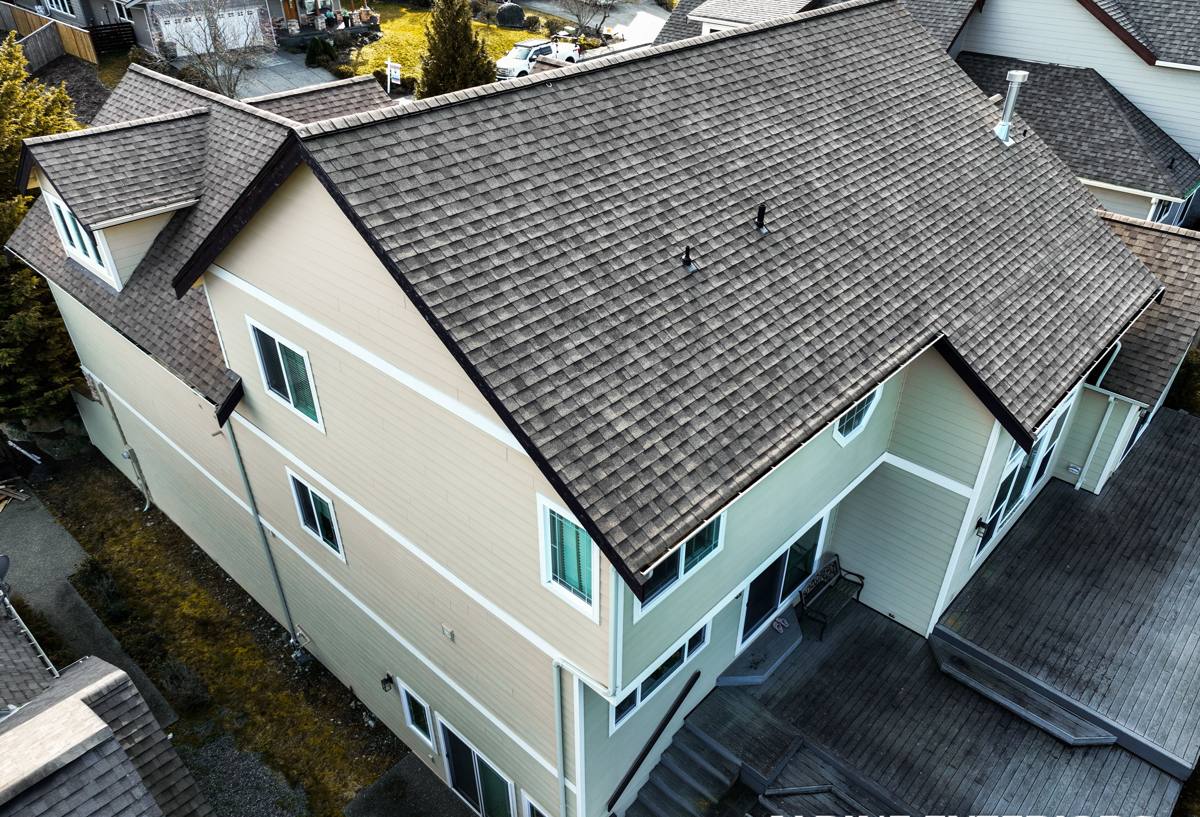
How to Tell a Deck Needs Replacing, Not Just Repairing
Homeowners often call us about a "few loose boards" and find out the real issue is underneath. Surface symptoms are useful clues, but the substructure is what actually determines whether repair is enough.
- Boards that feel spongy or flex noticeably underfoot, especially near the house or in shaded corners where moss tends to hold moisture
- Visible rot, soft spots, or dark staining at the ledger board where the deck attaches to the house
- Railing posts that wobble or have separated from the framing — often a sign the post base has been wet for a long time
- Rust streaks running down from fasteners or joist hangers, which usually means the metal connectors are failing, not just the wood around them
- Persistent green or black growth that comes back within weeks of cleaning, indicating the deck isn't shedding water and drying between rain events
- Footings that have shifted, cracked, or settled unevenly, which no amount of surface repair will fix
If the problems are limited to a handful of boards and the frame underneath is sound, repair can make sense. Once the ledger, joists, or footings are compromised, patching the surface just delays a bigger repair and can mask a safety issue in the meantime.
What a Correct Deck Replacement Actually Involves
Substructure and Framing
A proper replacement starts by tearing out down to the framing and evaluating every structural member — joists, beams, posts, and footings — rather than building new decking over an old frame. In a climate where framing stays damp longer between storms, we look closely at joist ends, hardware, and any wood-to-concrete contact points, since those are the first places moisture damage shows up.
Ledger and Flashing
The ledger board connection to the house is the single most common failure point on any deck, and it's especially important to get right in an area with a lot of driving rain. Correct flashing — installed so water is directed out and away from the house rather than behind the ledger — is not optional. This is also where a lot of lower-cost deck work cuts corners, because it's hidden once the decking goes down.
Fasteners and Hardware
Salt air accelerates corrosion on standard hardware faster than most homeowners expect. We use fasteners and structural connectors rated for coastal exposure, not just standard exterior-grade hardware, because the cost difference is small relative to the cost of re-opening a deck in a few years to replace rusted-out joist hangers.
Choosing a Decking Material for Cherry Point's Climate
There's no single "best" decking material — the right choice depends on how much upkeep you want to do, your budget, and how exposed the deck is to salt air and standing moisture. Here's how the common options actually compare in this environment.
| Material | Moisture & Salt Air Behavior | Moss & Algae Resistance | Maintenance |
|---|---|---|---|
| Composite decking | Does not rot or absorb water into the board itself; hardware and framing beneath still need to be corrosion-rated | Better than wood, but still needs periodic cleaning in shaded, damp areas | Low — occasional washing, no staining or sealing |
| Cedar | Naturally rot-resistant but still absorbs moisture over time, especially at fastener holes and board ends | Can develop moss and graying without regular cleaning and re-treatment | Moderate to high — periodic cleaning, sealing, or staining |
| Pressure-treated lumber | Treatment protects against rot but cut ends and fastener holes are more vulnerable; salt air speeds up hardware wear | Prone to moss buildup without upkeep, especially on the shaded side of a house | Moderate to high — regular cleaning and re-sealing to keep the treatment effective |
We'll walk through these trade-offs honestly during your estimate rather than pushing one product — the right call often comes down to how much deck maintenance you actually want to do versus a higher upfront cost for a lower-maintenance material.
Our Deck Replacement Process
- On-site assessment. We check the framing, ledger, footings, and drainage before quoting anything, since those determine the real scope of work.
- Written estimate. A clear breakdown of what's being replaced, the materials involved, and the timeline — no vague allowances.
- Permitting. Deck replacement typically requires a permit through the local building department; we handle that process as part of the job.
- Tear-off and disposal. Old decking, framing, and hardware are removed and hauled off.
- Framing and flashing. New joists, ledger flashing, and footings (where needed) are installed to current code, built for this area's moisture exposure.
- Decking, railing, and stairs. Installed per manufacturer specifications for whatever material you've chosen.
- Final walk-through. We go over the finished deck with you, including basic care guidance specific to a salt-air, high-rain environment.
What Affects the Cost of a Cherry Point Deck Replacement
Every deck is different, so we don't quote off a generic per-square-foot number until we've seen the site. These are the factors that move the price the most.
| Factor | Why It Matters |
|---|---|
| Substructure condition | If joists, ledger, or footings need replacing, that's added scope beyond surface decking |
| Decking material | Composite generally costs more upfront than pressure-treated lumber but less over time in maintenance |
| Height and access | Elevated decks or difficult site access add labor and sometimes engineering requirements |
| Railing and stairs | Style, material, and code requirements (like guard height and baluster spacing) affect both cost and time |
| Permitting and inspection | Required for most replacements and factored into the timeline, not just the price |
| Salt-air hardware upgrades | Corrosion-rated fasteners and connectors cost more than standard hardware but reduce future failure risk |
Why Hiring a Crew That Already Works Cherry Point Matters
A deck built to a generic spec sheet doesn't always account for what actually happens to it in a coastal Whatcom County winter. A crew that regularly works this stretch of shoreline near Semiahmoo already knows which fastener grades hold up, where flashing details tend to fail first in driving rain, and how much moss buildup to expect on a north- or shade-facing deck versus one with more sun exposure. That's the kind of judgment that doesn't show up in a standard estimate template but shows up in how the deck performs five and ten years out.
It also matters for permitting and inspection — local building departments have specific requirements for footings, guard heights, and attachment methods, and a crew that's pulled permits in the area before knows what inspectors are going to look for the first time, not the second.
Protecting Your New Deck Through Moss Season
A well-built deck still needs some basic upkeep to get the full lifespan out of it, especially given how long the wet season runs here. None of this is complicated, but it's easy to let slide.
- Sweep debris and standing leaves off the deck regularly — trapped organic material is what feeds moss growth
- Clean visible moss or algae early in the season before it spreads, rather than waiting until it's established
- Check that gaps between boards stay clear so water drains through instead of pooling
- Inspect railing posts and stair connections once a year for movement or corrosion at the hardware
- Keep gutters and downspouts near the deck clear so runoff isn't dumping extra water onto or under it
- Re-seal or re-stain wood decking on the schedule recommended for that product — skipping a cycle in this climate shows up faster than in a drier region
If you're weighing whether your current deck needs a full replacement or can hold on with repairs, we're happy to take a look and give you a straight answer. Reach out for a free, no-pressure estimate using the form below.