 Semiahmoo Siding
 Drayton Harbor Siding Takes a Different Kind of Beating
Homes around Drayton Harbor sit close enough to the water that siding problems tend to show up differently than they do a few miles inland. Salt-laden air, wind-driven rain off the harbor, and long stretches of gray, damp weather all work on exterior walls in ways that generic siding repair advice doesn't really address. A repair that would hold up fine in a drier part of Whatcom County can fail here in a few seasons if it isn't done with this specific exposure in mind.
We repair siding on Drayton Harbor homes regularly, and the patterns are consistent: damage clusters on the sides facing the water and prevailing weather, moisture problems show up before they're visually obvious, and moss and algae get a head start almost everywhere shade and dampness overlap. Repairing siding here isn't just patching a hole — it's restoring the wall's ability to shed water and stand up to salt exposure for years, not months.
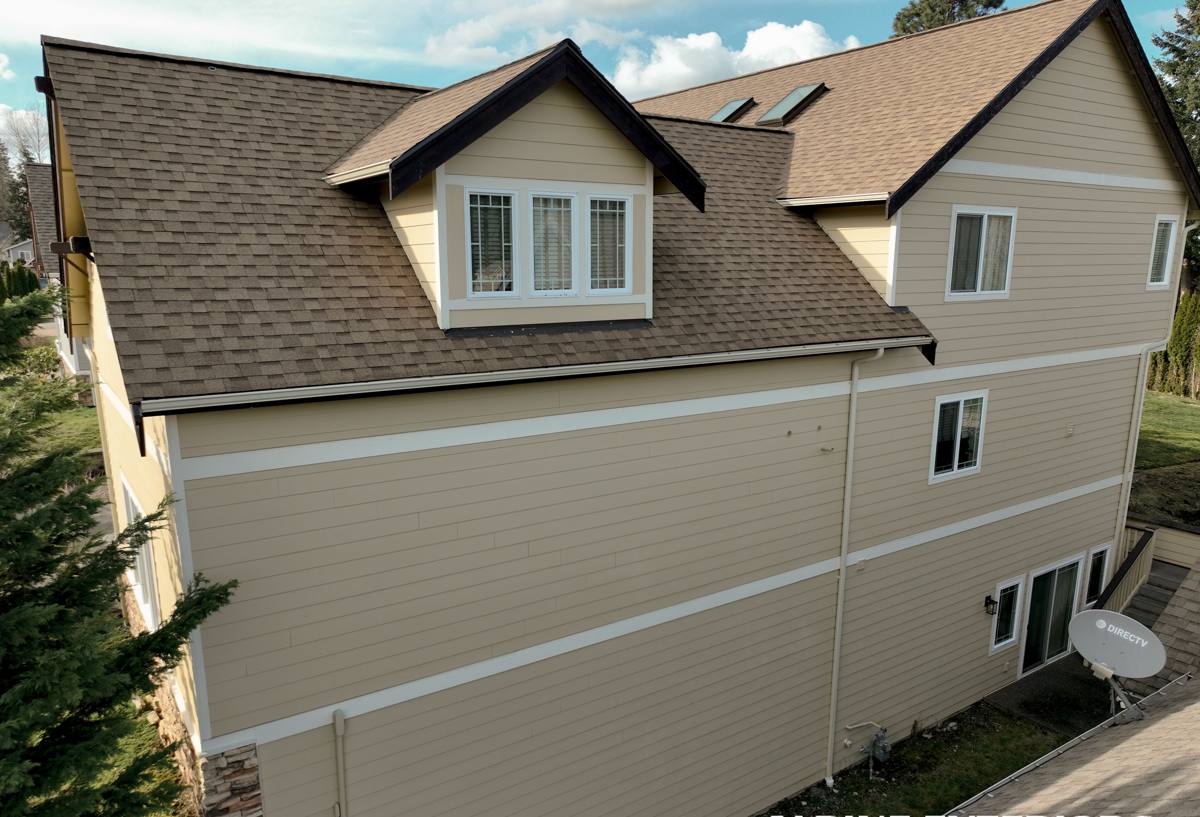
What Salt Air, Rain, and Moss Actually Do to Siding
Salt Air and Corrosion
Airborne salt from the harbor settles on siding surfaces and, more importantly, on fasteners, flashing, and trim hardware. Over time it accelerates corrosion in anything not properly rated for coastal exposure. Nails and screws that would last decades elsewhere can start staining, weakening, or backing out sooner near the water. When we open up a damaged section of siding, corroded fasteners are one of the first things we check — because if the fasteners failed, the patch will fail too.
Driving Rain and Moisture Intrusion
Rain in this part of Whatcom County doesn't always fall straight down. Wind off the water pushes it sideways into wall assemblies, which puts real pressure on seams, laps, and any place siding meets a window, door, or trim board. If the water-resistive barrier, flashing, or caulking behind the siding isn't doing its job, water gets behind the cladding long before you see a stain or soft spot on the surface. By the time damage is visible, there's often been moisture intrusion happening for a while.
A Long Moss Season
Shaded, north-facing, and tree-adjacent walls around Drayton Harbor stay damp for much of the year, which gives moss and algae a long runway to establish themselves. Beyond the cosmetic issue, moss holds moisture directly against the siding surface, which is a problem for wood-based products in particular and can accelerate paint and caulk failure on any material if it's left to grow unchecked.
Signs Your Drayton Harbor Home May Need Siding Repair
Some damage is obvious. Some isn't — and the damage you can't see is usually the kind that costs the most to ignore. Look for:
- Soft, spongy, or visibly warped sections of siding, especially near the bottom of walls or below windows
- Paint that's bubbling, peeling, or failing in localized patches rather than evenly across a wall
- Visible cracks, gaps, or separation at seams, corners, or trim joints
- Persistent moss, algae, or dark staining that keeps returning after cleaning
- Rust streaks running down from nail heads or metal trim
- Musty smells or discoloration on interior walls that back up to exterior siding
- Siding panels that feel loose or move when pressed
- Damage concentrated on the harbor-facing or wind-exposed side of the house
What a Correct Repair Actually Involves
Replacing a damaged board and calling it done is the fastest way to end up doing the same repair again in two years. A repair that actually holds up in this environment involves a few steps that are easy to skip and easy to notice later when they were skipped.
Find the Source, Not Just the Symptom
Damaged siding is often a symptom of a water management problem somewhere else — a flashing detail, a caulking failure, a grading issue, or a gap where two materials meet. We open up the affected area to understand why the damage happened before we decide how to fix it. Patching over an unresolved moisture source just delays the next repair.
Check What's Behind the Siding
Once a section is open, we check the sheathing, water-resistive barrier, and framing underneath for rot or moisture damage. In coastal-exposed walls, this step matters more than usual — hidden moisture behind siding tends to travel further before it's caught.
Restore Proper Flashing and Water Management
Any repair around windows, doors, seams, or penetrations needs flashing and sealant details rebuilt correctly, not just re-caulked over old, failed material. This is the difference between a repair that sheds wind-driven rain and one that lets it back in during the next storm.
Match Materials Correctly
Patch repairs need to match the existing siding in profile, exposure, and finish as closely as possible, and use fasteners and flashing suited to a coastal environment. A mismatched patch is a visible reminder that the repair was done fast rather than right.
Repair vs. Replacement: How We Decide
Not every damaged section needs full replacement, and not every repair is worth doing instead of replacing. We walk homeowners through the tradeoffs honestly rather than defaulting to whichever job is bigger.
| Factor | Favors Repair | Favors Replacement |
|---|---|---|
| Extent of damage | Isolated to one or two sections | Spread across multiple walls or elevations |
| Underlying moisture | Source identified and fixable | Widespread rot or long-term hidden moisture |
| Age of existing siding | Relatively new, still under warranty | Near or past its expected service life |
| Material match | Original product/color still available | Discontinued, faded, or already mismatched |
| Fastener/flashing condition | Sound outside the repair area | Corroded or failing more broadly |
If a home is otherwise sound and the damage is contained, repair is the right call — it's faster, less disruptive, and less expensive. If the underlying problem is systemic, a repair just delays the same conversation. We'll tell you which situation you're in.
Our Siding Repair Process
- On-site assessment: We inspect the damaged area and the walls around it, not just the spot you called about, since coastal exposure damage rarely stays isolated.
- Diagnosis: We identify the actual cause — moisture intrusion, fastener failure, flashing failure, or organic growth — before proposing a fix.
- Honest scope and estimate: You get a clear explanation of what needs to happen and why, including whether repair or replacement makes more sense for that section.
- Correct repair: Damaged material comes out, the wall assembly underneath gets checked and corrected if needed, and new flashing, fasteners, and siding go in to spec.
- Finish and match: Repaired areas are finished to blend with surrounding siding as closely as the existing material allows.
Why We Repair and Replace With James Hardie Fiber Cement
When a repair calls for new siding material — whether it's a small patch or a full section — we use James Hardie fiber cement, and we don't install anything else. It's a deliberate standard, not a default. Fiber cement doesn't absorb water the way wood-based products can, it's non-combustible, and it holds paint and factory-applied ColorPlus finish far longer than the materials that tend to need frequent repair in the first place. In a marine environment like Drayton Harbor, where salt air and moisture are constant, that durability difference matters more than it does in a lot of other places.
We'll still assess and repair existing siding of other materials when that's what's on the house. But when it comes time to replace a section outright, or when a homeowner is ready to stop patching an aging product, Hardie is what we recommend and what we install — engineered for climates like this one, backed by a strong transferable warranty, and proven to hold up when installed correctly.
Why It Matters to Hire a Crew That Already Works Drayton Harbor
Coastal exterior repair isn't identical to inland siding work, and treating it that way is how repairs end up failing early. A crew that regularly works this stretch of Whatcom County already knows which elevations take the worst of the wind and rain, how fast moss reestablishes itself in shaded areas near the harbor, and which fastener and flashing choices actually hold up against salt exposure. That local pattern recognition shows up in faster, more accurate diagnosis and repairs that are built for the conditions the home actually faces — not generic conditions from a manual.
Maintaining Your Siding Between Repairs
A good repair lasts longer with a little basic upkeep, especially this close to the water:
- Rinse siding periodically to remove salt residue and organic buildup before it takes hold
- Trim back vegetation that keeps walls shaded and damp
- Check caulking at trim, window, and door joints yearly and address cracking early
- Keep gutters and downspouts clear so water isn't sheeting down exterior walls
- Address small issues — a loose panel, a hairline crack, early moss growth — before they become bigger repairs
If you're seeing signs of siding damage on your Drayton Harbor home, or you're just not sure whether what you're looking at is cosmetic or something more, we're happy to take a look. Reach out for a free, no-pressure estimate using the form below.