 Semiahmoo Siding
 Roofing in Ferndale's Whatcom County Climate
Ferndale sits in a part of Whatcom County that gets more moisture, more wind, and more moss pressure than most homeowners expect when they first move here. The marine air moving in off the water, combined with a long stretch of overcast, drizzly months every year, means an asphalt shingle roof in this area works harder than the same roof would in a drier climate. It's not that asphalt shingles are the wrong choice for Ferndale — they're one of the most practical, cost-effective roofing systems available almost anywhere — it's that they need to be installed and maintained with this specific climate in mind.
We work on roofs throughout the Semiahmoo and greater Whatcom County area, and Ferndale comes with its own set of patterns: shaded lots that hold moisture longer, older homes with ventilation that was never updated, and roofs that look fine from the ground but are hiding moss growth and soft spots underneath. This page walks through what a Ferndale asphalt shingle roof actually needs, what a correctly done job looks like, and how our process works.
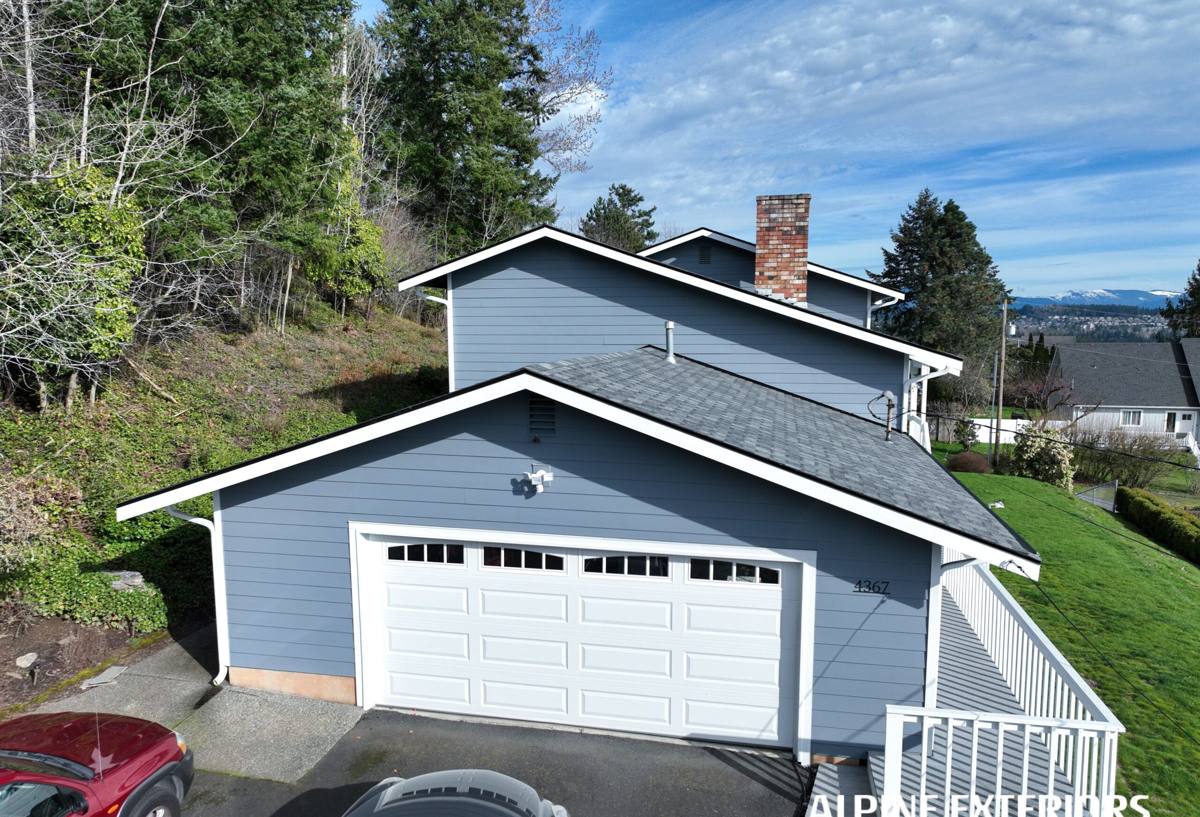
What Ferndale's Weather Does to an Asphalt Shingle Roof
Moss and Organic Growth
Whatcom County's long wet season, especially from fall through spring, keeps roof surfaces damp for extended stretches. Add shade from mature trees — common on a lot of Ferndale properties — and you get ideal conditions for moss, algae, and lichen to take hold. Moss isn't just cosmetic. It holds moisture directly against the shingle surface, works its way under shingle tabs and around nail heads, and over time it lifts shingles enough to let water find a path underneath. A roof that looks "a little green" from the street is often further along than it appears.
Wind-Driven Rain and Water Intrusion
Rain here doesn't always fall straight down. Storms moving through the region frequently bring wind that pushes rain sideways and up under shingle edges, especially at eaves, valleys, and anywhere flashing meets a wall or chimney. A roof that would perform fine in calm rain can still leak if the underlayment, flashing, and shingle overlap weren't installed to handle wind-driven moisture specifically.
Salt-Tinged Marine Air
Being close enough to the water to catch salt-carrying air affects roofing hardware over time — exposed fasteners, metal flashing, and vent components can corrode faster than they would further inland. It's a slower process than moss damage, but it's part of why material choice and detailing at metal transitions matter more here than they would in a landlocked climate.
Temperature Swings and Granule Wear
Whatcom County doesn't get extreme heat, but shingles still go through repeated wet-to-dry and cool-to-mild cycles throughout the year. Over many seasons, this contributes to granule loss, which is the main thing standing between UV exposure and the asphalt layer underneath. A shingle that's shedding granules early is a shingle that's aging faster than its warranty assumes.
What a Correct Asphalt Shingle Roof Job Actually Involves
Tear-Off and Deck Inspection
A proper reroof starts with a full tear-off down to the decking, not an overlay on top of old shingles. Overlaying traps moisture, hides existing damage, and voids most manufacturer warranties. Once the old roofing is off, the deck gets inspected board by board — any wood that's soft, delaminated, or water-stained gets replaced before anything new goes down. Skipping this step is the single most common shortcut that leads to problems a few years later.
Underlayment and Ice-and-Water Barrier
Underlayment is the roof's backup layer if wind ever drives water past the shingles themselves, which, given Ferndale's weather, is a real scenario rather than a hypothetical one. Synthetic underlayment across the full deck, with self-adhered ice-and-water barrier at eaves, valleys, and around every penetration, gives the roof a second line of defense in exactly the spots where wind-driven rain and ice cause trouble.
Flashing Is Where Most Roofs Fail
Chimneys, skylights, sidewalls, and valleys are where leaks actually start on most roofs — not out in the open field of shingles. Correct flashing means new metal (not reused old flashing), proper step flashing at walls, and counterflashing that's actually tucked into the wall material rather than caulked on top of it. Caulk is a maintenance item, not a waterproofing strategy, and it's one of the first things we check on an older Ferndale roof.
Ventilation
Balanced intake and exhaust ventilation keeps the attic close to outdoor temperature and controls moisture buildup underneath the roof deck. In a climate this humid, poor ventilation shows up as condensation on the underside of the sheathing, premature shingle aging from trapped heat and moisture, and in some cases mold or rot that isn't visible until it's advanced. Ventilation upgrades are often the most overlooked part of a reroof, and they're one of the most cost-effective.
Choosing the Right Shingle for a Ferndale Home
Not every asphalt shingle is built the same, and in a climate with heavy moss pressure and periodic wind events, the difference between shingle tiers matters more than it would somewhere milder.
| Shingle Type | Typical Lifespan | Wind Rating | Algae/Moss Resistance | Best Fit |
|---|---|---|---|---|
| 3-tab (economy) | 15-20 years | Lower | Standard, unless upgraded | Budget-driven projects, secondary structures |
| Architectural/dimensional | 25-30+ years | Higher, rated for gusts | Often includes algae-resistant granules | Most Ferndale homes |
| Impact-resistant | 25-30+ years | Higher | Usually includes algae-resistant granules | Exposed sites, homes wanting added durability |
For most homes in this area, an architectural shingle with algae-resistant (copper- or zinc-infused) granules is the practical middle ground: it holds up to wind better than a 3-tab shingle, and the algae-resistant granules slow down the moss and staining problem instead of just delaying it. We'll walk through the specific manufacturer options and warranty terms during your estimate rather than pushing one brand — the right shingle depends on your roof's exposure, slope, and how much shade the property gets.
Our Process, Start to Finish
- On-site inspection: we look at the roof, the attic, and the ventilation, not just the shingles from the ground.
- Honest scope and estimate: repair vs. replacement, with the reasoning behind the recommendation explained plainly.
- Material selection: shingle tier, color, and any upgrades (ventilation, ice-and-water coverage) reviewed together.
- Tear-off and deck repair: full removal, deck inspection, and replacement of any compromised sheathing.
- Underlayment, flashing, and shingle installation: done to manufacturer spec, not just "close enough."
- Cleanup and final walkthrough: magnetic sweep for debris, gutters checked, and a walkthrough of the finished work.
We schedule around the weather rather than fighting it — asphalt shingles need a reasonably dry window to install correctly, and rushing a job into a wet forecast is how installation defects happen. A crew that works this area regularly knows how to plan around Whatcom County's weather patterns instead of guessing.
Signs Your Ferndale Roof Needs Attention Now
- Visible moss or dark streaking across shingle courses, especially on shaded slopes
- Granules collecting in gutters or at the base of downspouts
- Shingles that are curling, cupping, or lifting at the edges
- Daylight visible through the attic roof deck, or damp insulation below it
- Staining on interior ceilings, especially after a windy storm
- Missing or damaged shingles after a wind event
- Soft or spongy spots when walking the roof (checked by a professional, not a homeowner on a ladder)
Any one of these on its own isn't necessarily an emergency, but several at once usually means the roof is past routine maintenance and into repair-or-replace territory.
Repair or Replace?
Not every issue means a full reroof. A localized leak around a single flashing point, a handful of wind-damaged shingles, or moss that hasn't yet lifted shingle tabs can often be repaired directly. Full replacement usually makes more sense when the roof is past two-thirds of its expected lifespan, when damage is spread across multiple slopes, or when the decking itself has deteriorated. We'll always tell you honestly which situation you're in rather than defaulting to the more expensive option.
Cost on any given project depends on a handful of factors more than on the shingle price tag alone:
- Roof size and number of slopes/planes
- Roof pitch and accessibility
- Amount of deck repair needed once old shingles are off
- Number of penetrations (chimneys, skylights, vents) requiring flashing work
- Shingle tier selected and any ventilation upgrades
- Layers of existing roofing to remove
Why a Crew That Already Works in Ferndale Matters
Roofing crews that work Whatcom County regularly develop a feel for which parts of a property tend to hold moisture, how local weather windows affect scheduling, and what permitting and inspection expectations look like in this area. That familiarity shows up in smaller ways too — knowing to check north-facing, shaded slopes more closely for moss, or recognizing an older ventilation setup that was never updated to current standards. It's the difference between a roof that's installed correctly for the climate it's actually in versus one installed the same way it would be anywhere else in the country.
We're based in the Semiahmoo area and take on roofing work throughout Whatcom County, including Ferndale, because the climate challenges are consistent across the region even when the neighborhoods differ. If you're dealing with moss, an aging roof, storm damage, or you're just planning ahead for a replacement, we're glad to take a look and give you a straightforward assessment — no pressure, no upsell, just an honest read on where your roof stands. Reach out for a free estimate using the form below.