 Semiahmoo Siding
 Ferndale's Climate Is Harder on Siding Than Most Homeowners Realize
Ferndale sits close enough to the water that salt-laden air is a fact of life, and it sits squarely in a stretch of Whatcom County that sees long stretches of driving rain followed by weeks of damp, low-sun conditions where moss and algae get a real foothold. Individually, none of those factors is unusual for the Pacific Northwest. Together, over years, they're exactly the combination that exposes weak siding systems — and exactly why the material choice on a Ferndale home matters more than it would somewhere drier or further inland.
Salt air accelerates corrosion on fasteners and trim metal. Driving rain finds every gap in flashing and caulk and pushes water sideways, not just down. And a long moss season means anything that traps moisture against a wall — bad laps, missing kick-out flashing, siding installed too close to grade — stays wet longer than it would in a drier climate. Siding here isn't just a cosmetic layer; it's the first line of defense against a slow, cumulative moisture problem that's expensive to fix once it reaches the sheathing.
Why We Install James Hardie and Nothing Else
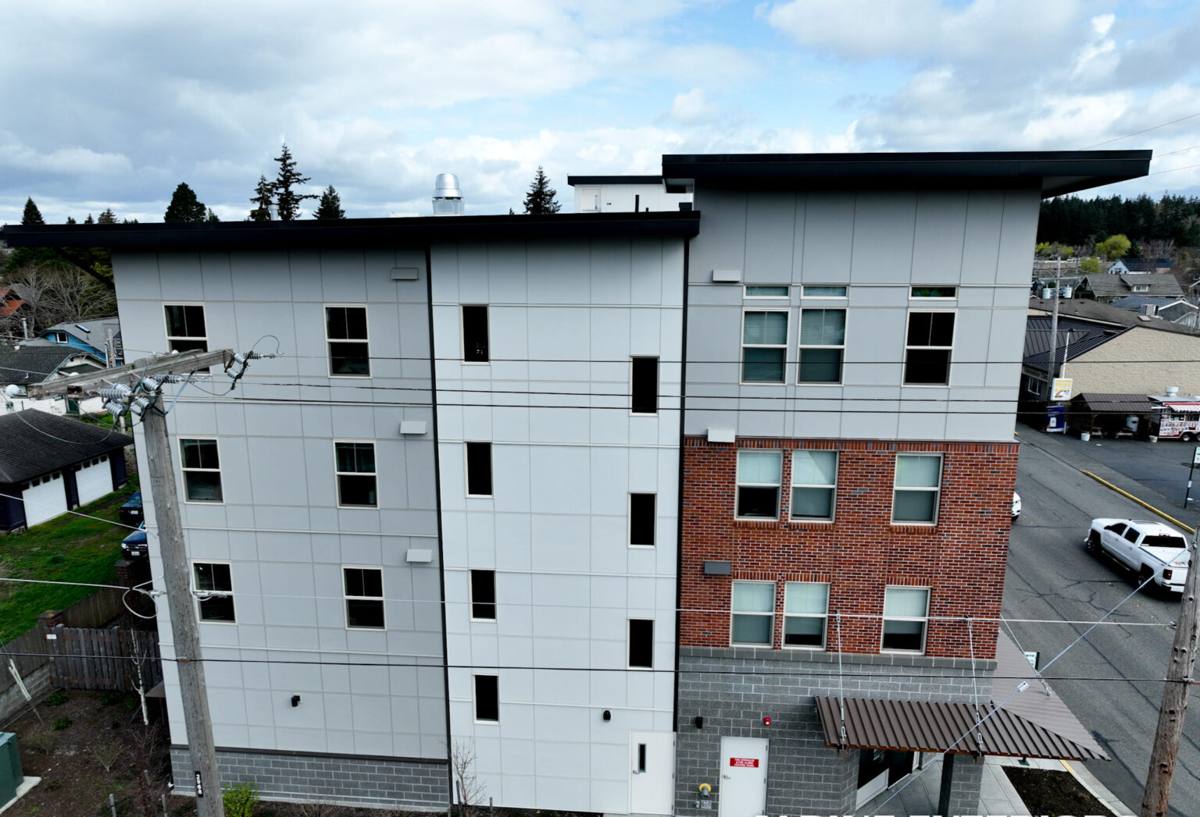
We standardized on James Hardie fiber cement because it's engineered for exactly this kind of climate, and because it holds up to inspection years after installation — not just on day one. Hardie's HZ5 product line is formulated specifically for regions with high moisture exposure and freeze-thaw cycling, which describes Ferndale's weather well. Fiber cement itself doesn't feed mold or absorb water the way wood-based products can, and it won't rot, delaminate, or attract wood-boring insects.
ColorPlus Factory Finish
Most of the siding we install carries Hardie's ColorPlus finish — a factory-applied, baked-on finish rather than a coat of paint applied on site after installation. In a salt-air, high-moisture environment, that matters: factory finishes cure under controlled conditions and bond more consistently than field-applied paint, which is more sensitive to the temperature and humidity on the day it's sprayed. That translates into a longer stretch before the homeowner is looking at a repaint.
Non-Combustible Construction
Fiber cement is non-combustible, which is a genuine advantage regardless of region, and it's part of why we don't offer alternatives like vinyl or wood-based siding products. We'd rather install one product correctly, to spec, than offer a menu of options with different long-term track records.
What a Correct Hardie Installation Actually Involves
The material is only half the equation. Most of the siding failures we get called out to inspect in this area aren't failures of the product — they're installation shortcuts that let water in behind a perfectly good board. A correct job is unglamorous and detail-heavy.
Flashing and Water Management
Every window, door, and horizontal trim transition needs proper flashing integrated with a drainage plane behind the siding, not just caulk covering the seam. Kick-out flashing where a roofline meets a wall is one of the most commonly missed details on older homes, and it's one of the most common sources of hidden rot when it's absent.
Fastening and Clearances
Hardie's installation specifications call for specific fastener types, spacing, and minimum clearances from grade, roof lines, and decks. Nailing patterns that look fine cosmetically can void the manufacturer's warranty and create stress points where boards crack over time. Siding installed too close to grade or a deck surface stays wet longer and is one of the first places we find moss buildup and staining.
Caulking and Joints
Butt joints and trim seams need the right sealant, applied correctly, and it needs to be maintained. Caulk is a wear item — it's not a permanent seal — and knowing which joints are designed to be sealed versus which should be left to shed water on their own is part of installing the system correctly rather than just fastening boards to a wall.
Where Older Siding in This Area Typically Fails
| Symptom | Likely Cause | Why It Matters Here |
|---|---|---|
| Green or black staining along laps | Moss and algae holding moisture against the surface | Long damp season gives growth time to establish and spread |
| Soft or swollen trim near windows | Missing or failed flashing behind trim | Driving rain drives water sideways into small gaps |
| Rust streaks below fasteners | Incorrect fastener type for the coastal environment | Salt air accelerates corrosion of the wrong metals |
| Cracking at butt joints | Improper clearance or over-driven fasteners | Freeze-thaw and moisture cycling stress bad joints |
| Paint peeling in sheets | Field-applied paint failing to bond | Humidity swings undermine site-applied finishes |
Our Process, From Estimate to Finished Job
We keep the process straightforward because homeowners are usually dealing with an existing problem — moisture, moss, or visibly failing siding — and want a clear path to a fix, not a sales pitch.
- On-site walkthrough: We look at the whole exterior, not just the area the homeowner called about, since moisture problems often show up somewhere other than where they started.
- Assessment of what's underneath: Where there's evidence of past water intrusion, we check sheathing condition before quoting, so the estimate reflects what the job actually needs.
- Written scope and estimate: Product line, color, trim details, and what's included in the flashing and moisture-management work — not just a square-footage number.
- Installation to manufacturer spec: Correct fastening, clearances, flashing, and joint treatment, done in the order that keeps the wall assembly dry throughout the project, not just at the end.
- Final walkthrough: We go over the finished work with the homeowner before calling the job done.
Repair, Partial Replacement, or Full Re-Siding?
Not every Ferndale home needs a full tear-off. The right scope depends on how localized the damage is and what's happening behind the siding.
| Situation | Typical Approach | Key Consideration |
|---|---|---|
| Isolated damage, sheathing dry | Targeted repair or panel replacement | Matching existing ColorPlus finish and lap lines |
| Recurring moisture at one wall section | Partial re-siding with flashing correction | Fixing the water source, not just the symptom |
| Widespread staining, cracking, or old wood/vinyl siding | Full re-siding | Opportunity to correct flashing and drainage plane throughout |
| Sheathing damage found during inspection | Full re-siding with sheathing repair | Cost driven by extent of hidden damage, not siding alone |
Living With Fiber Cement Siding in a Marine, Moss-Prone Climate
James Hardie siding is low-maintenance compared to wood-based alternatives, but "low-maintenance" isn't "no-maintenance," especially with the moss and algae pressure common in this part of Whatcom County. A little routine attention keeps the finish looking good and prevents small issues from becoming bigger ones.
- Rinse siding periodically with a garden hose to clear pollen, salt residue, and early moss growth before it establishes
- Keep gutters clean and functioning so overflow doesn't run down the wall surface
- Trim back vegetation and tree cover that keeps siding shaded and damp longer than it needs to be
- Inspect caulked joints every year or two and have any cracked or missing sealant replaced
- Watch for staining right after storms with sustained driving rain — it's often the first visible sign of a flashing issue
- Avoid pressure washing directly into laps and joints, which can force water behind the siding rather than just cleaning the surface
Why Hiring a Crew That Already Works in Ferndale Matters
Installation manuals describe the general spec, but knowing how a given climate actually behaves on a wall over years — where moss tends to take hold first, which orientations catch the worst of the driving rain, how salt air treats different fastener choices over time — comes from working on homes in this specific area, not just from reading a manufacturer's guide. A crew that installs Hardie siding regularly in Ferndale and the surrounding communities has already seen how the climate here plays out on real buildings, and builds that knowledge into the flashing details and product choices on every job, not just the ones where a problem has already shown up.
It also matters for warranty support. James Hardie's warranty coverage depends on installation to their written specifications, and having a documented, correctly executed installation from a crew familiar with the product line makes any future warranty conversation far more straightforward.
Get a Straightforward Look at Your Siding
If your siding is showing moss staining, cracked caulk, soft trim, or you're simply past the point where wood or vinyl is worth maintaining, we're happy to take a look and give you a clear, no-pressure estimate for James Hardie siding built for Ferndale's climate. Use the form below to get started.