 Semiahmoo Siding
 Why Ferndale Windows Wear Out Faster Than the Manufacturer's Warranty Suggests
Most window warranties are written by someone who has never stood on a ladder in Whatcom County in February. Ferndale sits close enough to the water that homes deal with a steady mix of salt-laden air, driving rain that comes in sideways off a southwest wind, and long stretches of gray, damp weather where surfaces barely get a chance to dry out between storms. That combination is hard on window assemblies in ways that don't show up in a showroom.
Salt air accelerates corrosion on hardware, screws, and metal reinforcement inside window frames. Driving rain finds any gap in flashing or sealant and pushes water uphill against gravity, which is why leaks in this region often show up above a window rather than below it. And the long moss season here isn't just a roof problem — moss and algae take hold on window sills, tracks, and exterior trim wherever moisture sits and sunlight is scarce, which is most of the year in this part of the county.
None of this means windows in Ferndale fail faster than they should. It means the installation has to account for our specific weather from day one, and the window itself has to be a reasonable match for a coastal Pacific Northwest climate rather than a generic national product.
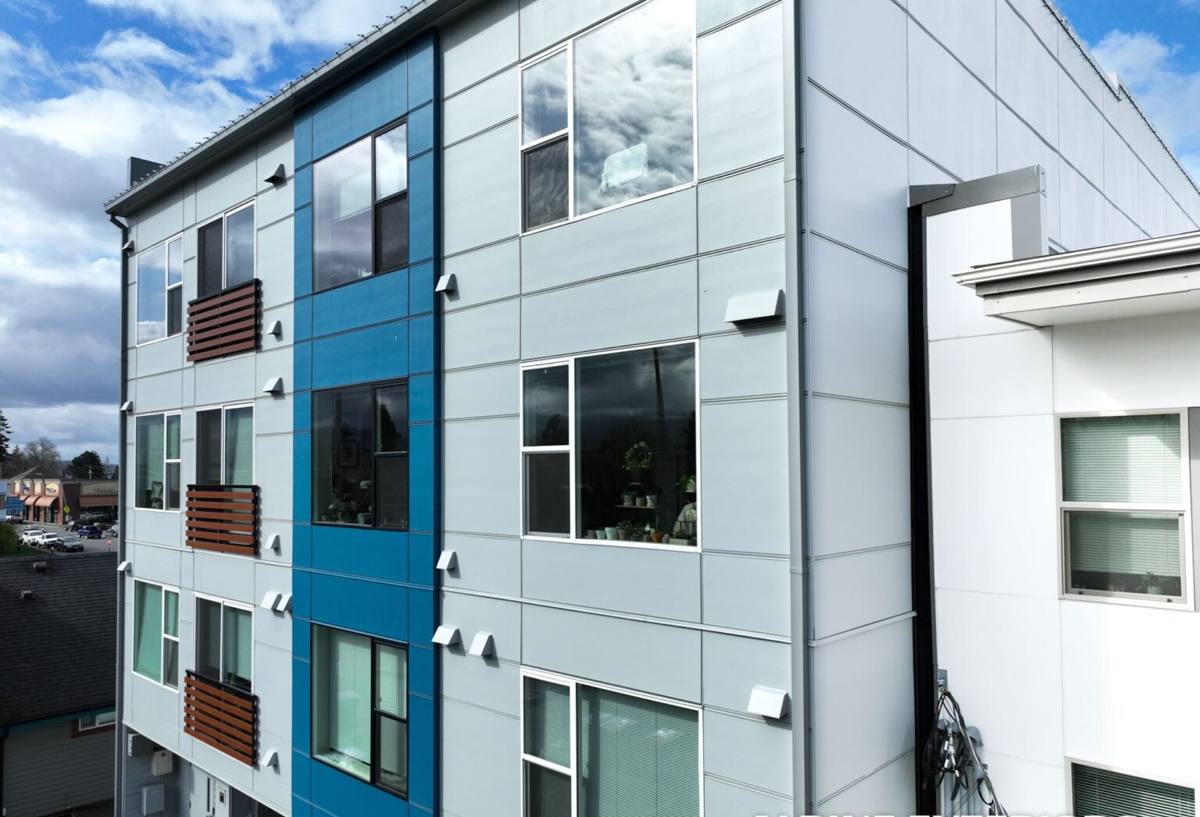
Signs a Ferndale Home Needs Window Replacement, Not Just a Repair
Not every drafty or foggy window needs full replacement. But in our climate, a few symptoms usually mean the window assembly itself — not just a worn seal or a stuck lock — has failed.
- Fog or moisture trapped between the panes of a double-pane window, which means the seal has failed and the insulating gas has escaped
- Soft, discolored, or spongy wood on the interior sill or the exterior trim around the frame
- Visible gaps between the window frame and the siding or trim, especially after a wet winter
- Windows that are noticeably harder to open and close than they used to be, which can point to a warped frame
- A persistent cold draft at the frame line even when the window is fully latched
- Moss or dark staining building up on the sill or lower frame faster than it can reasonably be cleaned
- A noticeable jump in heating costs without any other explanation
If you're only seeing one of these on one window, a repair may be enough. If you're seeing several of these across multiple windows, especially ones facing west or south where weather hits hardest, replacement is usually the more honest recommendation.
What a Correct Window Replacement Job Actually Involves
It's Mostly About What You Can't See
The window unit itself is maybe a third of what determines whether a replacement lasts. The rest comes down to how it's flashed, sealed, and integrated with the wall assembly behind your siding. In a region that gets sustained wind-driven rain, a window that looks perfectly installed from the curb can still leak within a year or two if the flashing details underneath were rushed.
The Steps That Matter
A proper replacement follows a sequence, and skipping steps to save time is where most future leaks come from:
- Removing the old window and inspecting the rough opening for rot, soft framing, or water staining before anything new goes in
- Repairing or replacing any compromised framing or sheathing found during that inspection — not covering it up
- Installing sill pan flashing that directs any water that gets past the window to the exterior instead of into the wall
- Setting the new window level, plumb, and square, then securing it per the manufacturer's fastening schedule
- Applying flashing tape and housewrap integration in the correct shingle-lap order so water sheds outward and downward
- Sealing the exterior perimeter with a compatible, weather-rated sealant — not just caulk from whatever tube is closest
- Insulating the gap between the frame and the rough opening so there's no thermal bridge or condensation point
- Finishing interior and exterior trim so the assembly looks clean and sheds water at every joint
Step three is the one that gets skipped most often on lower-bid jobs, and it's the one that matters most here. A sill pan is cheap. Water damage from not having one is not.
Choosing the Right Window Frame Material for This Climate
There's no single "best" window material — there's a best fit for your home, your budget, and how much exposure that particular window gets to weather. Here's how the common frame materials actually perform in a wet, salt-air coastal climate like ours.
| Frame Material | How It Handles Our Climate | Maintenance | Typical Fit |
|---|---|---|---|
| Vinyl | Good moisture resistance, won't rot or rust; performance varies by manufacturer quality | Low — occasional cleaning | Most homes, best value |
| Fiberglass | Excellent dimensional stability, handles temperature and moisture swings with minimal movement | Low | Higher-exposure walls, long-term owners |
| Wood | Attractive, but needs a sound exterior cladding or clad finish to survive our rain without ongoing upkeep | High if unclad, moderate if clad | Historic or architectural matches |
| Aluminum | Prone to condensation and, near salt air, corrosion unless thermally broken and properly finished | Moderate | Rarely our first recommendation for coastal Whatcom County homes |
We generally steer homeowners on wind-exposed or salt-exposed walls toward vinyl or fiberglass rather than uncoated wood or standard aluminum. That's not a knock on those materials in general — it's a judgment call based on decades of this specific weather pattern doing what it does to a window frame year after year.
Glass Packages Worth Asking About
Beyond the frame, the glass package affects comfort and condensation more than most homeowners expect:
- Double-pane with Low-E coating is the practical minimum for this climate
- Argon or krypton gas fill improves insulation without changing the look of the window
- Warm-edge spacers reduce the cold ring of condensation you sometimes see around the inside edge of older windows on damp mornings
Our Process, Start to Finish
Homeowners in Ferndale generally want to know two things upfront: how long it takes, and how much mess to expect. Here's the honest answer for a typical whole-window or multi-window replacement.
We start with an in-person assessment, measuring each opening and looking at the condition of the surrounding trim and wall assembly — this is also when we flag any rot or water damage that repair work will need to address. From there we provide a written estimate that separates the window units from the installation labor and any framing repair, so you can see exactly what you're paying for and where.
On installation day, most single-story homes with a handful of windows are done in one day; larger projects or full-house replacements typically run a few days depending on window count and how much of the surrounding trim needs attention. We work room by room to keep your home weathertight overnight rather than leaving multiple openings exposed, which matters a lot when the forecast includes rain — which, in this part of Washington, it usually does.
What Window Replacement Typically Costs in This Area
Every home is different, but the factors that move the price are consistent. Use this as a guide for what to expect a quote to depend on, not as a fixed price list.
| Cost Factor | Why It Matters |
|---|---|
| Frame material (vinyl vs. fiberglass vs. wood) | Material and manufacturing cost vary significantly, and durability tradeoffs affect long-term value |
| Window size and configuration | Large picture windows, bays, and custom shapes cost more than standard double-hung sizes |
| Number of openings | Per-window cost typically drops on larger, whole-house projects |
| Condition of the rough opening | Rot or water damage discovered during removal adds framing repair costs |
| Trim and finish work | Matching existing exterior trim profiles or repainting adds labor |
| Story height and access | Second-story or hard-to-access windows require additional setup and safety measures |
The honest range for most straightforward window replacements is broad, and that's true across the industry, not just for us — anyone quoting a single flat number before seeing your home and your windows in person is skipping a step. A written, itemized estimate after an actual site visit is the only number worth trusting.
Why Hiring a Crew That Already Works in Ferndale Matters
Window replacement isn't a one-size-fits-all trade, and Whatcom County's coastal weather isn't the same as what a contractor might be used to working with further inland or in a drier climate. A crew that regularly works Ferndale homes already knows which walls take the worst of the wind, how the local building department handles permitting for window replacement, and what flashing details actually hold up here versus what merely meets a generic code minimum.
There's also a practical scheduling advantage. A local crew can respond quickly if weather threatens a job that's mid-installation, rather than leaving an opening covered in plastic for a week while a contractor from out of the area finishes another job across the state. In a region where rain can show up with little warning, that responsiveness protects your home during the vulnerable window between old windows out and new windows sealed.
Maintaining Your New Windows in a Wet, Salty Climate
A correctly installed window in a good material still benefits from some basic upkeep, especially here:
- Rinse salt residue and grime off exterior frames a couple of times a year, especially on walls facing open water or prevailing wind
- Clear moss, leaves, and debris from window sills and tracks before they trap moisture
- Check exterior caulking annually for cracking or gaps, particularly after a hard winter
- Operate hardware periodically through the wetter months so mechanisms don't seize
- Keep gutters and downspouts clear so overflow doesn't run down the wall and pool at window heads
None of this is demanding, but skipping it is how a well-installed window ends up looking neglected years before it should.
Ready to Talk About Your Windows?
If your Ferndale home has windows showing their age — fogged glass, drafts, sticking sashes, or moss creeping into the sills — we're happy to take a look and give you a straightforward, no-pressure estimate. There's no obligation, just an honest read on what your windows need and what it would take to fix it right. Use the form below to get started.