 Semiahmoo Siding
 Blaine Harbor Sits Right at the Edge of a Tough Exposure
Homes around Blaine Harbor face a combination most siding never has to deal with inland: near-constant salt-laden air off Semiahmoo Bay, driving rain that comes in sideways during winter storms, and a moss season that stretches for months in the shade of mature Northwest tree cover. Any one of those factors is manageable on its own. Together, over years, they find every weak point in a siding system — every under-caulked seam, every panel installed without the right clearance, every finish that wasn't built for this kind of weather.
That's the lens we bring to every Blaine Harbor project. This page is specifically about fiber cement siding for homes in this area — not a general overview of siding options, but what actually holds up here, what a correct installation looks like given the exposure, and how we approach the work differently than a crew that only shows up in Blaine Harbor once a year.
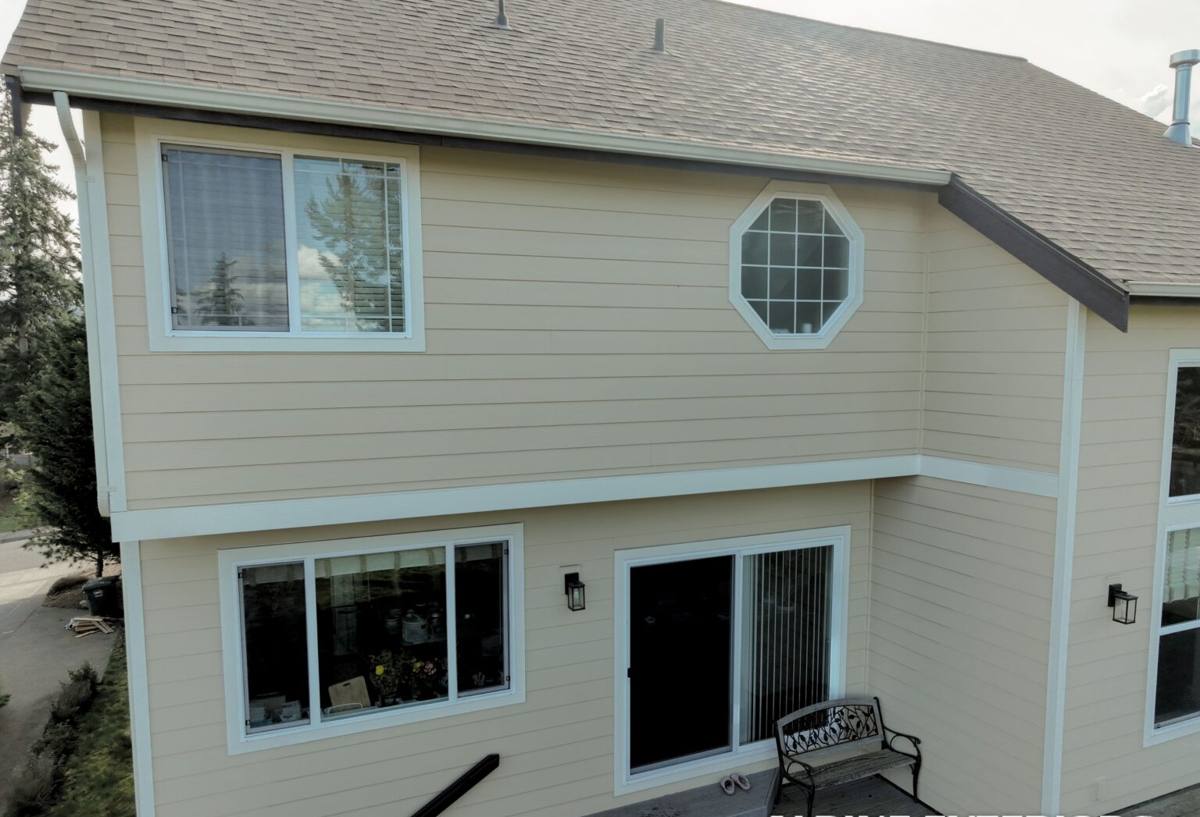
What Salt Air and Driving Rain Actually Do to Siding
Salt Air
Airborne salt doesn't just sit on a wall — it works its way into fasteners, trim joints, and any exposed cut edge. Over time it accelerates corrosion on lower-grade fasteners and flashing, and it breaks down paint finishes that weren't formulated to resist it. A siding product's finish matters as much as the substrate underneath it in a location like this.
Driving Rain
Wind-driven rain doesn't fall straight down — it gets pushed sideways into laps, corners, and butt joints. A siding system that relies on face-sealing (caulk alone keeping water out) instead of proper shingle-lap drainage and flashing detail will eventually let water behind the cladding. Once moisture gets behind siding on a Whatcom County waterfront lot, it has fewer chances to dry out than it would in a drier inland climate.
Extended Moss Season
Shaded, damp exposures around Blaine Harbor keep moss and algae active for much of the year. Left unaddressed, organic growth holds moisture against the siding surface and can stain or degrade finishes that aren't rated to resist mildew and algae growth.
Why We Install Only James Hardie Fiber Cement
We used to consider a wider range of siding products. Repeated callbacks on waterfront and high-exposure properties — swelling at cut edges, finish failure, moisture-related repairs — led us to standardize on one system we're willing to fully stand behind: James Hardie fiber cement.
Fiber cement is a mix of cement, sand, and cellulose fibers, cured into a rigid, non-combustible board. It doesn't absorb and swell the way wood-based products can, and it holds a factory-applied finish far better than field-painted alternatives. For a location like Blaine Harbor, where the siding is under sustained moisture and salt exposure, that difference compounds over the life of the product.
We don't install vinyl, LP SmartSide, Cemplank, Allura, primed spruce, or cedar. Each of those has legitimate uses in the right setting, but we've made a professional decision to put our name behind one system we understand completely and can install to spec every time, rather than spreading our crews thin across products with different installation rules, moisture behavior, and warranty structures.
ColorPlus Factory Finish
Most James Hardie products for this region are available with the ColorPlus finish — a baked-on, factory-applied coating that's more consistent and more resistant to fading and moisture intrusion than a coat of paint applied on site after installation. In a salt-air environment, a factory finish that's cured under controlled conditions holds up more predictably than field-applied paint exposed to weather within days of application.
Climate-Engineered HZ Product Lines
James Hardie engineers its fiber cement in different HZ (HardieZone) formulations for different climate zones. Blaine Harbor and the rest of coastal Whatcom County fall into the zone built for heavy moisture exposure and freeze-thaw cycling — not the formulation meant for hot, humid regions. Specifying the correct HZ line, rather than whatever happens to be in stock, is part of what makes an installation perform the way it's designed to over decades, not just years.
What a Correct Installation Involves in This Exposure
Fiber cement is a forgiving product when it's installed correctly, and an unforgiving one when it isn't. The material itself resists moisture and salt well, but a poor installation can undermine all of that. In a location like Blaine Harbor, we pay particular attention to:
- Correct nailing and fastener spacing, using fasteners rated to resist corrosion in salt-air exposure
- Proper clearance between the bottom edge of siding and grade, decks, or roof surfaces, so water has somewhere to go
- Flashing at every window, door, and penetration — not just caulk — so wind-driven rain is directed out, not trapped behind the siding
- Correct lap and overlap dimensions so water sheds down and out rather than wicking upward under wind pressure
- Sealing and priming any field-cut edges per manufacturer spec, since a cut edge is the one place factory finish doesn't already protect
- Rainscreen or drainage gap detailing where the wall assembly calls for it, giving incidental moisture a path to escape
None of this is unique to Blaine Harbor in principle — it's simply what the manufacturer's installation instructions call for. What's unique to this area is how much less margin for error there is when those details are skipped, because the exposure will find the gap faster than it would on a sheltered inland lot.
Choosing the Right Product and Color for a Waterfront Home
James Hardie's product line gives us a few practical options depending on the look and performance a Blaine Harbor home needs:
| Product | Typical Use | What It Offers Here |
|---|---|---|
| HardiePlank lap siding | Most homes, traditional lap look | Widely proven in coastal PNW exposure, broad color range |
| HardiePanel vertical siding | Accent walls, modern or board-and-batten style | Clean lines, pairs well with trim accents on waterfront homes |
| HardieTrim boards | Corners, fascia, window and door surrounds | Matches the siding's moisture and finish performance so trim doesn't become the weak point |
Color choice matters more on an exposed waterfront lot than it might elsewhere. Darker ColorPlus finishes absorb more heat and can show salt residue or water spotting differently than lighter tones. We walk through the realistic tradeoffs for a given elevation and exposure rather than just picking from a swatch book.
Our Process for a Blaine Harbor Project
The steps themselves aren't unusual, but the sequence matters for getting the details above right:
- Site walk and exposure assessment — we look at wind direction, sun exposure, tree cover, and existing moisture or moss patterns specific to the property
- Tear-off and sheathing inspection — checking for existing water damage before new siding goes on, since covering a problem doesn't fix it
- Weather barrier and flashing installation — the layer that does the real work of keeping water out, done before a single piece of siding is hung
- Hardie installation to manufacturer spec — correct fastening, clearances, and lap details for this climate zone
- Trim, caulking, and final finish check — including any field-cut edge sealing
- Walkthrough — reviewing the finished work and warranty documentation with the homeowner
Fiber Cement Compared to Other Siding in This Exposure
| Factor | Fiber Cement (James Hardie) | Vinyl | Wood / Cedar |
|---|---|---|---|
| Salt air resistance | Strong when correctly installed | Can become brittle over time in UV and salt exposure | Requires ongoing sealing/staining to resist moisture intrusion |
| Moisture behavior | Doesn't absorb and swell | Doesn't absorb, but seams can allow water behind it | Absorbs moisture; prone to rot without diligent upkeep |
| Moss/algae resistance | Finish resists staining; surface cleans up well | Can stain and is harder to refinish | Holds moisture that feeds moss and mildew growth |
| Combustibility | Non-combustible | Combustible | Combustible |
This isn't a claim that other materials can't work anywhere — it's specific to why we made a standard for the properties we work on in this exposure.
Maintaining Fiber Cement Siding in a Blaine Harbor Climate
Fiber cement is genuinely low-maintenance compared to wood, but "low-maintenance" isn't "no-maintenance" — especially this close to the water. A simple seasonal routine goes a long way:
- Rinse siding periodically to clear salt residue, especially on elevations facing the water
- Check caulking at trim joints and penetrations once a year for cracking or separation
- Keep gutters and downspouts clear so overflow doesn't run down the siding face
- Trim back vegetation and tree cover that keeps a wall shaded and damp, to slow moss growth
- Address any moss or algae buildup promptly rather than letting it sit through another wet season
- Have flashing and caulking inspected after major storms, when wind-driven rain is at its worst
Why Hiring a Crew That Already Works Blaine Harbor Matters
Siding installation instructions are the same on paper everywhere. What changes with experience in a specific exposure is judgment — knowing where flashing details need to be tighter than the minimum spec, which elevations take the worst of the wind-driven rain, and how much clearance actually holds up once winter storms roll through. A crew that has worked repeatedly in Blaine Harbor and the surrounding Semiahmoo area has already seen how this exposure behaves over multiple seasons, rather than learning it on your home for the first time.
That local pattern recognition is part of what we bring to every estimate: we're not guessing at how salt air, driving rain, and a long moss season will treat a given wall assembly — we've watched it happen on homes nearby, and we install accordingly.
If you're planning a siding project on a Blaine Harbor property, we're glad to walk the exterior with you and put together a clear, no-pressure estimate using the form below.