 Semiahmoo Siding
 Bellingham's Climate Puts Real Demands on Siding
A home in Bellingham or along the Semiahmoo shoreline sits in one of the more punishing exterior environments in Whatcom County. It's not one single problem — it's three working against your siding at the same time. Salt-laden air off the bay slowly attacks fasteners, coatings, and any material that isn't built to resist it. Driving rain, pushed sideways by wind off the water, finds every gap in flashing and every weak seam in a wall system. And a long, wet moss season means anything shaded or north-facing stays damp for months at a stretch, which is exactly the condition organic growth and rot need to take hold.
Siding that's marginal in a drier inland climate can fail years early here. That's the honest starting point for any conversation about what to put on a Bellingham or Semiahmoo home — and why we standardized on one product system instead of offering a menu of options with different failure points.
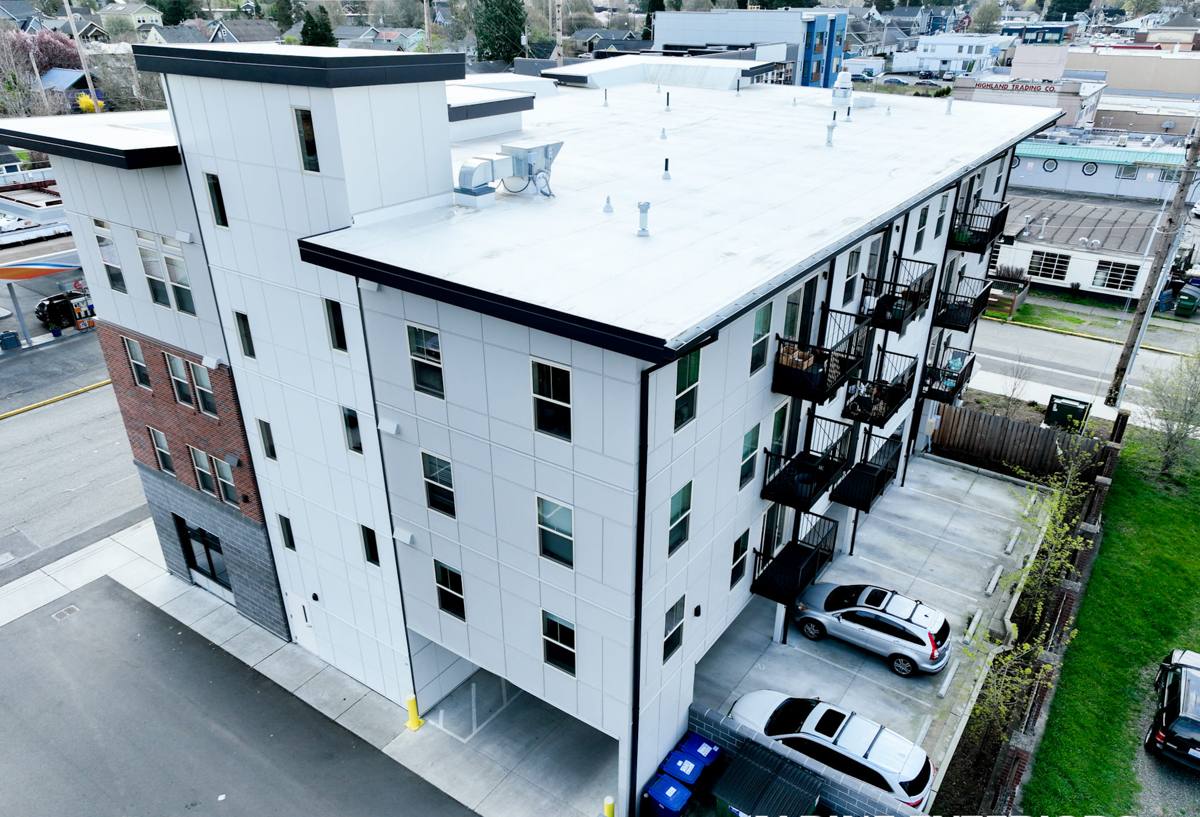
Why We Install Only James Hardie Fiber Cement
James Hardie fiber cement siding is cement, sand, and cellulose fiber, cured into a dense, stable board. It doesn't absorb water the way wood-based products do, it won't warp or delaminate from repeated wet-dry cycles, and it's non-combustible — a real consideration given the wildfire smoke and dry-season risk that has become part of a normal Pacific Northwest year. The factory-applied ColorPlus finish is baked on under controlled conditions, which gives it far better adhesion and UV resistance than field-applied paint, and it comes with a real, transferable manufacturer warranty.
We don't install LP SmartSide, vinyl, Cemplank, Allura, primed spruce, or cedar. Each of those has a legitimate use case somewhere — but every one of them asks a Bellingham homeowner to accept a trade-off (moisture sensitivity, seam and expansion behavior, coating durability, or ongoing maintenance) that we don't think makes sense on a home exposed to salt air and sideways rain for eight months of the year. Standardizing on one product means our crews install it constantly, know its quirks cold, and don't have to guess.
Picking the Right Hardie Line for This Exposure
James Hardie makes climate-engineered HZ product lines specifically because the same board doesn't perform identically in Arizona and on the Washington coast. For Bellingham and Semiahmoo, that means specifying the HZ5 formulation, which is engineered for wetter, colder, freeze-thaw-prone regions — not the HZ10 version built for hot, dry climates.
Common profile choices for this area
- HardiePlank lap siding — the standard choice for most walls; comes in several exposure widths and textures (smooth or cedarmill)
- HardieShingle — for accent gables or a more traditional Pacific Northwest look, without the moisture problems of real wood shingles
- HardiePanel vertical siding — for board-and-batten style accents or modern facades
- HardieTrim — matched trim boards so corners, fascia, and window casings age at the same rate as the field siding
Getting the line and profile right matters less for looks than for performance — the wrong formulation for this climate is the kind of mistake that doesn't show up for a few years, then shows up everywhere at once.
What a Correct Installation Actually Involves
Fiber cement siding is only as good as the wall assembly behind it. Most siding failures we get called out to inspect in this region trace back to installation shortcuts, not the product itself. A correct job includes:
Water management first
A weather-resistive barrier installed correctly, with proper laps and taped seams, sitting behind a drainage plane that lets any moisture that gets past the siding drain out and dry. On a home exposed to wind-driven rain off Semiahmoo Bay, this layer is doing as much work as the siding itself.
Flashing at every penetration
Windows, doors, hose bibs, light fixtures, and vents all need proper head flashing and kick-out flashing where a roofline meets a wall. This is the detail work that separates a siding job that lasts thirty-plus years from one that leaks behind the wall within five.
Fastening and clearances to spec
James Hardie publishes specific fastener types, spacing, and minimum clearances from grade, roof lines, and decks. Skipping these — using the wrong nail, fastening through the wrong zone of the board, or running siding too close to grade or a roof surface — voids warranty coverage and creates the exact moisture entry points this climate will find.
Caulking and joint treatment
Butt joints, corners, and trim transitions need the right sealant, applied correctly, not just enough to look finished. Done wrong, these are the first places moss and moisture find a foothold.
Comparing Options Homeowners Ask About
We get asked to bid against vinyl and engineered wood fairly often, so here's an honest look at how the main options stack up for a home in this specific climate — not a sales pitch, just the trade-offs.
| Factor | James Hardie Fiber Cement | Vinyl | Engineered Wood (e.g. LP SmartSide) |
|---|---|---|---|
| Moisture/rot resistance | High — cement-based, doesn't absorb and swell | High for the material itself, but seams and J-channels trap moisture | Moderate — wood-based core is vulnerable if the finish is ever breached |
| Coastal salt air | Stable — non-metallic, non-organic core | Can become brittle and discolor over time | Finish and edge sealing are critical; breaches lead to swelling |
| Fire resistance | Non-combustible | Melts/deforms under heat | Combustible wood fiber core |
| Finish durability | Factory-baked ColorPlus, long color life | Color molded in, but can chalk and fade | Field or factory paint, needs more frequent recoating |
| Upfront cost | Moderate-high | Lower | Moderate |
| Long-term maintenance | Low | Low, but limited repair options once damaged | Higher — edge and seam vigilance required |
None of these are "bad" products in the abstract. But for the specific combination of salt exposure, sustained wet weather, and moss pressure that Bellingham and Semiahmoo homes deal with, fiber cement is the one we're willing to put our name behind.
Our Process, Start to Finish
- On-site assessment — we look at current siding condition, wall assembly, moisture history, sun/shade exposure, and any rot already present before quoting anything
- Tear-off and substrate check — old siding comes off and sheathing gets inspected; any soft or water-damaged sheathing gets addressed before new siding goes up, not covered over
- Water-resistive barrier and flashing — installed and inspected before a single piece of siding is hung
- HZ5 Hardie installation — to manufacturer fastening spec, with correct clearances at grade, roofline, and deck surfaces
- Trim, caulking, and detail work — corners, penetrations, and joints finished to shed water, not just look clean
- Final walkthrough — we review the finished work with the homeowner before calling the job done
Living With Hardie Siding in a Moss-Prone Climate
Correctly installed James Hardie siding is genuinely low-maintenance, but "low" isn't "none." Whatcom County's long wet season means anything shaded by trees or facing north can grow surface moss or algae over time, same as a roof or deck would. It's a cosmetic issue, not a structural one, on properly installed fiber cement — a periodic soft wash keeps it looking right. What you're avoiding with Hardie is the structural risk that comes with moss and moisture sitting on a wood-based or seam-prone product for months at a time.
Keeping gutters clear, trimming back vegetation that holds moisture against a wall, and an occasional rinse are really the extent of the upkeep required.
Why Local Experience in Bellingham and Semiahmoo Matters
A crew that only occasionally works this stretch of coastline will treat it like any other siding job. A crew that works Bellingham and Semiahmoo regularly knows which walls take the worst of the driving rain, which north-facing sections need extra attention to drainage detail, and how the salt air here behaves differently than fifty miles inland. That local pattern recognition is what shows up ten years later as a wall that's still tight, not one that's quietly failing behind a finish that still looks fine.
What to look for in a siding contractor here
- Willing to explain their water-management approach in detail, not just the siding brand
- Specifies the correct HZ5 formulation for this climate, not a generic or warmer-climate product
- Can speak specifically to flashing and clearance details, not just "we install Hardie"
- Has actual experience with homes in this coastal, high-moisture area
- Provides a warranty that's transferable and backed by proper installation documentation
If your Bellingham or Semiahmoo home needs new siding, or you want a second opinion on what's currently on the walls, we're happy to take a look. Estimates are free, there's no pressure, and you'll get a straight answer about what your home actually needs — use the form below to get started.