 Semiahmoo Siding
 James Hardie Siding Built for Life at Semiahmoo Resort
Homes in the Semiahmoo Resort community sit in one of the most exposed residential settings in Whatcom County — out on the spit, with the golf course, marina, and resort hotel grounds wrapped by open water on more than one side. That waterfront setting is exactly what draws people here, and it's also what puts extra demands on the building envelope. Salt-laden air, wind-driven rain with almost nothing to slow it down, and a moss season that runs most of the year all take a toll on exterior materials faster than they would a few miles inland in Blaine. Siding is usually the first system to show it.
We install James Hardie fiber cement siding exclusively — not vinyl, not LP SmartSide, not Cemplank, Allura, primed spruce, or cedar. On a property like this, where the exterior is fighting salt, moisture, and UV from open water almost year-round, that standard isn't a marketing angle. It's the product line we've found actually holds up, provided it's installed correctly for the site.
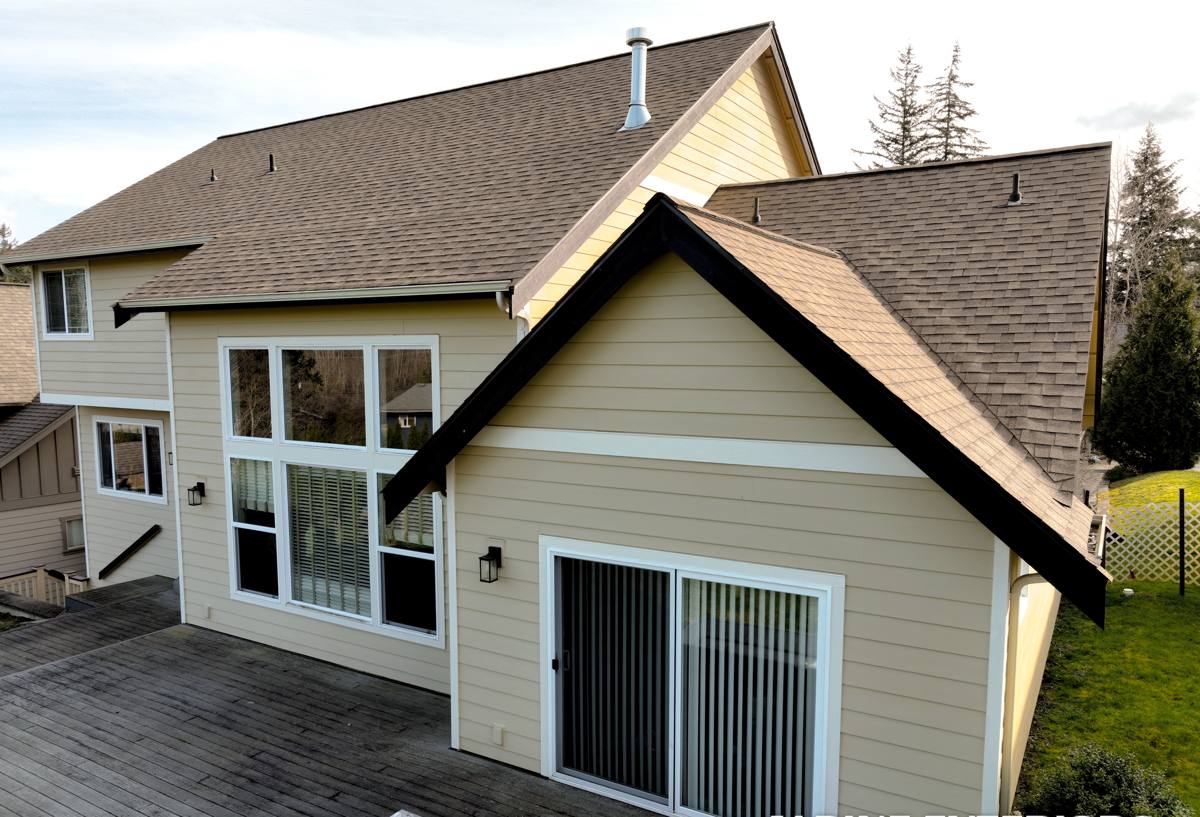
What the Semiahmoo Resort Climate Actually Does to Siding
Salt Air From Multiple Directions
Because the resort sits on a narrow spit between Semiahmoo Bay and Drayton Harbor, salt-laden air reaches these homes from more than one direction rather than a single prevailing exposure. Salt accelerates corrosion in fasteners, flashing, and trim, and it breaks down lower-grade paints and finishes well before they'd wear out on a drier, more sheltered lot. Any siding material or hardware choice here needs to account for that corrosion risk from day one — retrofitting for it after rust or finish failure shows up is a much more expensive conversation.
Wind-Driven Rain With No Windbreak
With open water on multiple sides and little to interrupt the wind, rain at Semiahmoo Resort rarely falls straight down. It gets pushed sideways into wall assemblies, siding laps, and trim joints with more force than most inland Whatcom County properties ever experience. Siding details that perform fine in a calmer setting — a slightly under-caulked joint, a lap without enough overlap, trim that isn't properly back-primed — can fail here specifically because water is finding a way in from the side, not just from above.
A Long Moss and Mildew Season
Mild temperatures, near-constant humidity, and shaded north-facing walls (common on homes positioned to capture golf course or water views on the south side) add up to a moss and mildew season that runs most of the year in this part of Whatcom County. Porous or moisture-holding siding materials tend to show it first, especially on walls that don't get much direct sun. Over time, that ongoing moisture exposure is also what drives the swelling, cupping, and paint failure we see most often on wood-based siding products in this setting.
Why James Hardie Fiber Cement Fits This Setting
We didn't start out installing only one brand of siding. We narrowed to James Hardie after seeing, repeatedly, which materials actually held up on exposed coastal properties like the ones around Semiahmoo Resort — and which ones started showing problems within a handful of years.
- Non-combustible core: Fiber cement doesn't feed a fire the way wood-based siding can, which matters for both homeowner safety and, in many cases, insurance underwriting on a coastal property.
- Factory-applied ColorPlus finish: The color is baked on under controlled factory conditions rather than brushed on in the field, and it holds up significantly longer against fading, chalking, and salt-air breakdown than site-applied paint.
- Climate-engineered HZ formulation: Hardie's HZ5 product line is engineered specifically for regions with heavy moisture exposure and freeze-thaw cycling, which describes waterfront Whatcom County well.
- Dimensional stability: Fiber cement doesn't swell, cup, or warp the way engineered wood products can after repeated wetting through a long wet season.
- Strong transferable warranty: Hardie backs its product with a substantial warranty structure, as long as installation follows their published spec — which is where a lot of the real-world performance difference actually comes from.
We won't install LP SmartSide, vinyl, Cemplank, Allura, primed spruce, or cedar on any home we work on, including here. Each of those products has a legitimate place in the market and plenty of homeowners elsewhere who are satisfied with them. But on an exposed, salt-air, golf-course-and-waterfront property, we've made a professional call that we'd rather stand fully behind one system than offer a cheaper option that quietly shifts long-term maintenance risk onto the homeowner.
What a Correct Hardie Installation Involves
Fiber cement only performs the way it's engineered to when it's installed to Hardie's published specifications — and on a site with this much moisture and wind exposure, the installation details matter more than they would somewhere calmer.
The Fundamentals We Don't Skip
- Correct fastener type, length, and spacing for the specific Hardie product and wall assembly
- Proper clearance between the bottom of the siding and grade, decking, patios, and roof lines
- Drainage or rain-screen detailing behind the panels so any incidental moisture can escape rather than sit against the sheathing
- Factory-mitered corners or properly sealed field joints, since open-water wind exposure will find any weak seam over time
- Flashing integration at every window, door, and roof-to-wall transition, lapped correctly for the direction wind-driven rain actually hits this property
A Hardie product installed loosely will still develop moisture problems on a site like this — the material is only as good as the installation behind it. That's true anywhere, but it shows up faster here than on a sheltered inland lot.
HardiePlank Versus HardiePanel for Resort-Style Homes
Most homes in and around Semiahmoo Resort suit either HardiePlank lap siding (the traditional horizontal board look) or HardiePanel vertical siding, often combined with HardieTrim for window and door surrounds, corners, and fascia. The right choice usually comes down to the home's existing architectural style and any design guidelines the community has in place, more than a performance difference — both product lines carry the same core engineering and warranty backing when installed correctly.
Matching Hardie Siding to Semiahmoo Resort's Look
Resort and golf-course communities like this one often maintain design or architectural guidelines governing exterior colors and materials, since consistency across the neighborhood is part of what protects property values for everyone. James Hardie's ColorPlus palette offers a wide enough range of factory-finished colors that matching an existing architectural direction — or a community's guidelines — is rarely a limiting factor. Where a specific custom color is required, Hardie's primed products can also be field-painted, though that approach gives up some of the longevity advantage of the factory finish and should be treated as a deliberate trade-off, not a default.
Before any project starts, we'll walk through color and trim choices with the homeowner and flag anything worth checking against community guidelines ahead of time, so there are no surprises mid-project.
Our Process for a Semiahmoo Resort Siding Project
We start with an on-site assessment of the existing siding and wall assembly, looking specifically for how moisture and salt exposure have already affected the home — soft spots, failed caulking, corroded fasteners, or paint breakdown are all things we check for before quoting anything. From there we put together a clear, written scope covering material, color, trim details, and timeline before any work begins.
During installation, we treat correct flashing, drainage detailing, and corrosion-resistant fastening as standard practice on a property like this, not as optional upgrades. We also coordinate around the practical realities of working in a resort community — shared access roads, golf course sightlines, and neighboring properties — so the project stays considerate of the surroundings, not just the home itself.
Cost Factors for a Semiahmoo Resort Hardie Siding Project
| Factor | Why It Matters Here | Impact on Scope |
|---|---|---|
| Existing siding removal | Older siding may already have hidden moisture or fastener damage from salt exposure | Can add sheathing repair before new siding goes on |
| Product line (Plank vs. Panel vs. Shingle) | Affects both look and the trim detailing required around windows, doors, and corners | Trim-heavy designs take more labor per square foot |
| Color: factory ColorPlus vs. field-painted primed | Factory finish resists salt-air fading and chalking far longer | Factory color typically costs more upfront, less in long-term upkeep |
| Access and site logistics | Waterfront and resort-community lots can have tighter access or shared roadways | May affect staging, scaffolding, and material delivery timing |
| Flashing and drainage detailing | Wind-driven rain from open water demands more careful moisture management | Non-negotiable line item; not a place to cut scope |
Why a Crew That Already Works Semiahmoo Resort Matters
A contractor who regularly works this specific stretch of Whatcom County coastline already knows how salt air, open wind, and prolonged moisture behave differently here than they do even a short drive inland toward Blaine proper. That familiarity shows up in the small decisions — how flashing gets lapped for the direction storms actually come from, which fastener grade holds up against this level of salt exposure, where extra drainage detailing earns its keep. Those details are exactly what determines whether a siding job lasts one wet season or several decades on an exposed property like this.
Familiarity with a resort or golf-course community also means fewer surprises around access, scheduling around shared amenities, and any design review a homeowner association may require — things that can slow down or complicate a project for a crew working the area for the first time.
A Simple Checklist Before Hiring for Siding Work at Semiahmoo Resort
- Ask what siding material they install and why, and whether they'll put it in writing along with a manufacturer warranty
- Confirm they carry current Washington contractor licensing and active liability insurance
- Ask specifically how they detail flashing at windows, doors, and roof-to-wall transitions for wind-driven rain off open water
- Ask about fastener and hardware corrosion resistance for a salt-air site
- Ask whether they have experience working within a resort or HOA community's design and access requirements
- Get a clear, written scope of work — material, color, trim, and timeline — before signing anything
Signs Existing Siding at Semiahmoo Resort Needs Attention
Because this is such an exposed site, siding problems tend to show up earlier and more visibly than they would inland. Worth checking for:
- Paint or finish that's chalking, peeling, or fading unevenly, especially on water-facing walls
- Soft spots or visible swelling at butt joints, corners, or the bottom courses near grade
- Persistent moss or mildew staining that returns quickly after cleaning
- Rust streaking from fasteners or trim hardware
- Gaps opening up at caulked joints around windows, doors, or trim
Any of these are worth a professional look before they turn into sheathing or framing damage, which is a far more expensive repair than replacing siding on its own.
If you own a home at Semiahmoo Resort and are weighing options for new or replacement siding, we're happy to walk the exterior with you and give an honest read on what it actually needs — no pressure, no upsell. Reach out below for a free estimate.