 Semiahmoo Siding
 Siding Built for Wiser Lake's Weather, Not Just the Coast
Wiser Lake sits inland from Semiahmoo Bay, but the weather pattern that defines this corner of Whatcom County doesn't stop at the shoreline. Marine air moving in off the Strait of Georgia carries moisture well past the water, and homes around Wiser Lake see the same long, wet winters, the same driving rain that comes in sideways during a windstorm, and the same shaded, tree-lined lots that never quite dry out between storms. Add a lake nearby and you get extra humidity sitting low in the yard on cool mornings — exactly the kind of environment where moss, algae, and mildew take hold on siding that isn't built to shed water fast.
This is a местность where siding gets tested every single year, not just during the occasional bad storm. Homeowners here don't need siding that looks good in a showroom — they need siding that holds its shape, its finish, and its seal through eight or nine months of damp weather a year, for decades, without babysitting.
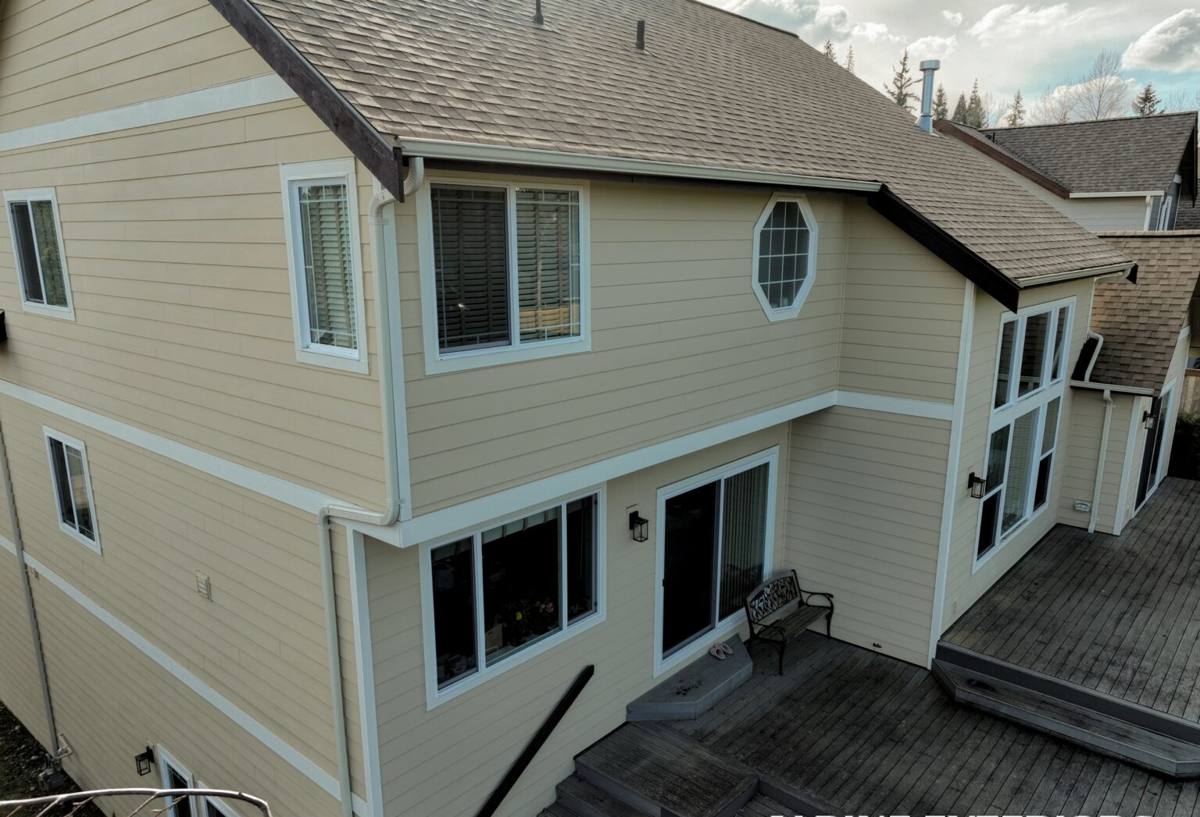
Why We Only Install James Hardie in This Area
We standardized on James Hardie fiber cement siding company-wide, and areas like Wiser Lake are a big part of why. Wood-based and wood-alternative sidings — cedar, primed spruce, LP SmartSide — all rely on an intact paint film and consistent maintenance to keep moisture out. Miss a re-caulk cycle, let gutters overflow onto a wall, or let a shaded north side stay damp too long, and those products start absorbing water at the edges and fastener holes. Once that happens in a climate like this one, it doesn't get a chance to fully dry out before the next storm rolls in.
James Hardie fiber cement doesn't rot, and it isn't a food source for the moss and mildew that thrive in Whatcom County's shade and moisture. It's dimensionally stable, so it doesn't swell, cup, or warp the way wood-based products can after repeated wet-dry cycles. And the factory-applied ColorPlus finish is baked on under controlled conditions — a more consistent, UV- and moisture-resistant bond than field-applied paint can achieve, especially on a house that only gets a few dry, workable weeks a year for exterior painting.
We're not against every alternative product on principle — some of them are well-engineered. But for homes that sit in this kind of persistent damp, low-light environment, we've seen which material holds up with the least intervention from the homeowner, and it's fiber cement done right.
What "Climate-Engineered" Actually Means
James Hardie makes different formulations for different climates, and the Pacific Northwest falls under their HZ5 engineering — a version of the product designed around freeze-thaw cycling and sustained moisture exposure rather than extreme heat or hurricane wind zones. That's not a marketing label; it changes the composition of the board itself. For a Wiser Lake property, that's the correct product line, not a generic national spec.
What a Correct James Hardie Installation Involves
Fiber cement siding is only as good as the installation behind it. The board itself resists moisture and pests, but the assembly around it — flashing, house wrap, fastening, clearances — is what actually keeps water out of the wall. In a rainy, moss-prone area, cutting corners on any of these details shows up as a problem within a few years, not decades.
Weather-Resistant Barrier and Flashing
Every seam, window, and door opening needs proper flashing and a continuous weather-resistant barrier behind the siding. On a lake-adjacent lot with more ambient humidity, we pay particular attention to head flashing above windows and doors and to kick-out flashing at roof-wall intersections, since these are the spots where a small gap turns into a slow leak that isn't visible until the sheathing underneath is already compromised.
Fastening and Clearances
James Hardie specifies exact fastener placement, spacing, and clearances from grade, roofing, decks, and other trim. Siding installed too close to the ground or too close to a roofline traps moisture and invites the kind of moss and mildew growth that's already common in shaded Whatcom County yards. Correct clearances aren't a cosmetic choice — they're what lets the wall breathe and dry.
Caulking and Joint Treatment
Every butt joint and trim intersection needs to be treated according to Hardie's installation guidelines — some joints are meant to be caulked, others left as a rain-screen gap. Getting this wrong is one of the most common causes of premature siding failure we see on older installations in this area, regardless of what material was used.
James Hardie Product Lines We Use
| Product | Best Use | Why It Fits Wiser Lake |
|---|---|---|
| HardiePlank Lap Siding | Most homes, primary wall surface | Traditional lap profile sheds driving rain effectively; widest ColorPlus color range |
| HardieShingle | Accent gables, dormers | Won't split or curl like cedar shingle in freeze-thaw and damp shade |
| HardiePanel | Modern facades, garages | Clean vertical lines with fewer horizontal joints to maintain |
| HardieTrim | Corners, fascia, window trim | Matches the siding's moisture resistance instead of pairing fiber cement with vulnerable wood trim |
Our Process for a Wiser Lake Project
1. On-Site Inspection
We walk the exterior and look at more than the visible siding condition — we check for trapped moisture, soft trim, gutter and drainage issues, and any spots where past siding was installed too tight to grade or roofing. On lake-area lots, we also look at how much shade and standing moisture different walls get, since that affects both the failure of old siding and how the new installation should be detailed.
2. Sheathing and Barrier Assessment
Before any new siding goes on, we confirm what's happening underneath. If the sheathing has taken on moisture damage from a prior installation, that gets addressed first — new siding over a compromised wall just hides the problem instead of solving it.
3. Install to Manufacturer Spec
Flashing, house wrap, fastening pattern, and clearances are installed to James Hardie's published specifications for this climate zone, not shortcuts adapted from a warmer or drier region's install method.
4. Final Walkthrough
We review the finished work with the homeowner, including basic care expectations, before considering the job complete.
Cost Factors for a Wiser Lake Home
Every project is different, and we'll always give you real numbers after seeing your home, but the factors below are what typically move the price on a local job:
| Factor | Why It Matters |
|---|---|
| Existing siding removal | Wood or vinyl tear-off, plus any water-damaged sheathing repair, adds labor before install begins |
| Home size and wall complexity | Dormers, gables, and multiple stories increase both material and labor time |
| Product line selected | Lap, shingle, and panel profiles vary in material cost and installation time |
| Trim and accent work | Matching HardieTrim at corners and openings adds a finished, cohesive look but adds scope |
| Site access | Wooded or lakefront lots with limited equipment access can affect staging and labor |
Signs Your Current Siding May Be Failing
- Soft or spongy spots when you press on the siding, especially near the bottom courses
- Persistent moss or dark streaking that returns shortly after cleaning
- Paint that's peeling, bubbling, or chalking heavily on wood or composite siding
- Visible gaps, warping, or boards that have pulled away from the wall
- Rising energy bills that coincide with drafts felt near exterior walls
- Caulk lines that are cracked, shrunk, or missing at joints and trim
Why It Matters That We Already Work in This Area
A crew that regularly works Wiser Lake and the surrounding Whatcom County communities already knows how this climate behaves — which walls stay shaded and damp longest, how moss season affects timing and cleanup, and what drainage and clearance details actually hold up here versus what looks fine on paper. That local pattern recognition matters more than it seems: it's the difference between an installation that's technically to spec and one that's specifically right for this lot, this exposure, and this weather.
It also means we're not disappearing after the job is done. Warranty support, follow-up questions, and future service are easier when the company installing your siding is genuinely local and plans to keep working in this area for years to come.
Caring for James Hardie Siding at Wiser Lake
Fiber cement is low-maintenance, not zero-maintenance. A yearly rinse to knock off moss spores and pollen before they take hold, keeping gutters clear so water doesn't sheet down the wall, and trimming back vegetation that keeps a wall shaded and damp will all extend the life of both the siding and its finish. None of this compares to the sanding, scraping, and repainting cycle that wood siding demands in this climate — but a little attention still goes a long way.
If your siding is showing wear, or you're planning ahead for a home near Wiser Lake, we'd be glad to take a look and give you a straightforward, no-pressure estimate for James Hardie siding built for this specific climate and lot.