 Semiahmoo Siding
 Decks Built for Laurel's Weather, Not Just Its View
Laurel sits inside the broader Semiahmoo service area of Whatcom County, and that comes with a specific set of weather problems for anything built outdoors. Salt-laden marine air drifts inland off the county's coastline, driving rain arrives sideways more often than straight down, and the region's long, wet stretch from fall through spring keeps every horizontal surface damp for months at a time. A deck that would hold up fine in a dry inland climate can start showing problems here within a couple of seasons if it wasn't built with this specific combination of moisture, salt, and moss in mind.
We build decks in Laurel the way this climate requires — not the way a generic build sheet from a warmer, drier region would suggest. That means different fastener choices, different attention to drainage and airflow under the structure, and different maintenance expectations we walk homeowners through before we ever cut a board.
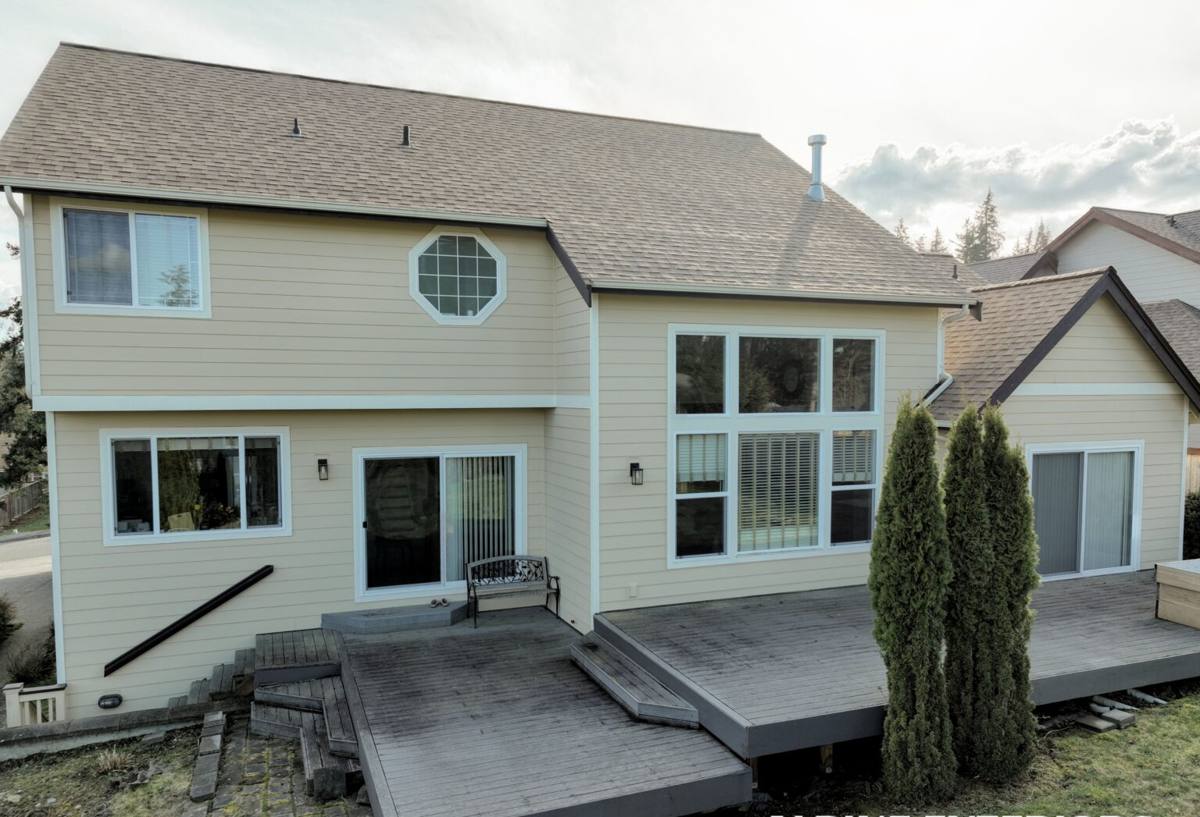
What Whatcom County's Climate Actually Does to a Deck
Moisture That Never Fully Leaves
Wood, and even some composite products, need time to dry out between rain events to stay stable. In Laurel, the gap between rain events during the wet months is often too short for that to happen. The result is decking that stays slightly damp at the surface and, more importantly, at the underside and in the gaps between boards — exactly where rot, mold, and moss get their start.
Salt Air and Metal Hardware
Salt in the air accelerates corrosion in fasteners, brackets, and connectors. A deck built with standard hardware not rated for coastal exposure can develop rust streaks and weakened connections well before the wood itself shows its age. This is one of the most common shortcuts we see in decks that were built cheaply and are now failing early.
Moss Season Is Longer Than People Expect
Moss doesn't need standing water — it just needs consistent shade, moisture, and a surface with enough texture to hold onto. Deck boards, especially in any spot with partial shade from the house or nearby trees, check every box. Once moss establishes itself, it holds moisture against the board surface even longer, which speeds up decay underneath it.
What a Correctly Built Deck Needs Here
A deck that's going to hold up in Laurel's conditions needs to be right in places that aren't visible once the project is finished. This is where most of the difference between a deck that lasts and one that needs early repairs actually comes from.
- Ledger board flashing that fully sheds water away from the house wall, not just a bead of caulk
- Joist tape or an equivalent moisture barrier on every joist top, not just the ledger
- Corrosion-resistant fasteners and structural connectors rated for exterior, moisture-heavy use
- Footings sized and set to local frost and soil conditions, not a one-size-fits-all depth
- Consistent gapping between deck boards for drainage and airflow, adjusted for the decking material's expansion behavior
- Enough clearance and airflow underneath the deck to let the substructure actually dry between rain events
None of this is exotic. It's standard good practice — but it's also the first set of details that get skipped when a job is priced to compete on speed rather than longevity. In a climate this forgiving of shortcuts in the short term and unforgiving of them over a few years, those skipped details are exactly what shows up as soft spots, rust stains, and moss-covered boards down the line.
Choosing the Right Decking Material for Laurel
There's no single "best" decking material for every home — it depends on budget, how much upkeep the homeowner wants to do, and how much sun or shade the deck gets. What matters is picking a material honestly, with a clear understanding of what it will need from you over time in this climate.
| Material | Upfront Cost | Moisture & Salt Air Behavior | Moss/Mildew Maintenance | Realistic Lifespan Here |
|---|---|---|---|---|
| Pressure-treated wood | Lowest | Needs sealing on a regular schedule to resist moisture cycling | Regular cleaning required; moss takes hold quickly if neglected | 10–15 years with consistent upkeep |
| Cedar | Moderate | Naturally moisture- and insect-resistant, but still needs periodic finish | Moderate; benefits from annual cleaning | 15–20 years with upkeep |
| Composite (capped) | Higher | Excellent — doesn't absorb moisture or salt like wood | Low; occasional washing keeps surface algae/moss from taking hold | 25–30+ years |
| PVC decking | Highest | Fully synthetic, essentially immune to moisture and salt exposure | Lowest maintenance of any option | 30+ years |
We install all of these depending on what a homeowner wants, but we're upfront about the trade-off: lower upfront cost generally means more of your own time and money going into upkeep over the years, and in a climate with this much sustained moisture, that upkeep isn't optional — it's what keeps the deck from becoming a moss farm and a rot risk.
Substructure and Drainage: The Part That Determines Lifespan
Most of what actually determines whether a deck lasts 10 years or 30 in Laurel's climate is underneath the boards, where nobody looks after the project is done. Footings need to be sized correctly and set below the frost line for this area. Joists need consistent spacing and proper blocking, sized for the specific decking material going on top of them — composite and wood have different span requirements, and using wood-rated spacing under composite decking is a common mistake that leads to bounce and premature sagging.
Just as important is what happens below the joists. A deck built low to the ground, or over a patio slab with no real air gap, traps moisture underneath it with nowhere to go. That trapped moisture is exactly what accelerates rot in the substructure and feeds the moss and mildew that show up on the surface. Any deck we build in Laurel accounts for airflow and drainage underneath as a core part of the design, not an afterthought.
Railings, Fasteners, and Hardware Choices That Matter Here
Hardware is one of the areas where cutting corners doesn't show up until years later. In a climate with regular salt-tinged air, standard galvanized fasteners can start showing corrosion well before the structure around them has any real reason to fail. We use stainless steel or coated fasteners rated for coastal and high-moisture exposure on structural connections, and we choose railing hardware with the same standard in mind.
On railings themselves, wood balusters and rails need the same maintenance schedule as wood decking — regular sealing to keep moisture out of end grain and joints. Metal and cable railing systems can look clean with less upkeep, but the fasteners and cable ends need to be rated for the exposure or they'll be the first thing to show wear. We walk homeowners through these trade-offs before installation, not after something starts rusting.
Our Deck Building Process for Laurel Homes
1. On-Site Assessment
We look at sun and shade exposure, drainage patterns around the house, existing grade, and how the deck will connect to the structure. This tells us what the moisture and moss risk actually looks like for that specific spot on that specific property, rather than guessing from a generic checklist.
2. Design and Material Selection
We talk through decking material, railing style, and layout with an honest rundown of what each option will need from you over the years in this climate — not just what it costs to install.
3. Permitting
Deck construction in Whatcom County generally requires permitting depending on size, height, and attachment to the home. We handle this as part of the process so the project is built to code from the footings up, not something a homeowner has to sort out on their own.
4. Build
Footings, framing, flashing, and moisture barriers go in first and get inspected before decking goes on top. This is the stage that determines how the deck performs in five, ten, and twenty years — we don't rush it to get to the visible finish work faster.
5. Final Walkthrough
We go over the finished deck with the homeowner, including what maintenance it actually needs and on what schedule, based on the material chosen and the specific exposure of that deck.
Maintenance Checklist for Laurel Deck Owners
Whatever material a deck is built from, a little consistent maintenance goes a long way in this climate. This is the baseline we recommend to every homeowner, regardless of who built the deck:
- Sweep leaves and debris off the deck surface regularly, especially in fall — trapped debris holds moisture and feeds moss
- Wash the deck surface at least once or twice a year to remove algae and moss growth before it takes hold
- Check gaps between boards periodically to make sure they haven't clogged with debris, which blocks drainage
- Reseal or refinish wood decking on the schedule appropriate for the product — don't wait until it looks worn
- Inspect railing connections and structural hardware annually for early signs of corrosion or loosening
- Trim back overhanging branches or shrubs that keep sections of the deck in constant shade and dampness
Why Hiring a Crew That Already Works in Laurel Matters
A contractor who mostly builds in drier climates will often use methods and materials that are perfectly reasonable elsewhere but fall short here. The difference shows up in flashing details, fastener selection, joist spacing for wet-climate materials, and how much attention gets paid to drainage and airflow underneath the structure. None of that is visible when the deck is new — it's only visible a few years in, when a properly built deck is still solid and a shortcut-built one is showing rust, soft spots, or a green film that won't scrub off.
We build decks throughout the Semiahmoo service area, including Laurel, and we design every one of them around the reality of Whatcom County's weather — not a generic national build standard. That means the framing choices, hardware, and material recommendations we make are based on what actually holds up here, season after season.
If you're planning a new deck or replacing one that's showing its age, we're happy to take a look and walk you through what a correctly built deck for your property would involve. Reach out for a free, no-pressure estimate using the form below.