 Semiahmoo Siding
 The Marietta Climate Problem: Salt, Rain, and Moss All at Once
Marietta sits close enough to Drayton Harbor and Semiahmoo Bay that salt-laden air is a daily fact of life here, not an occasional coastal breeze. Add in Whatcom County's long stretch of driving rain each fall and winter, plus a moss season that can run from October well into spring, and a deck in this part of Semiahmoo is fighting three separate threats at once. Salt air speeds up corrosion in fasteners, hinges, and metal connectors. Driving rain, especially when it comes in sideways off the water, forces moisture into end grain and horizontal surfaces that were never designed to hold standing water. And moss doesn't just look bad — it holds moisture against the wood surface and blocks the drying time a deck needs between storms.
None of these problems is unique to this area, but the combination and the length of the wet season are. A repair built around techniques suited to a drier inland climate will show its age here years sooner than it would elsewhere. That's why deck repair for a Marietta home needs to be planned around this specific coastline, not treated as a generic checklist job.
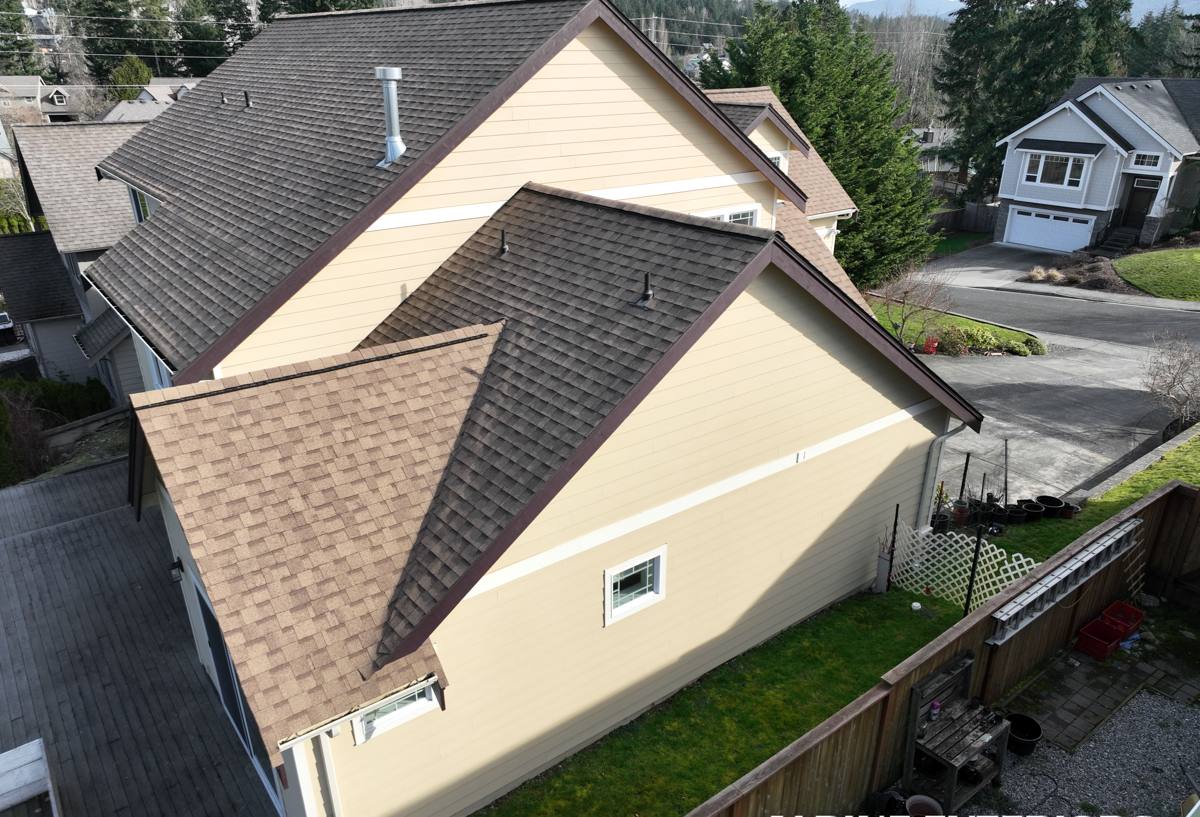
Signs Your Deck Needs Repair, Not Just a Cleaning
We get a lot of calls for a wash or a stain refresh that turn into something more once we're actually on the deck. Here's what tells us a deck has moved past routine maintenance and into repair territory:
- Soft or spongy spots when you walk across the decking boards
- Rust streaks or corroded fastener heads, especially near the outer edges
- Gaps, cracking, or movement where the deck ledger meets the house
- Green or black growth that comes back within weeks of a cleaning
- Railings or guardrails that flex or feel loose under hand pressure
- Visible rot or dark discoloration at post bases and stair stringers
- Water that pools and takes more than a day to fully dry after a storm
Any single item on that list might be a minor fix on its own. Several together usually mean water has been getting past the surface for a while, and it's worth a real inspection before spending money on cosmetic work that won't hold up through the next wet season.
What a Correct Deck Repair Actually Involves
Framing and Joists
The framing underneath is what actually holds the deck up, and it's the part homeowners see least. Rot at joist ends, undersized or corroded hangers, and posts that have wicked up moisture from ground contact all live below the decking boards. A repair that only addresses the visible surface while leaving compromised framing in place is a repair that buys a few years at most.
Ledger Board and Flashing
Most of the deck failures we see near the water don't start at the decking boards — they start at the ledger board, where the deck attaches to the house. If flashing was skipped, undersized, or installed incorrectly during the original build, rain works its way behind the ledger year after year with no visible sign until the damage is significant. Any repair worth doing checks this connection, because a repair that ignores it is a repair that will likely need to be redone.
Decking Boards and Fasteners
Swapping out individual boards is straightforward once we know the framing underneath is sound. The bigger decision is fastener selection. In a salt-air environment, standard exterior screws and nails corrode faster than the wood around them, which is why fastener grade gets matched to the site conditions rather than defaulting to whatever's standard for an inland job.
Railings and Stairs
Any repair that goes beyond cosmetic work is a chance to check railing height and baluster spacing against current code, since older decks were often built to standards that have since changed. Stair stringers also take more direct rain exposure than almost any other part of the structure, so they're worth inspecting even when the deck surface itself looks fine.
Repair or Replace? How We Make That Call
Not every deck with problems needs to come out. The honest answer depends on a handful of factors we walk through during the inspection:
| Factor | Points Toward Repair | Points Toward Replacement |
|---|---|---|
| Framing and joist condition | Solid, dry, no significant rot | Widespread rot or soft spots in structural members |
| Age of the deck | Built or rebuilt within the last 10-15 years | Original construction from several decades back |
| Extent of surface damage | Isolated boards or sections | Damage spread across most of the deck surface |
| Fastener and hardware condition | Minor surface corrosion only | Widespread rust, failing hangers, or loose connections |
| Ledger and flashing condition | Properly flashed, no water intrusion found | Missing or failed flashing with evidence of chronic moisture |
Most decks fall somewhere in between, which is why we give a straight recommendation rather than defaulting to whichever option costs more. Minor repairs — a handful of boards, some fastener upgrades, railing tightening — often land in the range of a few hundred dollars. Structural work involving framing, ledger flashing, or a full stair rebuild moves into a larger range, usually several thousand, depending on the size of the deck and how much of it is affected. We'll always tell you which category your deck is actually in before any work starts.
Material Considerations for This Climate
What you repair with matters as much as how it's installed. A few honest trade-offs worth knowing before you decide:
Pressure-Treated Lumber
Still the most common choice for framing and often for decking boards, because it's affordable and widely available. It needs more attention in a salt-air, high-rain climate — end cuts should be sealed, and it benefits from a maintenance coat every couple of years to keep water from working into the grain.
Cedar
A good-looking option with natural rot resistance, but it's a softer wood that shows wear from foot traffic and moss growth faster than treated lumber if it isn't kept clean and sealed. It rewards regular upkeep more than it tolerates neglect.
Composite Decking
Composite holds up well against moisture and doesn't need staining, which appeals to a lot of homeowners dealing with this much rain. The trade-off is upfront cost and the fact that composite still needs a sound, dry frame underneath — it solves the surface problem, not the structural one, and installation has to account for expansion and drainage or it can trap moisture against the frame instead of shedding it.
We'll talk through which of these makes sense for your specific deck and budget rather than pushing one option across the board — the right material depends on how the deck is used, how much sun and rain exposure it gets, and what you're trying to get out of the next 10-15 years.
Our Repair Process
1. Inspection
We walk the full deck — surface, framing where accessible, ledger connection, posts, and stairs — and check for the signs listed earlier rather than just looking at what's obviously broken.
2. A Written, Honest Plan
You get a clear breakdown of what needs to happen now, what can wait, and what we'd flag as repair versus replacement, in plain language, before any work begins.
3. The Repair Itself
Framing and structural issues get addressed first, since surface work over a compromised frame doesn't hold. Fasteners, flashing, and hardware get matched to the coastal conditions rather than generic inland standards.
4. Protection Before We Leave
Any exposed cuts or new lumber gets sealed, and we make sure water has somewhere to go — proper drainage and gaps between boards matter as much as the repair itself in a climate this wet.
A Realistic Maintenance Schedule for Marietta Decks
Given the moss season and salt exposure here, a deck in this area needs a different upkeep rhythm than one further inland:
| Task | How Often | Why It Matters Here |
|---|---|---|
| Clear debris and check for moss | Every 2-3 months, more during moss season | Trapped debris and moss hold moisture against the surface |
| Inspect fasteners and hardware | Once a year | Salt air accelerates corrosion faster than inland conditions |
| Check ledger and flashing | Once a year, ideally before the wet season | Hidden water intrusion causes the most serious long-term damage |
| Reseal or restain exposed wood | Every 2-3 years, sooner for cedar | Driving rain and UV both break down surface protection over time |
| Full structural check | Every 3-5 years | Catches framing issues before they become visible surface problems |
Why Hiring a Crew That Already Works Marietta Matters
A repair crew that only occasionally works this stretch of Whatcom County will treat your deck like a generic job — same fasteners, same schedule, same assumptions they'd use anywhere else. A crew that works this area regularly knows how much faster salt air corrodes hardware here, how long the moss season actually runs, and how driving rain off the water behaves differently than rain further inland. That local pattern recognition is what tells us where to look for hidden problems before they become expensive ones, and it's part of why a repair done for this specific location holds up longer than one done to a generic standard.
If your deck is showing any of the signs above, or you just want an honest read on whether it needs repair or replacement, we're happy to take a look. Use the form below to request a free, no-pressure estimate — we'll walk the deck, tell you what we find, and give you a straight recommendation either way.