 Semiahmoo Siding
 Roof Replacement Built for California Creek's Weather
California Creek sits close enough to Semiahmoo Bay and Drayton Harbor that salt-laden air is a daily fact of life for every roof in the area, not an occasional visitor. Add Whatcom County's long wet season, the driving rain that blows in off the water during winter storms, and the deep shade that keeps moisture sitting on north-facing slopes for months, and you get a climate that's harder on roofing than most manufacturer warranty testing ever accounts for. A roofing system that might last three decades in a dry inland climate can show real trouble in California Creek well before then if it wasn't installed with this specific environment in mind.
We replace roofs in this neighborhood on a regular basis, and the same patterns show up over and over: moss buildup on shaded slopes, corroded fasteners and flashing that weren't rated for salt exposure, and moisture working its way into attics through undersized or poorly placed ventilation. A correct roof replacement here isn't just "put new shingles on top" — it's addressing those specific failure points so the next roof actually outlasts the last one.
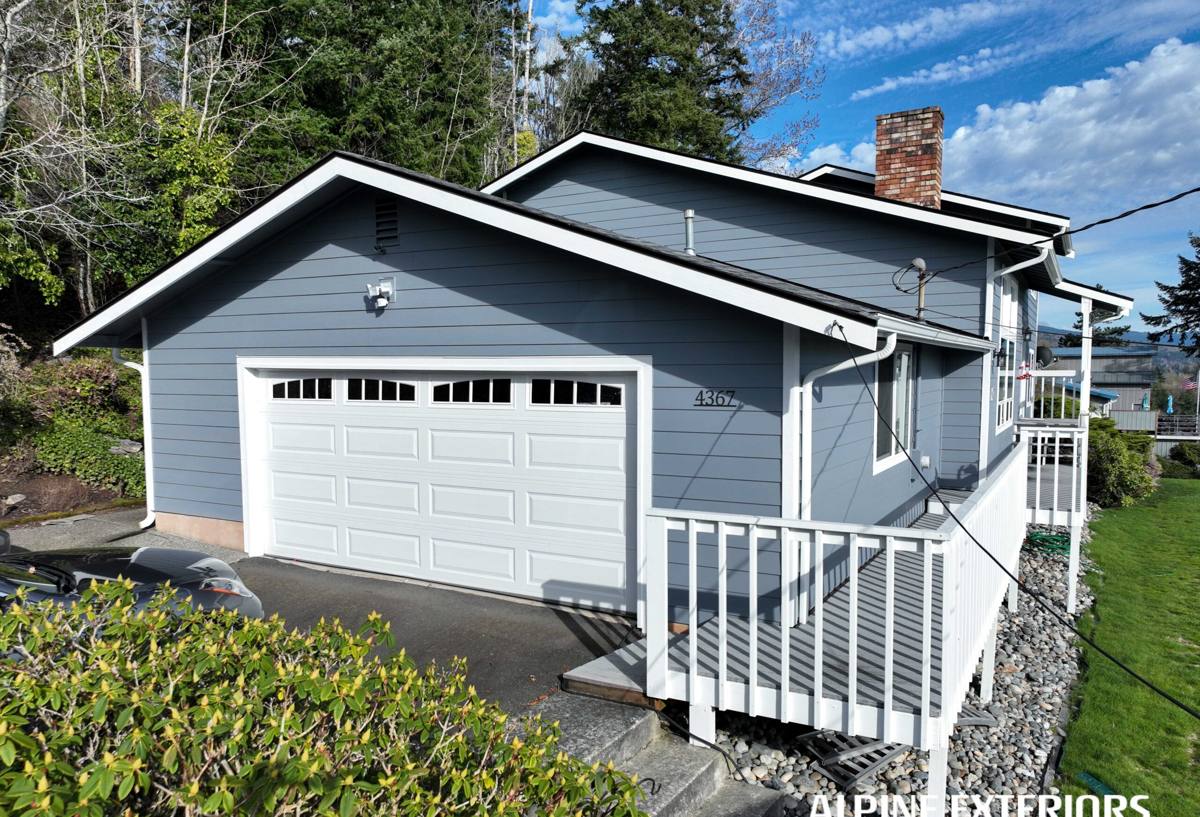
Signs a California Creek Roof Is Ready for Replacement
Roofs in this area rarely fail all at once. More often, small problems compound quietly for a couple of years before a homeowner notices a leak. Catching the early signs saves money, because a full tear-off and replacement done proactively is almost always cheaper than repeated emergency repairs plus the interior damage that follows a leak.
- Granule loss showing up in gutters, downspouts, or on the ground after a hard rain
- Shingles that are cupping, curling at the edges, or cracking, especially on south and west-facing slopes that take the most sun and wind
- Moss or dark algae streaking that keeps coming back within months of cleaning, particularly on shaded north-facing sections
- Soft or spongy decking felt underfoot when walking the roof, a sign moisture has already reached the sheathing
- Rust staining or visible corrosion around flashing, vents, or exposed fasteners
- Daylight visible through the roof deck from inside the attic, or damp insulation
- A roof that's approaching or past the age range typical for its material, especially if it was installed with builder-grade materials rather than upgraded for coastal exposure
If you're seeing two or more of these, it's worth having someone look at the roof before the next big storm rather than after.
What a Correct Roof Replacement Actually Involves
A roof replacement is more than swapping the top layer of material. In a coastal, high-moisture area like California Creek, several layers underneath the shingles matter just as much as the shingles themselves.
Tear-off and deck inspection
Every layer of old roofing comes off down to the deck. This is the only point in the entire job where the sheathing, rafters, and framing can actually be seen and checked for rot, soft spots, or prior water damage. Skipping a full tear-off, or covering existing layers, hides problems instead of fixing them and voids most material warranties.
Underlayment
Underlayment is the roof's backup line of defense if wind-driven rain gets past the surface material, which happens more often here than in drier parts of the state. We use synthetic or self-adhered underlayment sized to the roof's exposure, with extra protection at eaves, valleys, and any low-slope sections where standing water and ice can push moisture backward under the shingles.
Flashing
Flashing around chimneys, skylights, vent pipes, and roof-to-wall transitions is where most leaks actually originate, not in the open field of shingles. Salt air accelerates corrosion on lower-grade or improperly sealed flashing, so material choice and installation detail matter more here than in an inland climate.
Ventilation
Balanced intake and exhaust ventilation keeps the attic dry and close to outdoor temperature. Without it, warm moist air condenses on the underside of the deck, which is exactly the slow, invisible damage that shows up years later as rot or premature shingle failure from the inside out. Ventilation is one of the most under-addressed parts of older roofs in this area.
Choosing Roofing Materials for Salt Air and Moss
There's no single "best" roofing material for California Creek — the right choice depends on the home's roof pitch, shade exposure, and budget. What matters is picking a system honestly, understanding the trade-offs, and installing it correctly for coastal conditions.
| Material | How it handles salt air and moisture | Moss resistance | Typical lifespan here |
|---|---|---|---|
| Architectural asphalt shingle | Good with corrosion-resistant fasteners and flashing; the most common, cost-effective choice | Moderate — benefits from algae-resistant granules on shaded slopes | 20-30 years |
| Standing seam metal | Excellent when finished and fastened with coastal-rated hardware; sheds water and debris quickly | Strong — smooth surface gives moss little to grip | 40-50+ years |
| Cedar shake | Requires more upkeep in a wet, salty climate; needs consistent airflow underneath to avoid trapped moisture | Weak without regular maintenance and treatment | 20-25 years with upkeep |
| Synthetic composite shingle | Good; engineered to resist moisture absorption and salt corrosion better than natural wood | Moderate to good depending on product | 30-40 years |
We'll walk through these trade-offs honestly for your specific roof rather than pushing whatever happens to be in stock. Steeper, sun-exposed sections of a roof and shaded, low-slope sections often perform better with different treatment even on the same house.
Our Roof Replacement Process
- On-site inspection. We walk the roof and attic, check for soft decking, existing ventilation, and moss or moisture patterns specific to your home's exposure.
- Written estimate. You get a clear scope of work and price before anything is scheduled — no surprise add-ons discovered mid-job unless we find hidden deck damage, which we'll show you before proceeding.
- Material selection. We help you weigh options against your budget, roof pitch, and how much shade and moss exposure your home actually gets.
- Full tear-off. Old roofing is removed down to the deck, with the deck inspected and any damaged sheathing replaced.
- Underlayment, flashing, and ventilation installed. This is where most of the long-term durability is decided, and where we spend real attention.
- New roofing installed to manufacturer spec. Correct nailing patterns, exposure, and sealing — the details that keep a warranty valid and a roof watertight.
- Cleanup and final walkthrough. Yard and gutters cleared of debris and nails, and we walk the finished roof with you.
Cost Factors for Roof Replacement in California Creek
Every roof is priced individually, but the same handful of factors drive most of the difference between bids in this area.
| Factor | Why it affects cost |
|---|---|
| Roof size and number of planes | More square footage and more valleys, hips, and transitions mean more labor and material |
| Deck condition | Rotted or soft sheathing found during tear-off needs replacement before new roofing goes on |
| Material choice | Asphalt, metal, and composite products carry different material and labor costs |
| Roof pitch and access | Steep or hard-to-access roofs require more safety setup and take longer to install |
| Ventilation upgrades | Adding or correcting intake/exhaust venting is worth the modest added cost for long-term dryness |
| Flashing scope | Homes with more chimneys, skylights, and roof-to-wall intersections need more detail work |
Rough budget ranges vary widely with these factors, which is why we'd rather give you an honest number after seeing the actual roof than a ballpark that doesn't hold up once we're up there.
Why Hiring a Crew That Already Works in California Creek Matters
Roofing crews who mostly work drier, inland areas don't always plan for the realities of a home this close to the water. It shows up in small but consequential decisions: standard fasteners instead of corrosion-resistant ones, underlayment specs sized for a lighter rain load, or ventilation calculated without accounting for the extra moisture load this area carries most of the year.
Working in Semiahmoo and the surrounding Whatcom County communities regularly means we already know which slopes in this kind of setting tend to hold moss, which flashing details fail first under driving coastal rain, and which materials are worth the upgrade cost here versus which ones aren't. That local pattern recognition is the difference between a roof that's technically installed to code and one that's actually built for where it sits.
Living With Your New Roof: Moss Prevention and Maintenance
A correctly installed roof still benefits from some basic upkeep in this climate. Keeping gutters clear so water doesn't back up under the eaves, trimming back overhanging branches that keep shaded areas damp, and having moss gently removed before it establishes rather than after will meaningfully extend the life of any roofing material. We're happy to point out any maintenance-relevant details specific to your roof once the new one is on, so you know what to watch for and what's simply normal wear.
If your roof is showing any of the signs above, or you'd just like an honest read on how much life it has left, we're glad to come take a look. The estimate is free, there's no pressure attached to it, and you'll get a straight answer either way — just fill out the form below to get started.