 Semiahmoo Siding
 Why Wiser Lake Roofs Take a Different Kind of Beating
Wiser Lake sits inland from the coastline but still gets the full weather package that defines this corner of Whatcom County: moisture-loaded air pushing in off the Strait of Georgia and Semiahmoo Bay, heavy tree canopy around the lake shading roofs for months at a time, and a rainy season that doesn't so much end as taper off. That combination is hard on any roofing material, but it's especially hard on the wrong metal roofing job. A panel system that isn't detailed correctly for this environment won't fail in year one — it'll fail quietly, in the flashing, the fastener line, or the underlayment, three or four winters in, right when you've stopped thinking about your roof.
We install metal roofing on homes throughout the Semiahmoo area, including the lake-adjacent properties around Wiser Lake, and the failures we get called out to repair almost always trace back to the same handful of shortcuts: fasteners that weren't rated for salt-influenced air, panel laps that weren't sealed for wind-driven rain, or a roof that was installed without accounting for how much shade and standing moisture the site actually gets. This page is about doing that job correctly, once, for a Wiser Lake home specifically.
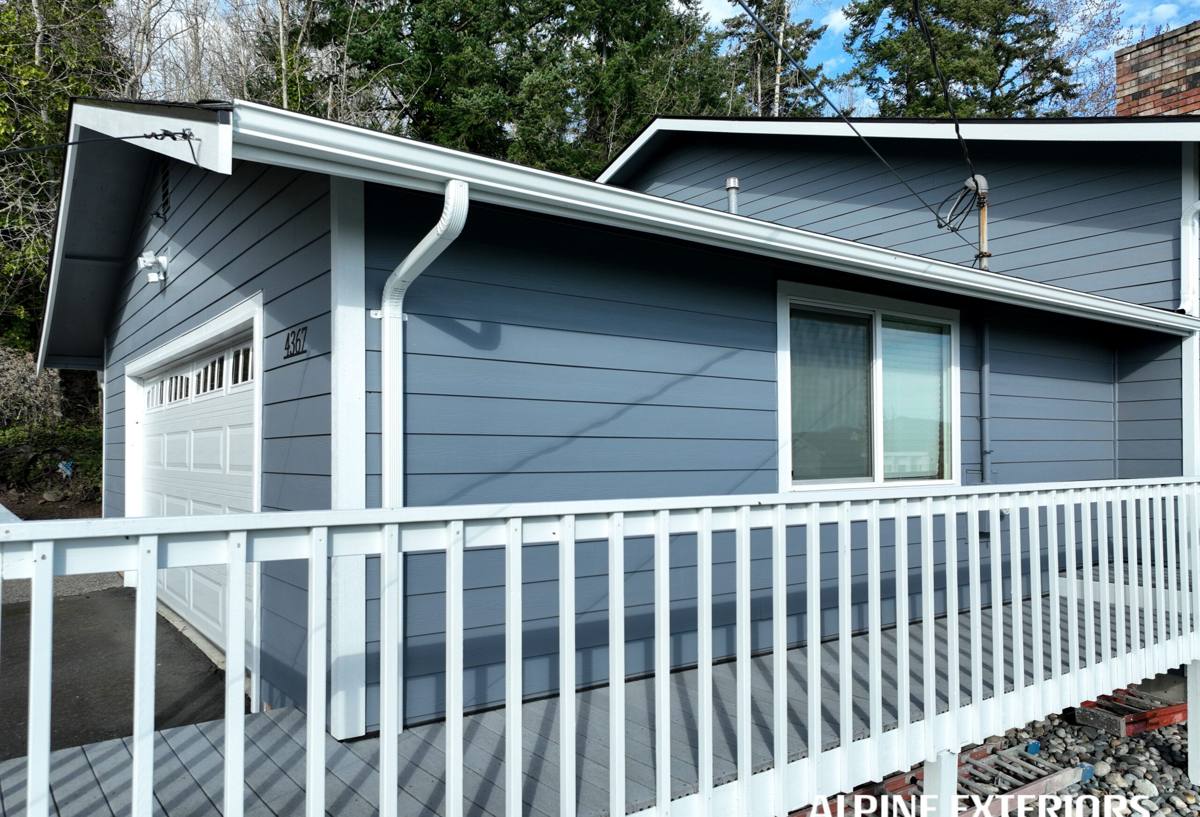
What This Climate Actually Does to a Roof
Salt Air, Even Away From the Water
Semiahmoo and the surrounding shoreline push salt-laden air inland on a regular basis, and it travels farther than most homeowners assume — especially on windy days. Bare or poorly coated fasteners, cheap flashing metal, and mismatched metals in contact with each other are where that salt exposure shows up first, usually as rust streaking or galvanic corrosion long before the panels themselves show any wear.
Driving Rain and Wind-Loaded Water
Rain here rarely falls straight down. Storms off the water tend to drive rain sideways under eaves, into ridge caps, and up under panel laps if those details weren't built to resist wind-driven moisture. A metal roof that only handles vertical rain well is a metal roof that's going to leak in this location.
A Long, Real Moss Season
The tree cover around Wiser Lake keeps a lot of roof surfaces shaded and damp for extended stretches, which is exactly what moss and algae need to take hold. On asphalt shingles that means granule loss and mat degradation. On a correctly installed metal roof it's less destructive, but moss and organic debris still trap moisture against seams and fasteners if the roof design doesn't shed water and dry out efficiently.
What a Correctly Built Metal Roof Includes
"Metal roofing" isn't one product — it's a system, and every layer matters for a site like this one.
- High-temp, self-adhering underlayment at eaves, valleys, and penetrations, not just felt paper, to guard against ice and wind-driven water intrusion at the details that fail first.
- Corrosion-rated fasteners matched to the panel metal — mixing metals or using generic hardware is one of the fastest ways to invite galvanic corrosion in a salt-influenced climate.
- Closed-cell foam closures at ridges and eaves to block wind-driven rain and pests without choking off airflow.
- Proper panel overlap and seam sealing sized for the exposure the roof plane actually faces, not a one-size-fits-all detail.
- Balanced ventilation — intake at the eaves, exhaust at the ridge — so moisture-laden air actually leaves the attic instead of condensing under the deck.
- Flashing at every valley, wall intersection, and penetration, fabricated to match the panel profile rather than caulked into place as an afterthought.
Skip any one of those and you don't have a lesser metal roof — you have a roof that's likely to leak or corrode ahead of schedule, regardless of how good the panels themselves are.
Choosing the Right Panel System for a Lake-Adjacent Property
Not every metal roofing product is a good fit for a shaded, moisture-heavy lot near Wiser Lake. Here's how the common options compare for this specific situation.
| Panel Type | How It Handles This Climate | Where It Fits Best |
|---|---|---|
| Standing seam (concealed fastener) | Best resistance to wind-driven rain and moss buildup since there are no exposed fastener heads for water or debris to collect against | Most Wiser Lake roofs, especially shaded or heavily-treed lots |
| Exposed-fastener panel | More affordable, but every fastener penetration is a future maintenance point in a climate that stresses gaskets and hardware over time | Outbuildings, shops, budget-driven projects |
| Stone-coated steel | Sheds moss and debris better than shingles and holds up well to wind, though seam detailing at valleys still needs the same care as any metal system | Homeowners who want a traditional shingle look with metal's durability |
For most homes we work on around Wiser Lake, standing seam earns its higher upfront cost through lower long-term maintenance — fewer exposed penetrations means fewer places for salt air and driving rain to find a weakness.
How Our Process Works
- On-site assessment. We look at your roof's exposure — how much tree cover it sits under, which direction storms typically hit it from, and the condition of the existing deck and flashing.
- Deck inspection and repair. Any soft, rotted, or moisture-damaged decking gets replaced before a single panel goes on. Metal roofing over a compromised deck just hides a bigger problem.
- Underlayment and flashing install. This is where most of the roof's actual water resistance comes from, and it's done before panels ever go down.
- Panel installation. Panels are run, seamed, and fastened according to the profile's engineered spec — not shortcut for speed.
- Ventilation check. We confirm intake and exhaust airflow is balanced so the attic space isn't trapping moisture under the new roof.
- Final walkthrough. We go over the finished roof with you, including what routine maintenance actually looks like for your specific site.
Managing Moss and Organic Debris Long-Term
A correctly installed metal roof won't grow moss the way shingles do, but a shaded, lake-adjacent lot can still accumulate needles, leaves, and organic debris in valleys and against ridge details. Left alone, that debris holds moisture against the roof surface and can shorten the life of sealants and fasteners even on a metal system. Keeping valleys and gutters clear, especially heading into fall, is a small task that protects a large investment.
What Drives the Cost
Every metal roofing project on Wiser Lake ends up priced differently based on a handful of real factors, not a flat per-square number.
| Factor | Why It Matters |
|---|---|
| Panel type | Standing seam runs higher than exposed-fastener panel or stone-coated steel due to material and labor for concealed fastening |
| Roof complexity | Valleys, dormers, and multiple roof planes all add flashing work and labor time |
| Deck condition | Rot or soft decking found during tear-off adds repair cost before installation can proceed |
| Tear-off vs. re-cover | Removing an existing roof adds cost but is often the right call on an older or moisture-damaged deck |
| Access and site conditions | Steep pitches, tree cover, and lake-adjacent lot layouts can affect staging and labor time |
We'll walk your roof and give you an honest, itemized picture of where your project falls before any work starts — no surprise add-ons partway through.
Maintaining a Metal Roof in This Climate
Metal roofing is low-maintenance, not no-maintenance. A short annual checklist keeps a well-installed roof performing for decades:
- Clear valleys, ridges, and gutters of leaves and needles, especially after fall storms
- Check for any panel scratches or scuffs and touch up exposed metal before rust can start
- Inspect flashing around chimneys, skylights, and vents for sealant wear
- Confirm gutters and downspouts are directing water away from the foundation, not pooling near it
- Look for any fastener heads that have backed out or show early corrosion
None of this requires a specialist visit every year — most of it is a five-minute walk around the property after a big storm.
Why a Crew That Already Works Wiser Lake Matters
Metal roofing installed to a generic spec sheet, without accounting for what this specific climate and this specific lake-adjacent tree cover actually do to a roof over time, tends to underperform its warranty. A crew that already works Wiser Lake and the broader Semiahmoo area knows which roof planes on a given lot are going to take the worst of the driving rain, which lots hold enough shade to need extra attention to ventilation and debris shedding, and which fastener and flashing details actually hold up against salt-influenced air year after year. That local knowledge doesn't show up on a spec sheet — it shows up in fewer callbacks and a roof that's still doing its job fifteen years from now.
If you're weighing a metal roof for your Wiser Lake property, we're happy to walk the roof with you, talk through panel options honestly, and give you a straightforward estimate — no pressure, no pushy sales pitch. Use the form below to get started.