 Semiahmoo Siding
 Why Cherry Point Roofs Age Differently
Cherry Point sits on open water at the edge of Semiahmoo, and that location shapes everything about how a roof performs there. Homes closer to the shoreline take a steady mix of salt-laden air, wind-driven rain, and shade from mature Douglas fir and cedar that keeps roof surfaces damp long after a storm has passed. None of that is unusual for Whatcom County, but the combination is more aggressive right on the water than it is a few miles inland. A roof spec'd for a subdivision in Bellingham or Ferndale isn't automatically the right spec for a home exposed to open water and prevailing wind off the Strait.
That doesn't mean Cherry Point needs exotic materials or a radically different roof. It means the details — fasteners, flashing metal, ventilation, and how moss is kept from getting a foothold — matter more here, and skipping them shows up faster than it would somewhere drier and more sheltered.
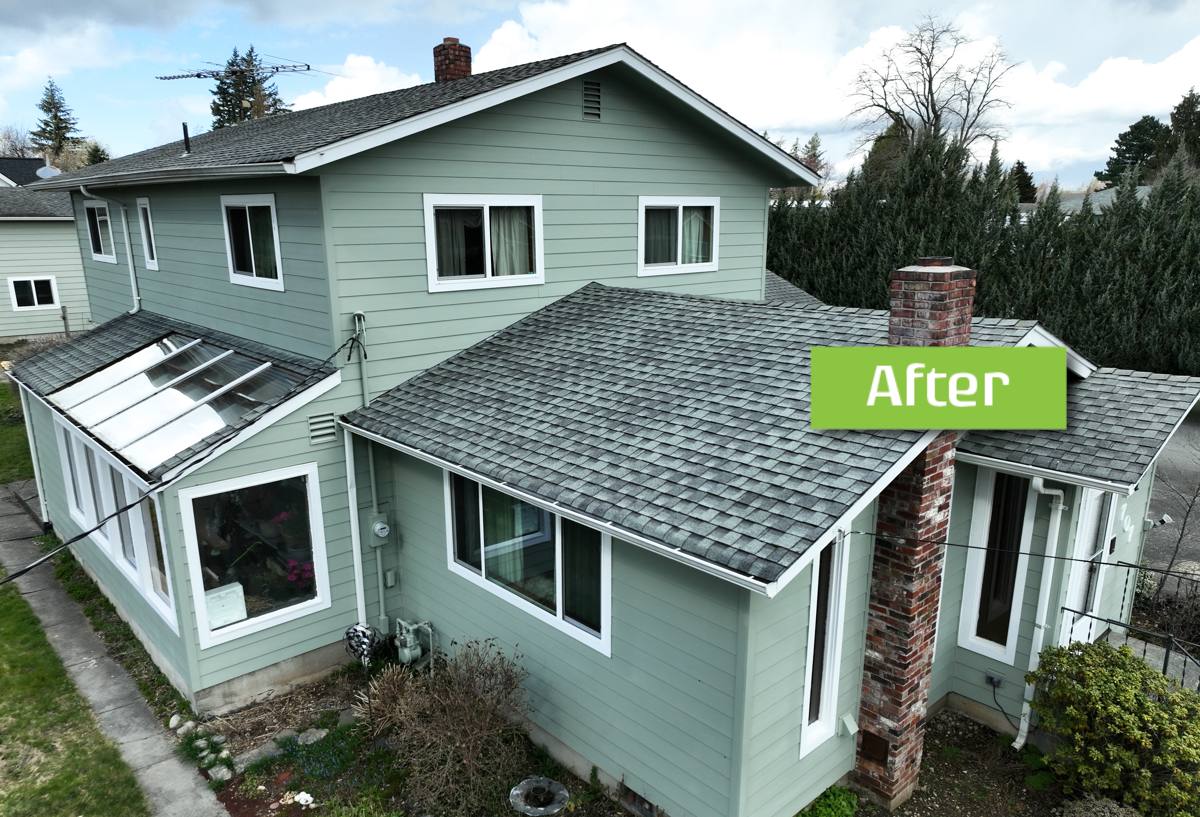
What Salt Air, Rain, and Moss Actually Do to a Roof
Each of these factors attacks a roof in a different way, and a correct installation has to answer all three at once, not just the one that's easiest to fix.
Salt air
Airborne salt accelerates corrosion on any exposed metal — nail heads, flashing, vent caps, gutter fasteners. Standard electro-galvanized fasteners can start showing rust streaks within a few years this close to the water. Once a fastener corrodes, it loses holding power and the seal around it degrades, which is exactly where leaks start.
Driving rain
Wind off the water doesn't just drop rain straight down — it pushes it sideways and up under shingle edges, around chimneys, and into any flashing joint that isn't lapped correctly. A roof that would shed water fine in a calm rain can leak in a wind-driven storm if the underlayment and flashing details weren't built for that direction of attack.
Moss and shade
Tree cover and the region's long wet season give moss months at a time to establish itself, especially on north-facing slopes and anywhere debris collects. Moss holds moisture against the roofing material, works its way under shingle tabs, and lifts them enough for wind-driven rain to get underneath. Left unaddressed, it shortens the life of an otherwise sound roof by years.
Choosing a Roofing Material for This Location
There isn't one "correct" material for Cherry Point — asphalt, metal, and cedar are all installed successfully on the water here. The right choice depends on budget, roof pitch, tree cover, and how much upkeep the homeowner wants to take on.
| Material | How it handles this climate | Trade-offs to know going in |
|---|---|---|
| Architectural asphalt shingle | Good performance for the cost when installed with marine-grade fasteners and proper flashing; algae-resistant granules help with moss and staining | Shortest lifespan of the common options; still needs periodic moss removal under heavy tree cover |
| Standing-seam metal | Sheds wind-driven rain well, handles moss better than shingles because there's no exposed tab edge to lift, long service life | Higher upfront cost; needs correctly detailed fastener and flashing hardware to avoid galvanic corrosion near salt air |
| Cedar shake | Traditional look that suits many Semiahmoo-area homes; breathes well in this climate | Highest maintenance burden in a damp, shaded setting — moss and moisture management are non-negotiable, not optional |
We'll walk through which of these fits a given roof's pitch, tree exposure, and budget honestly, including what each one actually costs to maintain over 15-20 years — not just what it costs to install.
What a Correct Installation Involves
A new roof is only as good as what's underneath the visible surface. In a climate like this, the underlayment and flashing package matters as much as the shingle or panel choice.
Tear-off and deck inspection
We remove the old roofing down to the deck rather than layering over it, because that's the only way to find rot, soft spots, or trapped moisture from years of wind-driven rain working past old flashing. Any damaged sheathing gets replaced before anything new goes down.
Ice-and-water shield at vulnerable points
Eaves, valleys, and any low-slope transitions get a self-adhering waterproof membrane underneath the primary underlayment. This is the backup layer that keeps a home dry even if wind pushes rain past the shingles themselves — exactly the scenario Cherry Point's exposure creates more often than a sheltered inland lot.
Flashing that's built for this exposure
Chimneys, skylights, sidewalls, and roof-to-wall transitions are the most common leak points on any roof, and they're where driving rain finds weaknesses first. We use corrosion-resistant flashing metal and lap every joint so water is always directed out and down, never trapped.
Fasteners rated for coastal exposure
Standard fasteners corrode faster this close to open water. We use fasteners rated for coastal or marine exposure so the roof's mechanical connection doesn't weaken years before the roofing material itself is due for replacement.
Ventilation and Moisture Control
A roof that can't breathe traps moisture in the attic, which shows up as premature sheathing rot, mold, and shortened shingle life from the underside — a problem that has nothing to do with the weather outside and everything to do with airflow inside. Balanced intake and exhaust ventilation is standard on every roof we install, and it matters more in a shaded, damp setting like Cherry Point than it does somewhere sunnier and more exposed to drying wind. We size intake and exhaust to the specific roof, not a generic rule of thumb, and check that existing soffit vents aren't blocked by insulation or paint before calling ventilation "done."
Our Installation Process
- On-site inspection and estimate. We look at the existing roof, attic ventilation, tree cover, and any signs of past leaks before recommending a material or scope.
- Written scope and timeline. You get a clear breakdown of materials, underlayment package, and flashing detail before work starts — no surprise substitutions mid-job.
- Tear-off and deck repair. Old roofing comes off, the deck is inspected, and any soft or rotted sheathing is replaced.
- Underlayment, ice-and-water shield, and flashing installation. This is the layer that determines whether the roof actually holds up to wind-driven rain, done before the finish material goes on.
- Roofing material installation. Shingles, panels, or shakes installed to manufacturer spec with coastal-rated fasteners.
- Ventilation check and cleanup. We confirm intake and exhaust venting is balanced, then clear the site of old material and debris.
- Final walkthrough. We go over the finished roof with you and answer any questions before calling the job done.
Local Considerations for a Cherry Point Roof
A few things are worth planning for specifically because of this location, rather than treating the job like any other roof replacement.
- Wind exposure off the water means fastening patterns and edge details matter more than on a sheltered inland roof — this isn't a place to accept the minimum manufacturer spec.
- Tree cover common to Semiahmoo-area lots means moss prevention should be discussed at install, not left until it's already a problem.
- Salt air shortens the life of unprotected metal — gutters, flashing, and vent hardware should all be corrosion-resistant, not just the visible roofing material.
- Whatcom County's wet season gives a compromised roof more months of exposure before a small leak becomes a real repair, so timing matters if a roof is already showing wear.
- Access and staging on some waterfront and wooded lots takes more planning than a standard suburban roof — worth discussing during the estimate, not on installation day.
What Drives the Cost of a Cherry Point Roof
| Factor | Why it matters here |
|---|---|
| Roof size and pitch | Steeper roofs and larger square footage take more material, time, and safety setup |
| Material choice | Asphalt, metal, and cedar span a wide cost range, both upfront and in long-term upkeep |
| Deck condition | Rot found during tear-off from past wind-driven rain intrusion adds material and labor to replace sheathing |
| Flashing complexity | Chimneys, skylights, and multiple roof planes all add flashing detail, which is where leaks originate if rushed |
| Site access | Tree cover, waterfront setbacks, or difficult staging can add time regardless of roof size |
We'll give you an honest, itemized number during the estimate rather than a vague range — but broadly, expect a straightforward asphalt roof to land at the lower end of these factors, and a full standing-seam metal or cedar shake job with complex flashing to land higher, mainly on material and labor rather than any hidden fees.
Why It Matters Who Installs It
Roofing crews that don't work this stretch of coast regularly can miss the details that matter most here — using standard fasteners instead of coastal-rated ones, skipping ice-and-water shield in valleys because "it doesn't rain that hard where I usually work," or not accounting for how much shade a wooded Semiahmoo lot actually gets before recommending a ventilation plan. None of those mistakes show up on install day. They show up two or three winters later as a leak, a corroded fastener, or moss lifting shingle tabs that should have been protected from the start.
A crew that already works Cherry Point and the surrounding Semiahmoo area knows what this coastline does to a roof over time, because they've seen it firsthand on homes nearby — not because it's written in a manufacturer's install guide. That's the difference between a roof that looks right on installation day and one that's actually built for where it sits.
If your roof in Cherry Point is showing wear, or you're planning ahead for a replacement, we're happy to come take a look and give you a straightforward, no-pressure estimate — just fill out the form below.