 Semiahmoo Siding
 Roof Repair Built for Cherry Point's Marine Climate
Cherry Point sits close enough to the water that every roof in the area lives under a different set of rules than a roof twenty miles inland. Salt-laden air moves off the Salish Sea and settles on shingles, flashing, and fasteners day after day. Add Whatcom County's driving rain and the long stretch of gray, damp months that let moss take hold on north-facing slopes, and you have a climate that is genuinely hard on roofing systems. This page covers roof repair specifically for Cherry Point homes: what the local conditions actually do to a roof, what a correct repair involves, and how our process works when you call us.
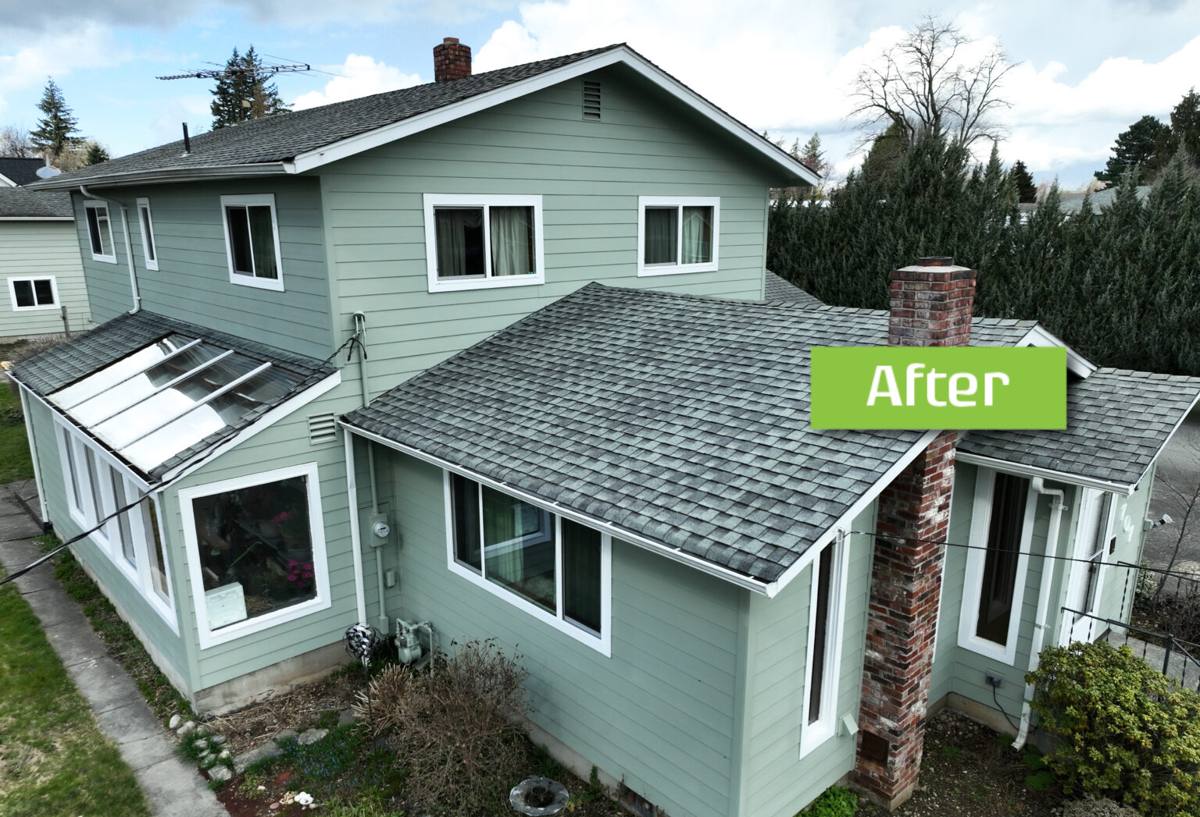
How the Marine Climate Wears Down a Roof
Salt Air and Metal Fatigue
Salt air accelerates corrosion on anything metal — flashing, nail heads, gutter hangers, and the fasteners holding shingles or shakes in place. A fastener that would last decades in a dry inland climate can start to weaken and stain years earlier this close to the water. Once a fastener backs out or corrodes through, the shingle or panel it was holding is free to lift in the next windstorm.
Driving Rain and Wind-Driven Water
Rain in this part of Washington rarely falls straight down. Wind off the water pushes it sideways, driving moisture up under shingle edges and into laps and seams that would stay dry in a calmer climate. That is why so many Cherry Point roof leaks show up around flashing, valleys, and eaves rather than in the open field of the roof — those are the places wind-driven rain finds a way in.
The Long Moss Season
Whatcom County's wet season runs long, and shaded, north-facing roof slopes near the trees common to this area rarely get enough sun to dry out fully between storms. Moss and algae take hold in that dampness, and once established, moss does more than look bad. Its root structure lifts shingle edges and granules, holds water against the roof deck, and accelerates the exact wear patterns that turn a small leak into a repair job.
Common Cherry Point Roof Repair Calls We Get
- Shingles or shakes lifted or cracked by wind and repeated wet-dry cycling
- Moss growth prying up shingle edges on shaded, north-facing slopes
- Flashing failures around chimneys, skylights, and roof-to-wall transitions
- Clogged valleys and gutters holding standing water against roofing material
- Soft or spongy decking from long-term moisture intrusion under moss or debris
- Nail pops and corroded fasteners letting water track under the roofing surface
- Skylight and vent boot leaks where old sealant has dried out and cracked
What a Correct Roof Repair Actually Involves
Diagnosing the Real Source
The stain on a ceiling is rarely directly below the leak. Water travels along rafters, underlayment, and framing before it shows itself indoors, so a repair that just patches the spot above the stain often misses the actual entry point. A correct repair starts with tracing the water path on the roof itself — checking flashing laps, fastener lines, valleys, and any penetration (vent, skylight, chimney) uphill of the visible damage.
Flashing Details Matter Most
Most roof leaks in a driving-rain climate trace back to flashing, not the field shingles. Step flashing at wall intersections, counter-flashing at chimneys, and valley metal all need to be layered correctly with the roofing material — not just caulked over — so water sheds outward instead of working its way behind the metal. A repair that relies heavily on sealant instead of correct flashing geometry is a repair that will need to be redone.
Matching Materials and Fasteners
Near the water, we use corrosion-resistant fasteners and flashing rated for coastal exposure rather than standard-grade hardware, and we match the repair shingles or shakes to the existing roofing as closely as possible so the patched area sheds water the same way the surrounding roof does. Mismatched materials can create a slightly different water path at the seam, which is exactly where a new leak likes to start.
Temporary vs. Permanent Fixes
When a leak turns up during an active storm and a full repair can't happen immediately, a temporary measure like tarping a section or installing an emergency patch can prevent further interior damage until conditions allow a proper fix. That stopgap should never be treated as the finished repair — it's meant to buy time, not replace the permanent solution. We're upfront about which category any given fix falls into so you know whether a follow-up visit is still needed. Cherry Point homeowners also deal with practical realities that shape scheduling a repair, such as steep driveway access, limited staging space on smaller coastal lots, and the narrow weather windows between storm systems that make safe roof work possible. A crew that already works this area plans around those realities instead of learning them on the job, which keeps a repair visit efficient and on schedule.
Our Repair Process, Start to Finish
1. Inspection
We get on the roof (or use a camera where a safe walk isn't practical) and look past the obvious damage to check flashing, valleys, moss coverage, and fastener condition across the whole roof — not just the spot you called about. A roof with one visible leak often has a few smaller issues developing nearby.
2. Written Estimate
You get a clear, written scope of what needs to be repaired and why, in plain language, before any work starts. If we find something beyond the original reason for the call, we explain it and let you decide whether it's worth addressing now or worth watching.
3. The Repair
We remove and replace damaged material back to sound decking, correct the flashing detail that's actually causing the leak, and reinstall with corrosion-resistant fasteners suited to this coastal climate. Moss and debris get cleared from the work area and surrounding slopes so the repair isn't immediately undermined by what's already growing on the roof.
4. Cleanup and Follow-Up
We clear debris from gutters and the ground, and we're straightforward about what to expect afterward — including realistic guidance on the roof's remaining service life if the repair was a stopgap rather than a long-term fix.
Repair or Replace? Cost Factors to Weigh
Not every roof problem in Cherry Point needs a full replacement, but not every leak should keep being patched either. These are the honest factors that should drive that decision:
| Factor | Leans Toward Repair | Leans Toward Replacement |
|---|---|---|
| Roof age | Well within its expected material lifespan | At or past the material's typical service life |
| Damage extent | Isolated to one flashing point, valley, or section | Spread across multiple slopes or recurring in the same areas |
| Moss/moisture history | Caught early, decking still sound | Long-term moss growth with soft or damaged decking |
| Repair history | First or second repair on this roof | Same area has already been patched more than once |
| Underlying materials | Underlayment and decking still in good condition | Underlayment failing or decking deteriorated beneath the surface |
We'll tell you plainly which side of that table your roof falls on. A roof with isolated, first-time damage almost always makes more sense to repair than replace — but a roof with a long moss history and repeated patch jobs in the same spot is often costing more in repeated repairs than a single correct fix would.
Roofing Materials in a Salt-Air, Moss-Prone Environment
The material already on your roof shapes how a repair should be done and how it will hold up afterward. Here's how the common options behave in this specific climate:
| Material | Moss/Moisture Behavior | Coastal Maintenance Considerations |
|---|---|---|
| Asphalt composition shingle | Granule loss accelerates where moss takes hold; algae-resistant lines help but don't eliminate the need for cleaning | Widely available replacement matches; moderate maintenance |
| Cedar shake/shingle | Absorbs and holds moisture, which speeds decay if moss isn't controlled | Needs more frequent moss removal and periodic treatment to reach expected lifespan |
| Metal roofing | Sheds moisture quickly and resists moss better than most materials | Fasteners and cut edges need corrosion-resistant hardware and correct sealing near salt air |
Whatever material is already on your roof, we work with it rather than pushing you toward a different system during a repair call — replacement material choice is a separate conversation with its own trade-offs in upfront cost, maintenance, and appearance.
Why Hiring a Crew That Already Works Cherry Point Matters
A roofer who mostly works inland doesn't see the wear patterns this climate produces every day. A crew that's already familiar with Cherry Point and the surrounding Semiahmoo area knows which slopes tend to hold moss longest, which flashing details fail first in wind-driven rain off the water, and what fastener and material choices actually hold up here rather than just on paper. That local pattern recognition is what separates a repair that lasts from a repair that reopens in the next big storm.
It also means faster response. When a storm comes through Whatcom County, homeowners who need a roof looked at quickly benefit from working with a crew that's already local, already equipped for this terrain, and not driving in from another part of the region.
Homeowner Maintenance Checklist Between Professional Inspections
Regular attention between repairs and inspections goes a long way in this climate. A short list you can realistically keep up with:
- Clear leaves, needles, and debris from valleys and gutters at least twice a year
- Look for moss or dark streaking on north-facing slopes each fall and spring
- Check that downspouts are directing water away from the foundation and not backing up onto lower roof sections
- After any major windstorm, do a visual check from the ground for lifted or missing shingles
- Watch for ceiling stains or musty odors in attic spaces, which often show up well before a leak is visible from outside
- Avoid pressure-washing the roof surface directly — it can strip granules and force water under shingle edges
None of this replaces a professional inspection, but it catches the early signs that turn a small repair into a bigger one if they go unnoticed through a wet Whatcom County winter.
Get a Straightforward Look at Your Roof
If you're dealing with a leak, moss buildup, or storm damage on a Cherry Point roof, we're glad to come take an honest look and give you a free, no-pressure estimate — with a clear explanation of what's actually going on and what it would take to fix it right. Use the form below to get started.