 Semiahmoo Siding
 Why Laurel Roofs Wear on a Different Timeline
Laurel sits close enough to Semiahmoo Bay and Drayton Harbor that homes here deal with a mix most inland Whatcom County neighborhoods don't see in the same combination: salt-laden air off the water, long stretches of driving rain pushed in by coastal wind, and a moss season that can run from fall through spring. None of these factors is dramatic on its own, but together they shorten the useful life of a roofing system that wasn't built or installed with them in mind.
Salt air accelerates corrosion on exposed metal fasteners, flashing, and vents. Driving rain finds its way under shingles and around penetrations that would stay dry in a calmer climate, especially on roofs with marginal underlayment or aging flashing. And moss doesn't just sit on the surface looking bad — its root structure lifts shingle edges, holds moisture against the roof deck, and speeds up granule loss. A roof that would last 25-30 years in a drier, inland setting often needs attention several years sooner out here.
None of this means Laurel is a bad place to own a home with a good roof. It means the replacement has to be planned and installed for these specific conditions, not treated like a generic tear-off-and-reshingle job.
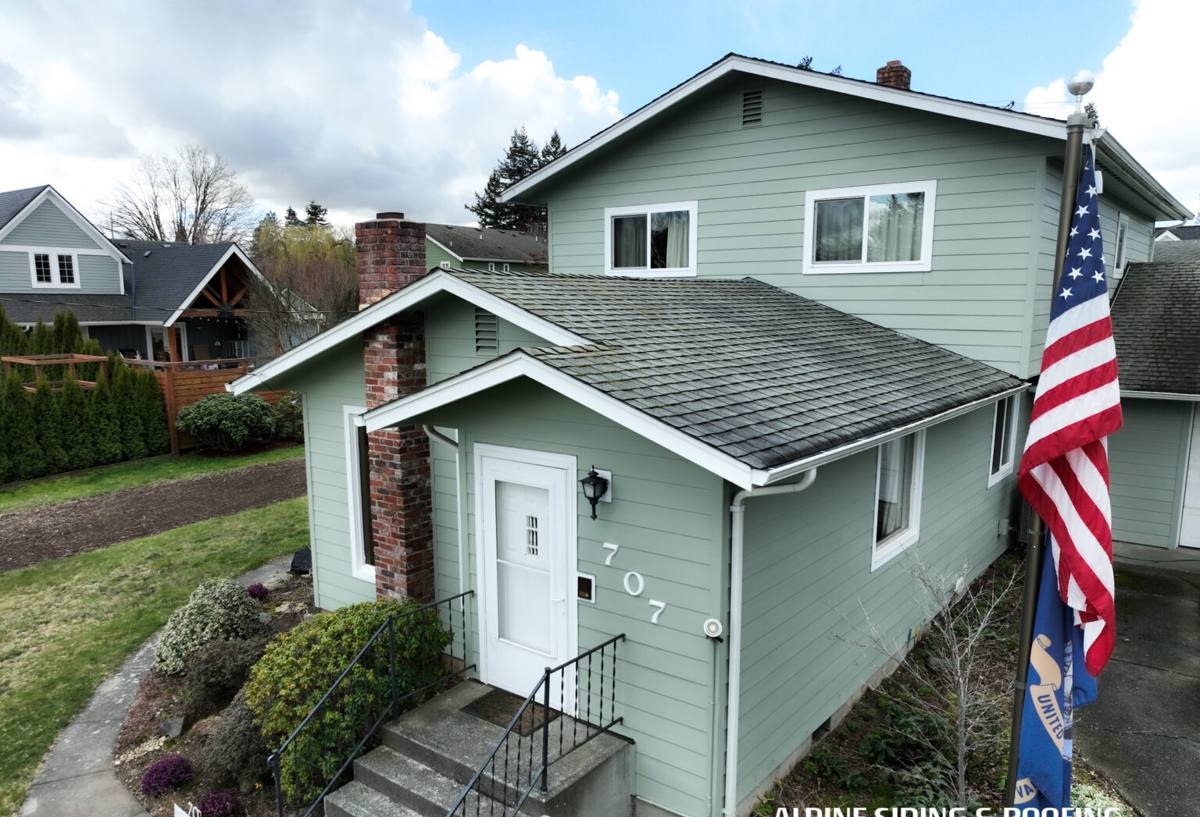
Signs a Laurel Roof Has Moved Past Repair
Repairs make sense when the problem is isolated — a cracked pipe boot, a section of flashing, a few storm-damaged shingles. Replacement becomes the honest recommendation when the damage is systemic. Common signs we look for on Laurel homes include:
- Granule loss heavy enough that shingles look patchy or bald in sun-exposed and rain-exposed areas
- Curling, cupping, or cracking shingles across multiple slopes, not just one spot
- Persistent moss growth that returns within a season or two of cleaning
- Soft or spongy decking felt underfoot during inspection, usually from long-term moisture intrusion
- Daylight visible through the attic roof boards, or damp insulation and staining on rafters
- Multiple past repairs in different areas within a few years of each other
If a roof is showing two or more of these at once, patching one area usually just delays the same conversation a year or two down the road, while the decking underneath keeps absorbing moisture.
What a Correct Roof Replacement Actually Involves
A roof replacement is more than stripping old shingles and nailing down new ones. In a climate like Semiahmoo's, the parts of the job that don't show once it's finished are usually what determine whether it lasts 12 years or 30.
Full Tear-Off and Deck Inspection
We remove the existing roofing down to the deck rather than layering over it. This lets us actually see the plywood or planking underneath — soft spots, delaminated sheathing, and hidden rot from years of moisture intrusion don't show up any other way. Any damaged decking gets replaced before anything new goes down; installing new roofing over compromised decking just resets the clock on the same problem.
Underlayment and Moisture Barrier
This is where driving rain gets stopped before it becomes a leak. We use synthetic underlayment across the full roof and self-adhering ice-and-water membrane at the vulnerable points — eaves, valleys, and around every penetration (vents, chimneys, skylights). In a rain-driven coastal climate, this layer matters as much as the visible roofing material.
Ventilation
A roof that can't breathe traps moisture in the attic, which speeds up deck rot and moss growth from underneath. We check that intake (soffit) and exhaust (ridge or roof vents) are balanced, not just present, since mismatched ventilation is a quiet, common cause of premature roof failure in this region.
Flashing and Metal Components
Given the salt air near the bay, we pay close attention to flashing material and fastener choice around chimneys, walls, and valleys. Corroded or undersized flashing is one of the most common leak points we find on older Laurel roofs during tear-off.
Choosing a Roofing Material That Holds Up Here
There's no single "best" roofing material for every home — the right choice depends on budget, roof pitch, and how much maintenance a homeowner wants to keep up with. For a home exposed to salt air and heavy moss pressure, here's how the common options stack up.
| Material | Typical Lifespan | Moss/Moisture Behavior | Salt Air Considerations |
|---|---|---|---|
| Architectural asphalt shingles | 25-30 years | Good with proper underlayment and ventilation; needs periodic moss treatment | Performs well; use corrosion-resistant fasteners and flashing |
| Standing seam metal | 40-50+ years | Sheds moisture and moss well due to smooth, steep-shedding surface | Requires coastal-rated coatings and fasteners to resist salt corrosion over decades |
| Cedar shake | 20-25 years in this climate | Higher maintenance burden; retains moisture and is more prone to moss/rot without diligent upkeep | Natural material can weather unevenly in salt-humid air |
| Synthetic composite shingle | 30-50 years (product dependent) | Resists moisture absorption better than wood; still needs moss prevention | Generally stable in coastal air; confirm manufacturer warranty terms for marine exposure |
We don't push one material on every homeowner. We'll walk through what your roof's pitch, sun exposure, and budget actually call for, and we'll be straightforward about the maintenance trade-offs of whatever you choose — including where a lower upfront cost means more upkeep down the line.
How Our Replacement Process Works
- On-site inspection and estimate — we walk the roof and attic, document the actual condition, and give you a written estimate with material options, not a ballpark guess from the driveway.
- Scheduling around weather windows — in a climate with this much rain, timing the tear-off to avoid an exposed deck overnight is part of doing the job right.
- Property protection — landscaping, siding, and gutters get covered or protected before tear-off begins.
- Tear-off and deck inspection — old roofing removed, decking assessed and repaired as needed.
- Underlayment, flashing, and ventilation installed — the layers that determine long-term performance, done before the finish material goes on.
- Roofing material installed to manufacturer spec — correct nailing patterns, exposure, and fastener types for the coastal environment.
- Full cleanup and magnetic nail sweep — yard and driveway cleared of debris and stray fasteners.
- Final walkthrough — we go over the finished roof with you before calling the job done.
Moss, Algae, and What Happens After Installation
A new roof in Laurel isn't maintenance-free just because it's new. Moss spores are already in the air here, and a north-facing slope shaded by trees will start showing growth again within a few years regardless of material. What changes with a correctly installed roof is how much damage that growth can do before it's addressed.
We install roofs with moss and algae resistance in mind from the start — proper ventilation to reduce trapped moisture, and where appropriate, zinc or copper strips near the ridge that release trace metals with rainfall to slow regrowth on the slopes below. We'll also walk you through a simple maintenance rhythm: keeping gutters clear so water doesn't back up under the eaves, and having moss gently removed (not pressure-washed, which can strip granules) every year or two rather than letting it establish and spread.
Permits, Warranty, and Cost Factors
Roof replacements in Whatcom County typically require a building permit, which we handle as part of the project rather than leaving it to the homeowner. Warranty coverage generally comes in two parts: a manufacturer's warranty on the roofing material itself, and our workmanship warranty covering the installation. We'll explain both in plain terms before work starts, including what voids each one.
Cost depends on roof size, pitch, current layer count, decking condition, and material choice — a straightforward single-layer tear-off on a simple gable roof costs meaningfully less than a steep, multi-valley roof with rotted decking that needs replacing. We give real numbers after inspection, not a phone-quote guess, because the decking condition alone can shift a bid significantly once we're actually up there.
Why a Crew That Already Works Laurel Matters
A roofer who works this specific stretch of Whatcom County regularly knows things that don't show up in a generic estimate: which slopes near the water take the worst of the wind-driven rain, how tree cover on wooded Laurel lots affects moss pressure on north-facing roofs, and what decking condition to expect on homes of a certain age in this area. That local pattern recognition shortens the inspection, sharpens the estimate, and reduces surprises mid-project.
It also means logistics go smoother — knowing the roads, permit expectations for the county, and how to schedule around this area's weather patterns instead of learning it on your job.
Questions Worth Asking Before You Hire
- Do you carry current liability insurance and workers' comp, and can I see proof?
- Is a building permit included in the bid, or is that on me?
- What's covered under your workmanship warranty, and for how long?
- Will you inspect and repair decking as part of the base price, or is that a change order?
- What underlayment and ventilation approach are you using for a roof this close to the water?
- Can you give me a written, itemized estimate rather than a verbal number?
If your Laurel roof is showing its age, we're happy to take a look and give you a straight answer — whether that's a repair, a replacement, or just a maintenance recommendation for a few more years. Fill out the form below for a free, no-pressure estimate.