 Semiahmoo Siding
 Storm Damage Roof Repair Built for Custer's Weather
Custer sits close enough to Semiahmoo Bay and the Strait of Georgia that its roofs deal with a mix most inland Washington towns never see: salt-laden air, wind-driven rain that comes in sideways instead of straight down, and a moss season that stretches for most of the year. When a windstorm rolls through Whatcom County, the damage it leaves on a Custer roof often looks different from what a contractor working thirty miles inland is used to seeing. We repair storm-damaged roofs specifically in this area, and that local pattern recognition changes how we inspect, what we look for, and how we fix it.
This page covers what storm damage repair actually involves for homes in and around Custer — not a generic overview, but the specifics that matter when your roof has already taken a hit from wind, rain, or the debris a storm kicks up.
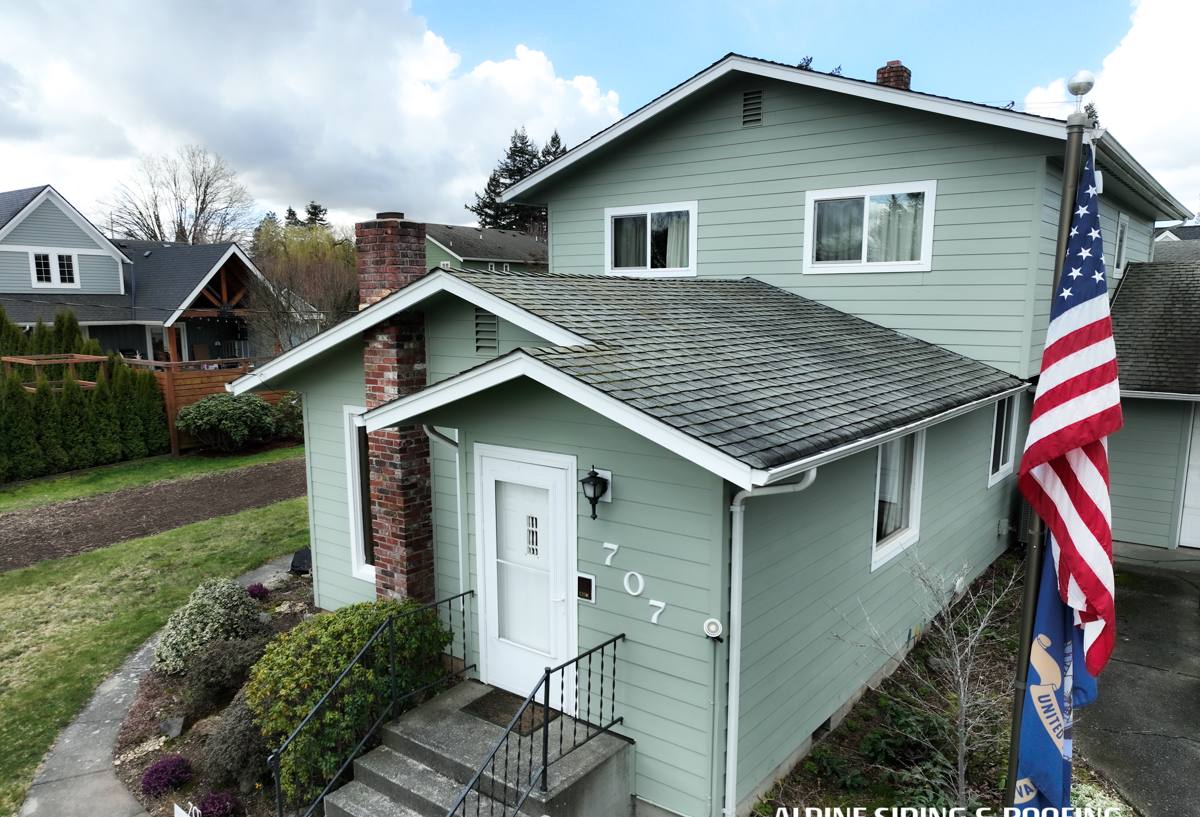
Why Storms Hit Custer Roofs Differently
A few climate realities shape how roofs age and fail out here, and they're worth understanding before you decide what kind of repair your roof needs.
Salt air and driving rain
Homes closer to Semiahmoo Bay and Drayton Harbor pick up salt-carrying moisture in the air, and wind during a storm pushes that moisture further inland than most people expect. Salt air accelerates corrosion on exposed metal — flashing, fasteners, gutter hardware — faster than plain rainfall does. Combine that with driving rain that gets pushed uphill under shingle edges instead of running straight off, and you get moisture finding its way into laps and seams that would stay dry in a calmer climate.
Outflow winds off the Fraser Valley
Whatcom County, including the Custer area, sits in the path of strong outflow winds that funnel down from the Fraser Valley during winter storm events. These aren't just gusty afternoons — they can sustain hard, directional wind for extended periods, which is exactly the kind of load that lifts shingle tabs, works ridge caps loose, and drives rain under flashing that was never designed to take wind from that angle.
A long moss season
Cool, damp, and often shaded conditions mean moss and algae get a long growing window here. Moss doesn't cause storm damage directly, but it does something almost as costly: it holds moisture against the roof surface and works its way under shingle edges, which weakens the exact spots that wind and rain damage will exploit during the next storm. A roof with heavy moss going into a windstorm is already at a disadvantage.
Spotting Storm Damage: What to Look For
Not every mark on a roof after a storm needs a repair, and not every repair need is visible from the ground. Knowing the difference saves homeowners money and prevents small problems from becoming big ones.
Signs you can usually see
- Shingles that are lifted, curled, cracked, or missing entirely
- Granules collecting in gutters or at downspout outlets
- Bent, dented, or detached flashing around chimneys, vents, and roof-to-wall transitions
- Visible sagging in the roof deck or soffit staining after heavy rain
- Debris — branches, needles, gravel from a neighboring roof — lodged in valleys
Signs that hide until they've already caused a problem
The damage that costs the most usually isn't visible from the driveway. Wind can lift a shingle just enough to break its seal without tearing it off, so the roof looks intact but is no longer watertight at that spot. Nail pops loosen fasteners without pushing them all the way out. Flashing can shift a fraction of an inch — enough to open a path for water, not enough to look wrong from below. This is why a real storm inspection means getting on the roof, not scanning it with binoculars.
What a Proper Storm Repair Actually Involves
A correct storm repair is more than swapping out a few obviously broken shingles. Here's what we consider a complete job.
Inspection before anything else
We walk the roof, not just the visible slopes. That includes checking the underside of ridge caps, probing suspect shingles for broken seals, and checking flashing at every penetration — chimney, plumbing vents, skylights, and wall transitions. On a roof exposed to salt air, we pay particular attention to fastener and flashing corrosion, since that's often further along than the shingles themselves suggest.
Matching materials, not just patching them
Shingle color and profile change over the years, and a mismatched patch is the most obvious sign of a rushed repair. Where an exact match isn't available, we talk through the trade-offs with the homeowner directly — sometimes that means pulling replacement shingles from a less visible slope, sometimes it means being upfront that a perfect blend isn't possible and letting the homeowner decide how much that matters to them.
Flashing and underlayment get real attention
Storm damage repair that only replaces shingles and ignores the flashing underneath is a repair that fails again in the next storm. We replace compromised flashing rather than caulking over it, and where underlayment has been exposed to water, we address that layer too — not just the surface shingle.
Documentation for insurance
If a claim is involved, we document damage with clear photos and a written scope before and after the repair. That paperwork matters more than most homeowners realize when it comes to getting a claim approved without delay.
Repair or Replace? How We Help You Decide
Storm damage doesn't always mean a full re-roof, and it doesn't always mean a quick patch will hold, either. The right call depends on a few factors working together.
| Factor | Leans toward repair | Leans toward replacement |
|---|---|---|
| Roof age | Under roughly 10-12 years | Nearing or past expected shingle lifespan |
| Extent of damage | Isolated to one slope or area | Spread across multiple slopes |
| Underlying deck condition | Solid, dry decking | Soft spots, rot, or repeated leak history |
| Moss/algae history | Minor, surface-level | Heavy growth undermining multiple courses |
| Typical cost range | A few hundred to a couple thousand dollars for a straightforward, localized repair | Full re-roof cost varies widely by size and material — worth a real quote, not a guess |
We'll always tell you honestly which side of that line your roof falls on. A repair that's likely to fail again within a year or two isn't a good use of anyone's money, and we'd rather say so upfront.
Our Process, Start to Finish
- Call or request an estimate. Tell us what happened and what you've noticed — missing shingles, a leak, debris on the roof.
- On-site inspection. We get on the roof, check flashing and penetrations, and look for damage that isn't visible from the ground.
- Honest scope and estimate. You get a plain-English explanation of what's damaged, what needs to happen, and what it will cost — repair or replacement, whichever actually fits.
- Insurance documentation, if needed. We provide photos and a written scope your adjuster can work from.
- The repair itself. Matched materials where possible, proper flashing and underlayment work, and a clean job site when we're done.
- Final walk-through. We show you what was done and why, so you're not left guessing.
Insurance Claims: What Homeowners Should Know
We're not insurance adjusters and we won't pretend to be, but we've worked alongside enough claims to know what helps them move smoothly. Photograph damage as soon as it's safe to do so, before any cleanup. Keep a record of the storm date, since claims are tied to specific weather events. A contractor's written scope of damage — separate from a sales pitch for extra work — carries weight with adjusters because it's specific and dated. We provide that kind of documentation as a standard part of storm repair work, whether or not you end up filing a claim.
Moss and Long-Term Roof Health After Storm Damage
Once a storm has compromised part of a roof's surface, moss and algae find it easier to take hold in that spot, because broken seals and lifted edges trap moisture more readily than an intact shingle surface. That's part of why we don't treat storm repair as purely cosmetic patchwork — a repair that also addresses moss buildup nearby, clears debris from valleys, and confirms gutters are draining properly does more to protect the roof through the next wet season than a shingle swap alone. In a climate where the damp season runs long, that follow-through matters.
After the Storm: A Quick Homeowner Checklist
- Photograph any visible damage from the ground before cleanup, if it's safe to do so
- Check gutters and downspouts for granule buildup or debris blockage
- Look inside the attic or top-floor ceilings for new staining after heavy rain
- Note the date and approximate time of the storm for insurance purposes
- Avoid climbing onto the roof yourself — leave the inspection to someone equipped for it
- Get an inspection scheduled before the next storm system moves through
Why a Crew That Already Works Custer Matters
Storm damage repair goes faster and holds up better when the crew doing it already understands the conditions a roof out here actually faces. Knowing to check flashing for salt-air corrosion before it's visibly failed, recognizing what outflow-wind damage looks like versus routine wear, and understanding how long moss has had to work into a shingle course — none of that comes from a generic storm-damage checklist. It comes from working roofs in Whatcom County, on this stretch of coastline, season after season.
If your roof took damage in a recent storm, or you're not sure whether what you're seeing needs attention, we're happy to take a look. Reach out for a free, no-pressure estimate — use the form below and we'll get back to you.