 Semiahmoo Siding
 Roofs on the Semiahmoo Spit Take a Different Kind of Beating
Semiahmoo Resort sits out on a narrow spit of land between Semiahmoo Bay and Drayton Harbor, right at the edge of Whatcom County where the Salish Sea meets Boundary Bay. That location is a big part of what makes the neighborhood beautiful — open water views, golf course frontage, quiet marina air — and it's also exactly why roofs out here wear differently than roofs ten miles inland. A home in Bellingham or Ferndale deals with rain and wind. A home in Semiahmoo Resort deals with rain, wind, and a steady dose of salt-laden air blowing off open water with almost nothing to break it up.
Storm damage in this setting rarely announces itself as a single dramatic event. More often it's a windstorm that lifts a few shingle tabs, followed by weeks of driving rain finding that opening, followed by a slow leak that a homeowner doesn't notice until there's a stain on a ceiling. Understanding that pattern — not just patching what's visible — is the difference between a repair that lasts and one you're paying for again next winter.
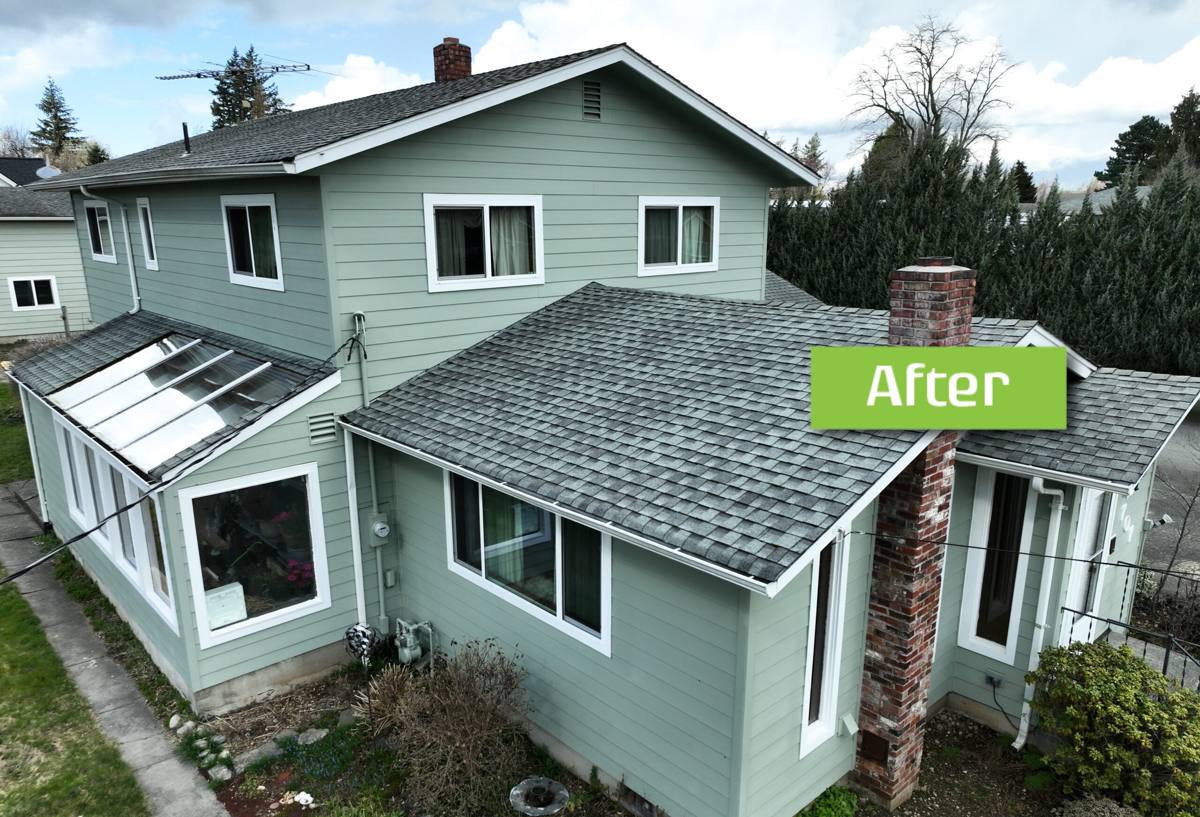
What Actually Counts as Storm Damage
Insurance companies and roofers don't always agree on what qualifies as "storm damage" versus ordinary wear, and that distinction matters for your wallet. Broadly, storm damage is sudden and event-driven: wind lifting or tearing shingles, a branch or debris impact, wind-driven rain forcing water past flashing that was otherwise intact, or hail bruising (less common here than in the Midwest, but not unheard of during winter convective storms).
What is not storm damage, even if a storm is what finally exposes it, is roofing that was already failing — shingles past their service life, flashing that was never properly sealed, or moss growth that had been quietly lifting shingle edges for a year or more. A honest inspection separates the two, because claiming ordinary wear as storm damage on an insurance claim can get a claim denied or flagged, and it's not something we'll do on your behalf.
Common Storm-Related Problems We See in Semiahmoo Resort
- Lifted, cracked, or missing shingle tabs along ridgelines and roof edges most exposed to bay wind
- Flashing pulled loose around chimneys, skylights, and roof-to-wall transitions
- Gutters and downspouts torn away or clogged with storm debris, causing water to back up under the roof edge
- Wind-driven rain intrusion at valleys and low-slope sections where water has nowhere fast to go
- Granule loss on older asphalt shingles, accelerating after repeated wind events
- Soft or discolored decking discovered once a repair crew pulls back damaged shingles
Our Storm Damage Repair Process
We work Semiahmoo Resort often enough to know that a rushed tarp-and-run job causes more problems than it solves. Here's how we actually approach a storm repair call:
1. Prompt Assessment, Not a Sales Pitch
We come out, get on the roof (weather permitting) or use a ground and drone-level assessment if conditions are unsafe, and document what we find with photos. We tell you plainly whether you're looking at a targeted repair, a larger section replacement, or something that's cosmetic and can wait.
2. Stop Active Water Intrusion First
If there's an active leak, our first priority is a secure temporary seal — proper tarping or emergency flashing — not a permanent fix rushed in bad weather. A temporary fix done right buys time to do the permanent repair correctly instead of twice.
3. Repair Down to Sound Material
We don't shingle over wet or compromised decking. If storm water has gotten under the roofing long enough to soften the sheathing, that section gets replaced before new shingles or flashing go back on. Covering a soft spot just hides a problem that gets worse.
4. Match and Blend
Where a repair is targeted rather than a full replacement, we try to match existing shingle color and profile as closely as the manufacturer's current lineup allows. On older roofs, an exact match isn't always possible — we'll tell you honestly if that's the case rather than promise a seamless blend we can't deliver.
5. Final Inspection and Documentation
We photograph the completed repair and provide documentation you can hand directly to your insurance adjuster if you're filing a claim.
Salt Air, Wind, and Moss: The Three Things Working Against a Semiahmoo Roof
Every coastal property in Whatcom County deals with weather, but Semiahmoo Resort's exposure on the spit puts it near the top of the list for how hard that weather works on a roof.
Salt Air
Airborne salt corrodes exposed metal faster than it does further inland — nail heads, flashing seams, gutter fasteners, and vent stacks all age quicker near open bay water. This is one of the reasons we favor corrosion-resistant fasteners and flashing materials on repairs out here rather than whatever happens to be the cheapest stock option; it costs a little more up front and saves a callback in a few years.
Driving Rain and Wind
With almost no windbreak between the spit and open water, wind-driven rain hits roof edges, valleys, and flashing at angles a sheltered inland roof rarely sees. That's why storm damage here so often shows up first at edges and transitions rather than in the middle of a roof field — those are the spots doing the most work in a windstorm.
Moss Season
Whatcom County's wet season runs long, and moss doesn't need much encouragement on north-facing or shaded roof slopes near the water. Moss holds moisture against the shingle surface and can work its way under tabs, which weakens the seal that keeps wind-driven rain out in the first place. A roof with established moss growth is more vulnerable to storm damage, not just uglier — which is why we'll flag moss during a storm repair visit even if it wasn't the reason for the call.
Repair or Replace? How We Make That Call
Not every storm-damaged roof needs a full replacement, and not every roof can be safely patched. We weigh a handful of factors honestly with you before recommending either path.
| Factor | Leans Toward Repair | Leans Toward Replacement |
|---|---|---|
| Roof age | Under roughly 12-15 years | Nearing or past expected shingle lifespan |
| Extent of damage | Isolated to one section or slope | Spread across multiple roof planes |
| Decking condition | Dry, sound sheathing under damaged shingles | Soft, stained, or rotted decking found |
| Shingle availability | Close color/profile match available | Discontinued product, no reasonable match |
| Underlying moss/wear | Minor, localized | Widespread moss damage or granule loss |
| Prior repair history | First storm-related issue | Repeated repairs in the same areas |
When a roof lands in the middle — say, a repairable section but a roof that's clearly in its last few years anyway — we'll walk through the honest math with you: cost of another repair down the road versus the cost of replacing now, so you can decide with real numbers instead of guessing.
Materials We Use for Storm Repairs in This Area
Material choice matters more here than in a sheltered inland neighborhood. For asphalt shingle roofs, we favor architectural (laminated) shingles with a strong wind rating over standard 3-tab where a section is being replaced, since the extra wind resistance is worth it on a spit exposed to open bay wind. For flashing and fasteners, we use corrosion-resistant materials suited to a marine environment rather than standard-grade hardware that will show rust streaks and early failure within a few seasons.
We're also candid about the trade-offs of certain products in this climate. Some roofing systems that perform well inland are more sensitive to installation quality or ongoing maintenance in a salt-air, high-moisture environment — a metal roof, for example, needs the right fastener spec and coating to hold up here, and a low-quality installation will show corrosion and streaking years before it should. We'll tell you plainly what a given material needs from you long-term, not just what it costs to install.
Working With Your Insurance Claim
Most storm damage repairs at Semiahmoo Resort involve an insurance claim, and a smooth claim comes down to good documentation and realistic expectations.
- Photograph visible damage yourself as soon as it's safe to do so, before any tarping or cleanup
- Get a written, dated assessment from a roofer — not just a verbal estimate — for your claim file
- Understand your policy's distinction between "storm damage" and "wear and tear," since adjusters draw that line carefully
- Ask whether your policy covers code-required upgrades (like updated flashing or ventilation) triggered by the repair
- Keep receipts for any emergency tarping or temporary repairs — most policies reimburse reasonable mitigation costs
- Don't sign a contract with a "storm chaser" crew that shows up unsolicited after a weather event and pressures a same-day decision
We provide documentation adjusters are used to seeing, but we're not a public adjuster and won't promise a claim outcome we can't control. What we can control is giving you an honest, well-documented assessment of the actual roof damage.
Why Local Experience With Semiahmoo Resort Homes Matters
A crew that mostly works inland Whatcom County neighborhoods can still do competent roofing work, but they're often learning the spit's quirks on your dime — figuring out fastener corrosion patterns, wind-loading on exposed edges, or how aggressively moss establishes on shaded slopes near the water. A crew that already works Semiahmoo Resort regularly has that knowledge going in, which shows up in fewer callbacks and repairs that account for conditions your roof will actually face next winter, not generic conditions.
It also matters for access and timing. Storm damage repair is often time-sensitive, and a crew already familiar with the resort's HOA guidelines, gate access, and typical home layouts can move faster from first call to tarped roof than one starting from zero.
Homeowner Checklist: After a Storm
- Check attic and ceilings for new water stains, even if you can't see obvious roof damage from the ground
- Look for granules collecting in gutters or downspouts — a sign of accelerated shingle wear
- Note any shingles, flashing pieces, or gutter sections found in the yard after high wind
- Avoid getting on the roof yourself, especially on wet or mossy surfaces near a coastal home
- Call for an assessment promptly — small openings let in more water with every subsequent rain
- Keep a simple log of when you noticed damage and any storm dates, useful for both contractors and insurers
If a recent storm has left your Semiahmoo Resort roof with missing shingles, a new leak, or damage you're not sure how to categorize, we're glad to take a look and give you a straight answer. Reach out through the form below for a free, no-pressure estimate — no obligation, no pressure tactics, just an honest read on what your roof needs.