 Semiahmoo Siding
 Storm Damage Roof Repair in Sumas, Washington
Sumas sits right up against the Canadian border in the eastern end of Whatcom County, in a spot where weather behaves a little differently than it does closer to the water. Homeowners here deal with the same driving rain and moss pressure as the rest of the county, plus wind events that come through the Sumas Gap with more force than most inland Washington towns ever see. A roof that's been through a real storm here rarely fails all at once — it fails in the places nobody checks until water shows up on a ceiling. This page covers what storm damage actually looks like on a Sumas roof, what a correct repair involves, and why it pays to hire a crew that already knows this area rather than someone passing through after a big weather event.
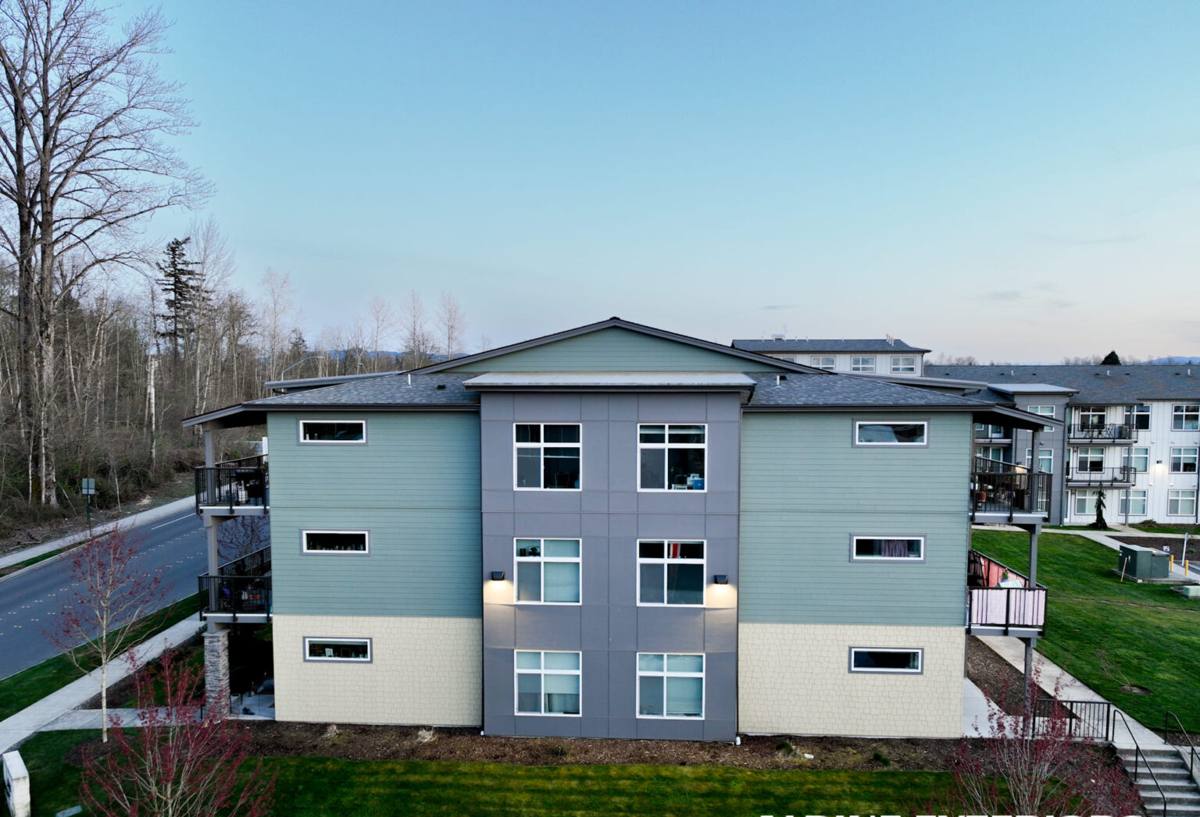
Why Sumas Roofs Take a Different Kind of Beating
Whatcom County as a whole gets the standard Pacific Northwest combination of salt-laden marine air near the coast, long stretches of driving rain, and a moss season that can run most of the year in shaded, north-facing sections of a roof. Sumas adds another layer: cold air draining down out of the Fraser Valley through the Sumas Gap can turn into sustained, gusty east winds during the fall and winter months. That wind doesn't just rattle a few shingles — it works at the edges of a roof, at ridge caps, and at anything that's already slightly loose, prying and lifting in ways that steady rain alone wouldn't cause.
Combine that wind exposure with the valley floor's tendency to hold cold air and moisture, and you get more freeze-thaw cycling on Sumas roofs than you'll see on roofs closer to the Strait of Georgia. Water that gets under a shingle or into a seam has more chances to freeze, expand, and widen the damage before it ever gets noticed. None of this means Sumas roofs are poorly built — it means they take a specific kind of wear, and a repair that doesn't account for it tends to fail again at the next storm.
What This Means for Materials and Detailing
In practice, it means fastening patterns, flashing laps, and edge details matter more here than they would in a calmer climate. A repair that's technically "fine" in a low-wind area can still lift at the next east-wind event if it wasn't detailed for wind uplift. We treat every Sumas repair as a wind-exposed repair, not just a rain-exposed one.
What Counts as Storm Damage (Even When It's Not Obvious)
Most homeowners think of storm damage as missing shingles or an obvious hole. That's the easy case. The harder cases are the ones that sit quietly for months before they show up as a stain, a soft spot, or a spike in a heating bill.
Wind Damage
Lifted or creased shingles, broken seals along tab lines, and bent or torn ridge cap pieces. Wind damage often looks minor from the ground and turns out to be more extensive once someone is actually up on the roof checking every course.
Water Intrusion
Damage from driving rain usually shows up at transitions — where a roof meets a wall, around a chimney, at valleys, and around any vent or pipe boot. These are the spots most likely to leak first because they depend on flashing and sealant doing their job, not just the field of the roof.
Impact Damage
Branches, cones, and debris carried by wind gusts can bruise or puncture shingles without leaving an obvious visible hole. Impact bruising can compromise the mat underneath a shingle even when the surface granules look mostly intact.
Moss-Accelerated Damage
Storms don't cause moss, but moss makes storm damage worse. Moss holds water against the roof surface, keeps shadowed areas from drying between storms, and lifts shingle edges as it grows — which gives wind something to grab onto. A storm that would have been a non-event on a clean roof can turn into a real leak on a moss-covered one.
What a Correct Storm Repair Actually Involves
A storm repair that's done right is not just "replace what's missing." It's a sequence, and skipping steps is exactly how the same spot leaks again next season.
- Full-roof inspection, not just the damaged section — storms rarely damage only one spot, and adjacent areas often have loosened fasteners or lifted seals that haven't failed yet.
- Deck check — any area that's had sustained water intrusion gets checked for soft or delaminated decking before new material goes down. Repairing over compromised decking just hides the problem.
- Underlayment and flashing review — flashing at valleys, chimneys, and wall transitions gets inspected and re-laid where it's been disturbed, not just caulked over.
- Matching materials where possible — we match shingle profile, color, and exposure as closely as the existing product allows so a repair doesn't stand out as a patch, while being upfront when an exact match isn't available due to product age.
- Fastening for wind exposure — given how much east-wind loading Sumas roofs see, repairs are fastened and sealed with that exposure in mind, not to a minimum-code standard.
- Final water test and walk-through — we check the repaired area and explain what was found, what was fixed, and what to watch going forward.
Repair or Replace? The Honest Factors
Not every storm-damaged roof needs full replacement, and not every roof can be responsibly patched. The right call depends on a few factors more than on how bad the damage looks from the ground.
| Factor | Favors Repair | Favors Replacement |
|---|---|---|
| Roof age | Under roughly two-thirds of expected shingle life | Near or past expected shingle life |
| Damage extent | Isolated to one slope or a few sections | Spread across multiple slopes or the whole roof |
| Decking condition | Solid, no soft spots found | Soft, delaminated, or water-stained decking found |
| Moss/algae history | Minimal, roof kept fairly clean | Long-term heavy moss growth already degrading the mat |
| Material availability | Matching shingle still available | Discontinued product, visible patch unavoidable |
We'll tell you straight when a repair is the honest call and when it's just delaying a bigger job. There's no benefit to us in talking a homeowner into a full roof when a proper repair will genuinely hold.
Documenting Storm Damage for Insurance
Most homeowners' policies cover sudden storm damage, though coverage details and deductibles vary by policy and insurer. We're not an insurance company and won't promise a specific claim outcome, but we do provide clear photo documentation, a written description of the damage and its likely cause, and a repair estimate that homeowners can hand directly to their adjuster. Getting a roof looked at soon after a storm — rather than waiting until the next one — also gives you a cleaner record of what happened and when.
Why It Matters to Hire a Crew That Already Works Sumas
After a significant wind event, it's common to see traveling crews going door to door in border-county towns like Sumas offering fast storm repairs. Some of that work is fine. A lot of it is rushed, done by people who won't be answering the phone in six months if the repair doesn't hold. A few things a locally established crew brings that's harder to get from an out-of-town operation:
- Familiarity with how the Sumas Gap wind pattern actually loads a roof, not just generic storm-repair knowledge
- Knowledge of local permitting and code requirements in Whatcom County jurisdictions
- Accountability after the job — someone local to come back if a repair needs a follow-up look
- An existing track record in the area that can be checked, rather than a phone number tied to a storm season
We work throughout Whatcom County and treat Sumas storm calls the same way we'd treat one down the road from our own crew — with a full inspection, an honest scope, and a repair built for the wind this area actually sees.
A Practical Post-Storm Checklist
After any significant wind or rain event, a quick check from the ground can help you catch problems early, before they turn into ceiling stains.
- Look for shingle pieces or granules in gutters, downspouts, or on the ground around the house
- Check for any new stains or damp spots on interior ceilings, especially near chimneys or vents
- Scan the roofline from the ground for shingles that look lifted, curled, or missing
- Check attic spaces (if accessible) for daylight showing through the roof deck or damp insulation
- Note the date and general conditions of the storm in case you need it for an insurance claim later
- Avoid climbing onto the roof yourself after a storm — wet, wind-loosened roofing is not a safe place to inspect from
Get an Honest Look Before Small Damage Becomes a Big Repair
If your Sumas home has been through a recent windstorm or a hard stretch of rain, it's worth getting a real inspection rather than guessing from the ground. We offer free, no-pressure estimates — we'll tell you plainly what we find, what it needs, and what it doesn't. Use the form below to get a time on the calendar.