 Semiahmoo Siding
 Window Installation in Blaine and Semiahmoo: Two Trades' Worth of Exposure
Blaine sits right at the water's edge on the northern tip of Whatcom County, and Semiahmoo takes that exposure a step further — the spit runs out between Semiahmoo Bay and Drayton Harbor with almost nothing standing between the houses out there and open water on more than one side. Between the two, this is one of the more demanding stretches of coastline in the county to keep windows performing the way they're supposed to. Salt-laden air, wind that rarely lets up, and rain that comes in sideways more often than it falls straight down all put more stress on a window installation here than the same job would see a few miles inland.
Window work is where a lot of that stress concentrates. A wall of solid siding has fewer seams for water to find; a window opening has a frame, a sill, jamb flashing, head flashing, and a joint with the surrounding siding — every one of those is a place where a rushed installation shows up first as a leak, a draft, or a rotted sill a few years down the road. We install windows for homes throughout Blaine and out onto the Semiahmoo peninsula regularly enough to know which parts of a standard manufacturer installation guide need extra attention out here, and which corners get cut on jobs that don't hold up.
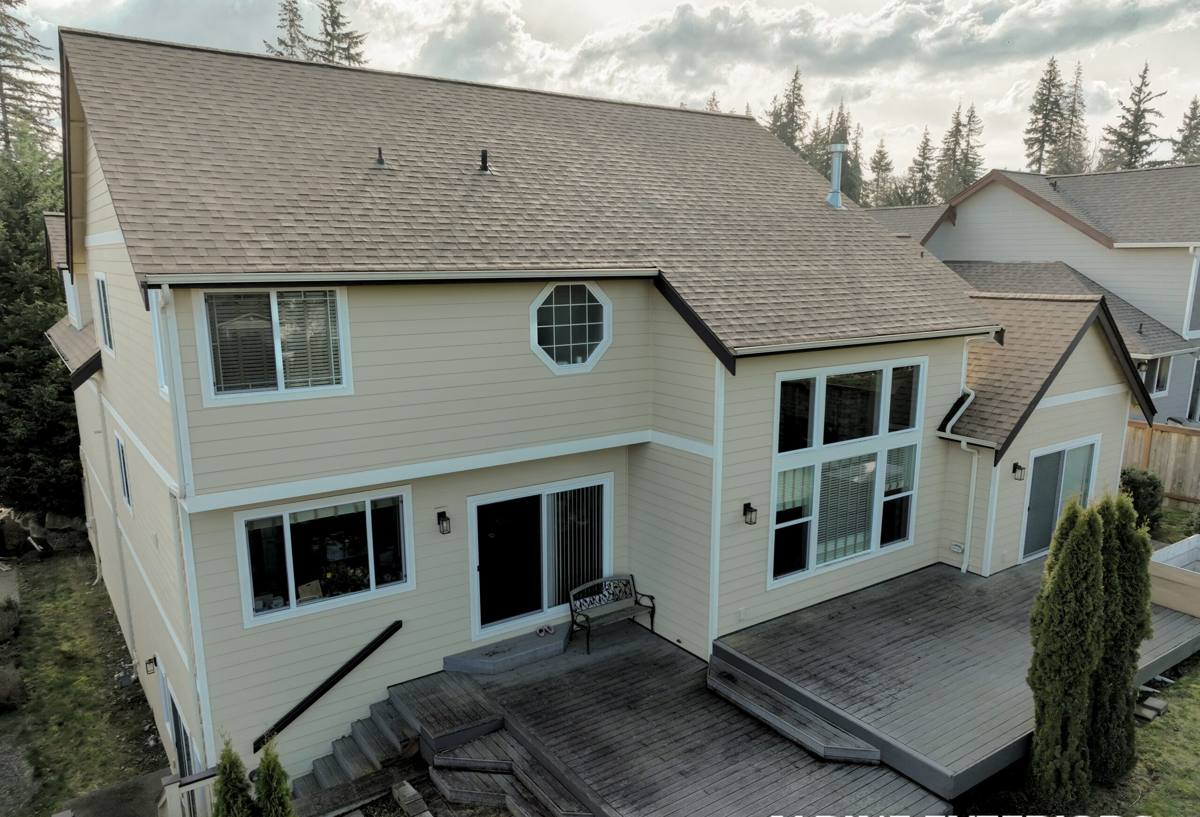
What Blaine and Semiahmoo's Climate Does to a Window Installation
Salt Air From More Than One Direction
Because Semiahmoo has water on more than one side and Blaine itself sits directly on the bay, homes in this area take on salt-laden air from multiple directions instead of one prevailing exposure like a lot of coastal towns see. That matters specifically for windows because salt accelerates corrosion in hardware, fasteners, and any lower-grade metal components in a frame or flashing system. A window that would hold up fine set back from the water can start showing pitted hardware, stiff operation, or corroded fasteners years earlier out here.
Wind-Driven Rain and Open Exposure
With little to break the wind coming off the water, storms push rain sideways into wall assemblies and window openings rather than letting it run straight down and off the roof. That sideways pressure finds gaps a calmer inland site would never test — a flashing lap that's an inch short, a sealant joint that's starting to crack, a corner where the head flashing wasn't tied into the wall wrap correctly. None of those gaps matter much in a sheltered yard. All of them matter here.
A Long Moss and Mildew Season
Mild temperatures and near-constant humidity give Whatcom County a moss and mildew season that runs most of the year, and window sills, trim, and the framing around older units are common places it takes hold first. Shaded elevations and windows tucked under eaves with poor drainage tend to show it earliest, since anything that stays damp longer than it should becomes a growth surface over time.
Condensation and Temperature Swings
The gap between a heated interior and a damp, wind-chilled exterior creates real condensation pressure on glass and frames through the fall and winter. Fogging between panes, water beading on interior sills, or a frame that feels cold to the touch are usually signs a seal has already failed rather than something to wait out.
Signs a Window in Blaine or Semiahmoo Needs Attention Now
- Fogging or visible moisture trapped between panes of a double-pane window
- A draft or cold spot at the frame even with the window fully latched
- Sill or trim that feels soft, spongy, or shows discoloration
- Hardware that's stiff, corroded, or hard to lock — common on units facing open water
- Visible gap or daylight where the frame meets the siding
- Paint or finish failing faster on window trim than on the rest of the exterior
Full-Frame Replacement vs. Insert Windows: How We Decide
One of the first decisions on any window installation is whether to replace the whole unit down to the rough opening (full-frame) or install a new window inside the existing frame (an insert, sometimes called a pocket replacement). Both are legitimate methods. Which one makes sense depends heavily on the condition of what's already there — and on an exposed property in Blaine or Semiahmoo, that condition check matters more than it would somewhere sheltered, because an insert reuses the existing flashing and frame rather than replacing it.
| Factor | Insert (Pocket) Replacement | Full-Frame Replacement |
|---|---|---|
| What it reuses | Existing frame, flashing, and exterior trim | Nothing — new flashing and trim installed with the new unit |
| Best fit | Existing frame and flashing are sound and dry | Existing frame, flashing, or sill shows rot, corrosion, or past water damage |
| Labor and disruption | Faster, less disruption to siding and interior trim | More labor; siding and trim around the opening are opened up |
| Glass area | Slightly reduced, since the new unit fits inside the old frame | Full original opening size, sometimes larger if the opening is corrected |
| Risk if frame is compromised | Hides existing damage instead of fixing it | Exposes and corrects the underlying problem |
| Typical cost | Lower | Higher, reflecting the added labor and materials |
We don't default to the cheaper option to win a bid. On a property with any history of water intrusion, or on older homes where the original flashing was never installed to a modern standard, an insert replacement can end up sealing existing damage inside the wall instead of solving it. We check the condition of the existing frame and flashing before recommending either method, and we'll tell you honestly when a full-frame job is the right call even though it costs more.
What a Correct Window Installation Involves
Assessment and Measuring
Every installation starts with an on-site look at the actual opening — not just a tape measure for ordering, but a check of whether the frame is square, whether the sill slopes correctly to shed water outward, and whether the existing flashing shows any sign of past leaks. On older Blaine and Semiahmoo homes, this step is where we typically find out whether the opening needs more than a straightforward window swap.
Removal and Opening Inspection
Once the old window comes out, the opening gets a real look — sheathing, framing, and any hidden moisture damage that wasn't visible with the window in place. This is the point where a full-frame job either confirms the opening is sound or turns up rot or corrosion that needs to be addressed before anything new goes in. Skipping this step and setting a new window over a compromised opening just seals the problem back up.
Flashing and Weatherproofing Sequence
This is the step that matters most given how much wind-driven rain this area sees. Flashing has to be sequenced correctly — sill pan flashing set first and sloped to drain outward, jamb flashing lapped over it, head flashing lapped over the jambs and tied into the weather-resistive barrier above the opening — so water is always directed down and out rather than trapped behind the window. Sealant supplements that sequence; it isn't a substitute for it.
Insulation and Air Sealing
The gap between the new window frame and the rough opening needs to be insulated and air-sealed correctly, not just stuffed with whatever's on hand. Done right, this cuts down on drafts and the condensation pressure that shows up on window frames during Whatcom County's cold, damp winters.
Trim and Exterior Finish
The exterior trim gets integrated back with the surrounding siding so the finished opening sheds water the way the rest of the wall does, rather than creating a new seam that behaves differently than everything around it.
Practical Checklist Before You Sign a Window Contract
- Ask whether they recommend insert or full-frame replacement for your specific windows, and why
- Confirm the opening will be inspected for hidden moisture damage once the old window is out
- Ask how they sequence sill, jamb, and head flashing — not just whether they "caulk it well"
- Get a written scope that separates the window manufacturer's warranty from the installer's labor warranty
- Confirm current Washington contractor licensing and active liability insurance
- Ask about realistic lead times, since window orders can take several weeks depending on size
Frame Materials and Glazing for This Climate
Frame material choice matters more on an exposed property than it does further inland, since a window here has more corrosive salt air and moisture to resist over the years. We'll walk through the honest trade-offs for your specific home rather than pushing one option by default.
- Vinyl: Resists rot and corrosion well, doesn't need repainting, and is generally the most affordable option — a solid fit for most replacement projects in this climate.
- Fiberglass: More dimensionally stable across temperature swings than vinyl and can be painted if you want a specific color, at a higher price point.
- Wood, uncladded: Can work on a sheltered elevation with a serious maintenance commitment, but we're honest that an uncladded wood frame facing open water in Blaine or Semiahmoo is a high-upkeep choice, not a low-maintenance one.
- Glazing: Double or triple-pane units with a low-E coating help with both energy performance and the interior condensation that's common in this climate; the specific coating and gas fill between panes varies by manufacturer, so it's worth asking what package is included.
- Hardware: Corrosion-resistant hardware is worth specifying on any window facing open water, since standard-grade hardware is one of the first things to show wear in salt air.
Our Process, Start to Finish
- On-site assessment — we look at each window's frame, hardware, and sill condition, and check how the existing flashing has held up over time
- Honest recommendation — insert replacement, full-frame replacement, or in some cases repair, explained with the reasoning behind it for each opening
- Written scope and lead time — a clear plan before ordering, since window lead times can run several weeks
- Removal and inspection — the old unit comes out and the opening gets checked for hidden damage before anything new goes in
- Installation and flashing — the new window is set, shimmed, insulated, and flashed in the correct sequence
- Trim and finish — exterior trim is tied back into the surrounding siding so the opening performs as one continuous system
Why a Local Blaine and Semiahmoo Crew Matters
Manufacturer installation instructions are written for average conditions in a moderate climate, and Blaine's waterfront position — with Semiahmoo taking that exposure even further out onto open water — doesn't match that description. A crew that installs windows regularly on this stretch of coastline knows which parts of a standard installation guide are worth following to the letter here, and where extra time on flashing or hardware selection is worth it even when it wouldn't be required somewhere calmer and drier.
That experience shows up in decisions a homeowner rarely sees discussed directly — how much lap a flashing course needs on a wall that catches wind-driven rain straight off the water, whether an insert replacement is really appropriate for a given opening or whether the flashing underneath needs to come out too, which hardware grade actually holds up against sustained salt exposure instead of just looking fine in the showroom. Those are the calls that decide whether a window installation is still performing cleanly in fifteen years or showing drafts and soft trim in five.
What to Ask Before Hiring for Window Installation Here
- Ask how many window installations they've done specifically in Blaine or on the Semiahmoo peninsula
- Ask how they handle flashing integration with existing siding, not just which window brand they sell
- Confirm current Washington contractor licensing and active liability insurance
- Get a written scope of work before signing anything
- Ask how the window manufacturer's warranty and the installer's labor warranty are each structured
If you're weighing window replacement on a Blaine or Semiahmoo property — whether it's one drafty window or a full-house update — it's worth having someone look at the actual openings before you start pricing units. We offer free, no-pressure estimates for window installation throughout Blaine and Semiahmoo. Use the form below to get a time on the schedule.